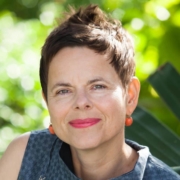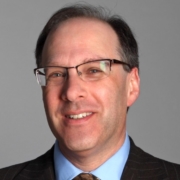
Ameena Ghaffar-Kucher
25 Years after September 11th
Today we mark the 25th anniversary of September 11th by unpacking that day’s lasting impact on society, culture, and schools in the United States. My Guest is Ameena Ghaffar-Kucher.
Ameena Ghaffar-Kucher is a Senior Lecturer at the University of Pennsylvania and director of the Teaching Beyond September 11th curriculum project.
Will Brehm 0:52
Ameena Ghaffar-Kucher, welcome to FreshEd.
Ameena Ghaffar-Kucher 0:57
Thanks for having me.
Will Brehm 0:58
I want to start with a question about you personally — about where you actually were on that Tuesday morning on September 11, 2001.
Ameena Ghaffar-Kucher 1:06
I was actually on my way to grad school in New York City. My bus was actually right on the George Washington Bridge when 9/11 was unfolding. We weren’t on the part of the bridge where you could see Southern Manhattan — we hadn’t quite gotten to that point yet — but it was just after 9 a.m. We were stuck in really bad traffic, and a gentleman got off the bus just before the last stop — there’s a bus station right before you get on the bridge — and he turned around and said to us, “If you’re going to the World Trade Center, it’s closed.” And he looked very, very upset, and we were all very confused. We did have cell phones, but you didn’t have internet at your fingertips, and we couldn’t get hold of anybody to figure out what was happening. So we really just didn’t know. We were stuck in terrible traffic and eventually learned that a plane had struck the World Trade Center.
Will Brehm 1:58
So incredibly close to what ended up becoming known as ground zero. What did that day set in motion for you personally?
Ameena Ghaffar-Kucher 2:06
I think initially what happened was I became really interested in immigrant communities — Muslim immigrant communities in the United States — which hadn’t been my original idea for dissertation work. I’d originally planned to go back to Pakistan and do my research there, but I became increasingly interested, not just because of that particular day, but through coursework and other things that came up. I studied a particular Pakistani immigrant community, and one of the things I learned from doing that work and interacting with folks from there is just how much the community had been impacted by deportation after 9/11. A lot of men in particular had literally been disappeared, and the community was a fraction of what it was. And concurrently, what you saw was an emergence of several community-based organizations, mostly offering legal services, but also educational services, translation services, and other things as well. So there was a lot of change happening within these communities, and I became very interested in that.
But it was a few years before I really started thinking about 9/11 and the legacy of 9/11 — or the ongoing legacies, as I will talk about. In fact, it wasn’t until 2019 that we really thought about creating something, a curriculum, to talk about what had been happening over the previous almost 20 years, because I think we realized that nothing really was being taught. Students weren’t learning about 9/11, and so that was the impetus.
Will Brehm 3:15
Looking back on these last 25 years — and it’s hard to kind of imagine and fathom that it’s been that long — what you’re saying is that 9/11 is more than just a day. It was a marker in time, a before and after in a way. And the after is what we’re living through and what you’ve been trying to study and understand. So what were some of the big structural changes that you started noticing over time?
Ameena Ghaffar-Kucher 3:38
First of all, I really appreciate you bringing this up, because I think it is really important to understand that yes, 9/11 was a terrible day in the history of this country. A lot of people died that day, and it’s something that we should remember. But there is this aftermath that is ongoing — it’s not completed, it hasn’t finished. We are living in a world that 9/11 has helped create.
There have been a lot of things impacted by the policies that followed. Everything from the way we wage wars, to immigration policies, to national security, the role of ICE, surveillance — all of these things have influenced everyday life for a lot of different groups and really extend beyond the original groups that were targeted. Perhaps it was Muslim men in particular who were targeted, but that grew, and a lot of misunderstandings emerged about who Muslims are and who are not Muslims. So I talk about the Sikh community a lot in terms of the fact that they have really borne the brunt of a lot of reactions from fellow Americans — not just discrimination, but full-on hate crimes. Several Sikhs have lost their lives because they were mistaken for Muslim.
And just to be clear — being Sikh is not Muslim. It’s a totally different faith tradition. It really is just about ignorance. Sikh men have beards, and there’s this association with Muslim men and beards, and some — not even all, very few — Muslim men may wear a kind of headdress, while Sikh men wear turbans. There’s just this conflation, this failure to understand the differences, and people get lumped into the same category.
Will Brehm 4:52
And in a sense, that is tied to a term I don’t think I ever heard before 9/11, but heard constantly afterwards — Islamophobia. And in a sense, even people who aren’t Muslim can get lumped into that phobia.
Ameena Ghaffar-Kucher 5:05
Yeah. Islamophobia is an interesting term because it was popularized in 1997 by the Runnymede Trust, but it actually has a much, much older history. And this I think might be interesting for comparative education folks — I found it fascinating. The first use of the term Islamophobia is in Italian in 1904, and it was a Swedish convert writing in Italian for an outlet based out of Cairo, which I think is kind of remarkable. He used that term to explain the experiences he felt his fellow Muslims were having. Then it appears in French a couple of times, and the first English use of Islamophobia — I don’t think it’s until 1923 or so — is a translation from some of the writings in French. So it’s actually a really interesting genealogy. And then Runnymede really made it the term familiar to us, but their original 1997 definition was simply fear or dread of Islam and therefore fear and dread of Muslims. It wasn’t until 20 years later that they updated it and started paying attention to more structural issues.
Will Brehm 6:02
So tell me about how those structural issues take shape, because in a sense it’s no longer seen as simply a form of individual prejudice — it’s actually these structural conditions that shape the big things you were talking about: war, immigration, national security, surveillance.
Ameena Ghaffar-Kucher 6:18
Right. And that’s one of the reasons why I like to use the term structural Islamophobia, because I do think Islamophobia isn’t the greatest term, but it is the term we’re stuck with. There is certainly an element of individual prejudice that still exists within it. But if we leave it at that, we fundamentally misunderstand what it is or what it’s become.
Structural Islamophobia is about how institutions, policies, law, media, and dominant narratives are producing different kinds of treatment and constrained possibilities for people from Muslim communities and those who are presumed to be from Muslim communities. And that presumption is really important. It’s about who gets constructed as a threat, who becomes suspicious, whose citizenship gets questioned, where surveillance is normalized for particular groups. Those kinds of questions underlie this type of Islamophobia.
And what it also points to is that when you have any sort of intervention, it can’t just be at the level of, “well, meet a Muslim and you’ll see they’re nice people and your biases will go away.” There’s something more insidious and far-reaching that shapes the macro level, then the meso level — which is where it comes into play in schools and institutions — and then the micro level. And it’s not a trickle-down effect. All of these levels are informing one another.
Will Brehm 7:22
In the U.S., what is shaping these different levels? The representation of Muslims, as well as those perceived to be Muslim — and that’s a broader category than just Sikhs, presumably. There are probably other groups that get lumped in as well.
Ameena Ghaffar-Kucher 7:35
Well, Arabs are the biggest group that get lumped in. And in fact — this may be an older statistic — but most Arabs in the United States are not Muslim. So they are definitely being lumped into this category as well.
At the macro level, the media is certainly shaping it — which stories get picked up, what the focus is, what lens is brought to bear — and that gets picked up by Hollywood. You see those same stereotypes in movies and films. Jack Shaheen’s work — he had a book called *Reel Bad Arabs* and a film that followed — really highlighted a hundred years’ worth of these stereotypes and how they constitute an Arab phobia that then gets mapped onto Muslim phobia, which is what we call Islamophobia today.
And then there are a lot of policies. For example, NSEERS — the National Security Entry-Exit Registration System — enacted by the Bush administration shortly after 9/11, which required all immigrant men from 25 Muslim-majority countries, as well as North Korea and Eritrea, to register every time they entered or exited the country. So it was, in effect, a Muslim registry. That creates a certain fear and distrust because you’re putting a whole swath of people into that category.
Then there was the NYPD surveillance of Muslim student associations across about 14 colleges and universities on the East Coast. These were Muslim students being secretly surveilled. What is the message that sends? And then this translates into micro-interactions. The one that upsets me the most is the case of Ahmed Mohamed — who is probably a young man now — who was handcuffed by the police because his teacher thought his homemade clock was a bomb. He was 14 years old. It’s hard to fathom that something like that would happen.
Will Brehm 8:58
We’ve been talking a lot about how these levels in the U.S. are shaped and enacted. Do we see similar structural Islamophobia happening in other parts of the world?
Ameena Ghaffar-Kucher 9:08
Yes, I do think there are many other countries where you see similarities, but it’s not as though this is a U.S. export. All of these countries have their own histories. France has its own history with Muslim people coming from French colonial Africa. India has its own history with Muslims, and you see a lot of Islamophobic policies emerging there. So there are specific histories of empire, race, religion, and nationalism at play.
But what does travel is the security framework — this war-on-terror security framework, this idea that Muslims or Muslim populations are a problem for security, for extremism, for national cohesion, if you think about the Danish case. You see these recurring patterns in several places, even though they have their own manifestations and their own histories. Muslims get constructed as a problem population — incompatible with the national identity, unable to assimilate — and they become objects of regulation and surveillance, associated with being a security threat.
Will Brehm 9:58
You brought up the war on terror. Thinking back on these last 25 years — four different U.S. presidents have been in office in that time — it does not seem like the war on terror is going anywhere. The U.S. is still dropping bombs on countries in the Middle East or West Asia. There’s a level of continuity that exists across political parties with this war on terror that gives it a real durability. How do you begin to understand that?
Ameena Ghaffar-Kucher 10:22
Just before we get into that, I do want to say that it is four presidents but five presidencies, because I think we have to separate the two Trump presidencies. The first Trump presidency inherited a different kind of world than the second one — we had left Afghanistan by that point, for example. So that’s an important distinction to keep in mind.
I do think that the 9/11 security architecture has become embedded. Things that were supposed to be temporary have now become permanent features of American life, to the point that we don’t even notice them anymore. And it isn’t a Republican or a Democratic phenomenon. As you were saying, there are some remarkable continuities. The rhetoric might change — the way Bush spoke about Muslims was different from the way Obama spoke about them, and both are very different from the way Trump speaks about them. There might be rhetorical differences, but the policies are not all that different.
In fact, I feel like Obama gets the least amount of critique, but he was responsible for a really devastating drone campaign in a country I care about deeply — Pakistan, my home country. He was responsible for a surge in Afghanistan as well. He promised to close Guantanamo Bay and end these wars, and he didn’t do either. Guantanamo Bay still exists to this day. There are only 15 people left who are captive there, but still — 15 people. And I think that’s shameful.
Will Brehm 11:38
Let’s turn to schools. Over the last 25 years, how has 9/11 been brought into schools, if at all?
Ameena Ghaffar-Kucher 11:45
You definitely see it in a lot of different ways, because even when policies aren’t directly targeting children or curriculum, they’re targeting their families and their communities. The Muslim ban is a really good example of that, but also countering violent extremism programs — seen in many parts of the world, not just the U.S. — where schools become a site for reporting on who might be a potential terrorist. You see it in school discipline policies. You see it in the NYPD surveillance that extended to schools.
And even if it’s not these direct policies, it can be more indirect — about where students are learning what it means to be a citizen, who counts as a citizen, who doesn’t, who is considered dangerous, who is considered a real American, who has to constantly prove themselves. I always think back to the 2016 lead-up to the election — I think it was the second presidential debate between Donald Trump and Hillary Clinton. People are often surprised when I pick on Hillary Clinton, because we kind of know what Trump’s rhetoric is. But Hillary Clinton said something like, “We need the Muslim community to be the eyes and ears of our national security.” What is that like for a child going to school who is being scrutinized in that way by their classmates and teachers? The Ahmed Mohamed example is a really good one here.
So it’s really about when political speech is treated as legitimate, when it’s considered dangerous or taboo, who is offered protection and who isn’t. These are all questions that play out in schools. And then of course, there’s what is actually taught — or not taught — in the curriculum itself.
Will Brehm 12:58
Is 9/11 actually taught in schools? Do they actually get all the way to 2001?
Ameena Ghaffar-Kucher 13:04
I think we had a version of this conversation the last time you interviewed me, a few years ago. And unfortunately, the answer is the same. In the United States, most teachers teach history chronologically and barely get to the 20th century, let alone 9/11. But even if they did, the amount of content, the amount of space given in textbooks, is very minimal. And as we said at the opening, the focus tends to be on that day and doesn’t go much beyond it.
Will Brehm 13:28
One of the fascinating things about thinking about 9/11 twenty-five years on — a quarter century — is that we’re now dealing with children and students in schools who have no direct experience of that day. Does that help or hinder? How does that generational gap, between those of us who lived through it and children who may have been born after 2001, factor in?
Ameena Ghaffar-Kucher 13:48
I think it’s the same kind of question that people who lived through Vietnam must have been asking around 9/11 — it’s a very similar time gap. So it’s not unusual to teach about historical events we haven’t lived through. And I don’t think we ever want to try and get students to feel what it was like on that day — I don’t think we should try to manufacture that kind of trauma.
But I do think we need to help students understand the breadth of loss of human life — not just on that day on U.S. soil, but when you extend the frame out, across the last 25 years of what we call the global war on terrorism, so many people have lost their lives and been displaced.
Let me give you some numbers for context. The civilian toll alone over the last 25 years, across five or six of the main sites of the 9/11 wars, is 432,000 people — and that’s from direct war violence only. If we bring in indirect war violence, the numbers are much, much larger. But a statistic I’ve been thinking about a lot: if we look at the total number of people who have died in the 9/11 wars from direct war violence — including so-called enemy combatants — the number is around 940,000 people, almost a million. If you divide that by the number of people who died on 9/11 and look across 25 years, that’s a 9/11-type event every month for the last 25 years. That is a number that should really make us stop and think. And that’s not including indirect war violence. When we account for indirect war violence, it’s another 3.5 million people. So the total toll of the 9/11 wars is around 4.6 million people. And then there are 38 million people displaced — who are not necessarily afforded refuge in the countries that were bombing them, or in countries where they may have served alongside the U.S. military as translators, cooks, or drivers.
Will Brehm 15:18
The magnitude is staggering. You brought up trauma. I would imagine there’s trauma on so many levels playing out here — from the victims in those countries, to their families, to those who have suffered Islamophobic racism and prejudice, but also to those who are in some way complicit in that system. Just being an American living through that moment was traumatic in many ways. So how do you manage trauma when trying to deal with historical memory and think through these last 25 years in a way that is going to be very triggering for so many people, for very different reasons?
Ameena Ghaffar-Kucher 15:52
That’s a very difficult question, and I don’t think I have a fully satisfying answer. But you are bringing up an important point about the trauma experienced by a lot of different groups. Just very recently, I met with a couple of veterans, and spending an hour with them has really fundamentally changed the way I think about some of the communities impacted, because I have to admit that veterans were not necessarily a group I was thinking about very much. I tend to think more about the various immigrant groups that have been hurt by these policies. But we know that 9/11 veterans now make up more than half of the severely disabled U.S. veteran population. And another statistic I find really troubling: 9/11 veterans have a suicide rate four times higher than the rate of dying from combat. This is all from the Costs of War project.
The veterans I met with were part of a moral injury project where they were reflecting not just on the PTSD they’ve obviously experienced, but on how it has impacted their sense of self, their values, how they see themselves, how they feel complicit in a war that doesn’t feel like it had any justification — especially in the case of Iraq. Iraq was just such a manufactured war.
Will Brehm 17:00
Can schools play a part in trying to work through some of that trauma? I think about it this way: if there was a collective trauma in the U.S. — of all different shades and varieties — and if we know that trauma can be passed on through generations, then the generation now going through school, who may not have lived through 9/11, may still be experiencing some of that trauma from their parents. How do schools, or even higher education, fit into this? What can educational spaces do to navigate, manage, and think through that trauma?
Ameena Ghaffar-Kucher 17:28
They would have to begin by actually teaching about the aftermath of 9/11, which they don’t do. Most people have no idea about the numbers I shared earlier. They have no clue about the number of displaced people, or how difficult it is to seek refuge in another country — the kinds of extra processes that refugees from these particular countries especially have to go through. Even when particular programs like the special immigrant visa or temporary protective status exist, they’re very, very challenging to navigate, with a huge backlog, and very few people have actually managed to come to the United States.
But what I’m trying to say is: if we don’t talk about these things, we can’t begin to deal with the trauma at all. Our focus in most schools is on that day, and we don’t go beyond it. When in fact, you can make connections to September 11th pretty much every month of the year — I would argue several times across any given month. It’s a matter of willpower, but also, I do think teachers just don’t have materials. A lot of the materials that exist out there tend to focus on the victims in the United States, on the first responders — and again, that’s important, nobody says you shouldn’t do that. But what are you doing in addition to that? What stories are you telling beyond that? What iconic images beyond the ones we see on U.S. soil are you sharing from other places in the world? There are plenty, but we just choose not to see them.
Will Brehm 18:52
So to end — if you had a room full of kids and you were going to try and talk to them about 9/11 and its aftermath and its legacy, what would be a good starting point?
Ameena Ghaffar-Kucher 19:02
I think I would probably start with the magnitude of the lives lost — trying to help young people understand that it goes beyond what happened on U.S. soil, that many other countries were impacted, but also to talk about how it’s come home as well. If you look at ICE, for example — I think a lot more people are paying attention to ICE now. ICE was formed right after 9/11, around 2002. Its mandate has been changing a lot over the years, particularly in this last year. They have an enormous amount of funding now, and the way that is impacting communities here in the U.S. — I think it’s about helping students connect those dots.
And there are so many materials available. As you know, I’m the Project Director of the Teaching Beyond September 11th Curriculum Project. Something unique about our project is that it is grounded in community experiences — all of our partners have been from affected community groups. We want students to think like historians, so we look at a lot of first-person accounts, policy documents, and speeches that have been given. We’re essentially saying to students: here are the materials, they’re in front of you — now let’s look at what rhetorical moves are being made. What does international policy say about how we define torture? What does the U.S. government say about how we define torture? There are lots of examples like that.
Listening to community testimony is really important, and giving students those kinds of materials helps them think for themselves. We have one whole module still to be published — a lesson on the Iraq war — where we look at some of the key players and have students examine a range of sources across the political spectrum, from CNN to Fox News, to talk about how bias comes into play and that there are different kinds of biases. We really want students to have a holistic understanding — not just one point of view — while also centering the communities that have been impacted the most.
Will Brehm 20:28
Ameena Ghaffar-Kucher, thank you so much for joining FreshEd. It’s always a pleasure to talk, and thank you for all of your work on trying to create a curriculum around 9/11 and its aftermath.
Ameena Ghaffar-Kucher 20:38
Thanks so much for giving space for this important conversation. I appreciate it.
Translate this transcript into any language. Before you do, we'd love to know a little about who this is for — it helps us understand which language communities find FreshEd useful.
Translations are limited to 10 per day per visitor to keep this free for everyone.
The Religification of Pakistani-American Youth
Brown Bodies and Xenophobic Bullying in US Schools: Critical Analysis and Strategies for Action
Refutations of Racism in the ‘Muslim Question’
Citizenship Denied: The Racialization of Muslim American Men and Women Post-9/11
Thinking Outside the Box: Arabs and Race in the United States
Islamophobia/Islamophilia: Beyond the Politics of Enemy and Friend
Muslim American Women on Campus: Undergraduate Social Life and Identity
The 9/11 Generation: Youth, Rights, and Solidarity in the War on Terror
Unsettled Belonging: Educating Palestinian American Youth after 9/11
Have any useful resources related to this show? Please send them to info@freshedpodcast.com