Kevin Kester
Peace Education in Divided Settings
Today we explore peace education as a form of global citizenship education in universities in divided settings. My guest, Kevin Kester, travelled to China/Taiwan, Cyprus, Korea, and Somalia/Somaliland to understand if peace as a form of global citizenship can be taught in universities where legacies of war, division, and colonialism remain deeply rooted.
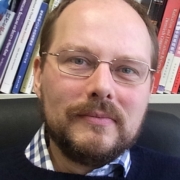
Kevin Kester is an Associate Professor of Comparative International Education and Peace/Development Studies at Seoul National University (서울대학교) and director of the Education, Conflict and Peace Lab. His latest article is entitled “Peace education as a form of global citizenship education in universities in divided settings: challenges and prospects” which was published in Discourse: Studies in the Cultural Politics of Education.
Citation: Kevin Kester, with Will Brehm, FreshEd, 412, podcast audio, February 2, 2026. https://www.freshedpodcast.com/kester
Kevin Kester 1:26
Thanks Will, look forward to our conversation today.
Will Brehm 1:30
So you live in Seoul, South Korea, and a few years ago you received this wartime alert warning that a North Korean missile or attack might be imminent. How was it for you to sort of live through the realities of conflict, and how do they start shaping how you might think about peace education?
Kevin Kester 1:46
That war alert that you’re referring to, which you see in the article on the first or second page, it came in about around 6:30 in the morning. So if I remember correctly, I was in bed at that time, so I just rolled back over and went back to sleep. And about 20 minutes later or so, a second message was sent that announced that the first message was an error. And as I write in the paper, living under these conditions, it’s just become completely normalized, whether it’s in Seoul or it’s in Taipei. And many of my colleagues as well, they brush it off, and some have even suggested that it’s a political tactic to create a sense of urgency and fear because the elections were just, you know, one or two weeks off from that point of time. But what is clear to me is that we shouldn’t have to live under conditions where we question whether a war threat is real or not. And then as everybody is aware, in December of 2024, we experienced martial law in Korea. And then just like before, my colleagues and I were also skeptical – is this real? We got a message on our phone: martial law has been declared. Seriously? So I’ve been living in South Korea now for, you know, off and on since 2007, and I’ve had so many events like this in that time. In 2010, North Korea bombed a South Korean island and there were casualties in that instance. In 2017 and 2018, which is the period that I had just returned to South Korea from the UK after my PhD, Donald Trump and Kim Jong-un were, you know, in a spat and they were starting to make nuclear threats to each other. And at that time, the situation was even more serious and there were very real evacuation plans and scenarios that were being crafted. So I think in a way what I’m saying here is that this is just part of what life is like in East Asia, and Koreans have lived under this for the past 80 years. Taiwan is very similar. In fact, in the paper, in this study, there’s a Taiwanese participant that I interviewed and she explained to me that they have just lived under threat for such a long time that people are scared, that some of those people want to run away – these are her words that she explained – but actually most people need to work, they have their family, they can’t run away, they just want to live like normal people. And because they’ve lived under threat for such a long time, many of them also believe that war will never actually materialize. So you see that there’s a kind of dualism here that on the one hand, the threat of war is very real and it affects so many aspects of contemporary life. I think about this all the time – the male students in my courses at SNU, for example, each of them has to go and serve in the military for two years and it interrupts their university study and it has a knock-on effect across the rest of their career. And it’s the same in Taiwan – all of the men in Taiwan and some of the women have to go and serve. But on the other hand, people have lived with that threat for so long that its urgency has worn off and there’s a disbelief on whether or not it’s actually going to happen. So to the second part of your question, how does this affect my sense of what peace education is or can be and what we’ll discuss for the next 30 minutes or so? I think it reminds me that there are so many different perspectives on what peace is and how an educator can go about teaching peace. It reminds me that peace work is very hard work, and it teaches me that depending on the context where these educators are working, there isn’t a single definition or practice of what peace education is. The concept and practices are as diverse as those who make up the field. So let me give you an example, both from this research but also from a related project. If you look closely in the paper, the Chinese participants in the study, they tend to emphasize what I might call micro peace. So they’re emphasizing individual attitudes and behaviors, teaching pro-social values. Now one might question whether this is a critical approach to peace or if it’s not. I relate this to a study a few years ago, a project that I was on – I was working with UNESCO developing a common curriculum guide for peace education in Northeast Asia. We worked with over a hundred different partners in China, in Japan, and Korea, and we encountered these similar issues where the Chinese participants were taking a very different sort of micro peace approach for the work than the Japanese and the Korean staff that we were working with that might be taking more of a sort of social justice activism approach. Now for many of my colleagues from Korea and Japan looking at this, they tend to think that the Chinese are being uncritical, but I don’t know if that’s fair. What if the approach that these educators, both in my study and in this project with UNESCO, what if the approach that they are adopting is what they are able to do in the particular context where they’re working, one that is more restricted and authoritarian? So if we flip it and we think about how micro practices and teaching attitudes, behaviors, capacities might be a form of de-linking from colonial tendencies and imagining different embodied possibilities, even if it doesn’t involve explicit social protests, could we imagine this as a form of critical peace education, one that’s more appropriate in authoritarian settings? And if that’s the case, then I think we have a lot – because of what’s going on in the world right now – we have a lot to learn from what educators are doing in more subtle ways in contexts like this. And this is what takes me to post-criticality. So might this be a type of what I call in the paper post-critical peace education, one that blends the micro and the macro together?
Will Brehm 7:35
So tell me a little bit more about this post-critical approach to peace education. Like how is it different from other ways of theorizing, say, peace or criticality?
Kevin Kester 7:42
Yeah, it’s an emerging concept, this post-critical, largely from scholars – I’m drawing off people like Karen Pashby and Vanessa Andreotti’s work in the field of global citizenship education, and then some work by Naomi Hodgson and her colleagues. They wrote back in 2018 a manifesto for a post-critical or post-critical pedagogy. But let me clarify two points because I think there’s a lot of confusion around this notion of post-critical. So first, when I say post-critical, I don’t mean to abandon criticality – and not just me, the literature. When the literature is speaking about this, particularly from Vanessa Andreotti and Karen Pashby, we’re not talking about abandoning criticality. Criticality remains foundational to that work. So that’s the first thing that I really want to emphasize – that post does not mean an after or a rejection of critical. And the second thing is, because a lot of this work, especially in the field of peace education, critical peace education, is building off of the work of Paulo Freire, so I’m also not, in adopting a post-critical approach, I’m not rejecting Freire and Pedagogy of the Oppressed or critical pedagogy. Instead, the way that I perceive it is this post-critical builds upon that work. It addresses some of the limitations of that work. Freire is still at the heart of peace education, critical peace education, still at the heart of the approach that a post-critical educator might use, but the post-criticality addresses some of those limitations. So let’s talk about those, right? Freire and critical pedagogy have come under some criticisms in recent years, and I think Michalinos Zembylas articulates this so well in his 2018 article that’s in the Journal of Peace Education, and namely the notion in critical pedagogy that students possess some form of false consciousness. And what this implies – it implies that the educators know best and the assumption that somehow rationality and reasoned dialogue are these universally transformative processes. This raises serious – to me at least – this raises serious ethical and pedagogical concerns. It anchors peace education in a colonizing and in a universalist agenda, which a post-critical perspective, for me, builds then on these post-colonial and decolonial critiques and it seeks to undo this anchoring in the colonial and universalist. And because Freire is such a canonical figure in peace education, I think it’s all the more important that we take these critiques seriously. So the question that I’m asking and that I’ve been thinking about for the past several years is: if critical peace education draws heavily on Freire’s grounding in Western Enlightenment thought, how might the field of peace education more fully engage with post-colonial and decolonial critiques that are aimed at dismantling these Eurocentric assumptions, these Eurocentric practices? And what I’ve come to realize in this time of engaging this question is that, as I said at the beginning, critical peace education remains vitally important and I continue to work with it. Yet it also carries those constraints that need to be addressed, and it’s at this juncture that post-critical thinking becomes generative. So in pursuing this line of inquiry, what comes into it for me is that a post-critical peace education would be more explicitly ontological – that is, it moves beyond the epistemic or the consciousness-raising aspects of critical pedagogy where transformation is assumed to be in the heads of students, and it embodies that, it grounds it, it’s attentive to how peace is lived and felt rather than only what students think. It would be more humble – a post-critical peace education is much more humble. In the paper I call this a hermeneutics of faith – that is, addressing that notion that critical pedagogy, that these students have false consciousness. I think we have to be more humble in what we can do as the educators, what peace education might be able to achieve, and also what those students are bringing with them. And finally, for me, a post-critical approach embraces the plurality of all of this – that there isn’t that single approach to what peace is or how to teach it. So it brings in what I would call three R’s – and this is different than what Mario Novelli and his colleagues speak about in terms of three R’s from Nancy Fraser – but three R’s that I’m sort of pulling out of that work from those who are writing on post-critical thinking. It focuses on reflexivity – so reflexivity is so critical to this work, but what I’ve written about elsewhere, a second order of reflexivity. It’s important that the reflexivity is not only at the level of the individual but at the level of the field, unpacking assumptions that we make in peace education. It’s relational – it focuses on the relationality between the different actors that are involved in peace education. And it’s reciprocal – it gives back, it isn’t extractive, it’s not just taking from. So when you ask what does a post-critical education entail or what does it say to peace education, I think these are some of the important responses that it’s given to the limits of our field today that are really grounded in some of those Western liberal ways of thinking.
Will Brehm 13:19
Let’s sort of unpack some of that by looking at some of these empirical studies that you’ve done, because you’ve been sort of crisscrossing these different contexts from China, Taiwan, Cyprus, Korea, Somalia, Somaliland, and you’ve been trying to understand how university professors who are teaching courses really on peace, how they do it and what they think about peace education, how it connects to global citizenship education. And one of the findings that you sort of pull out and highlight, and I like you find it really quite interesting, is that educators in de facto states like Taiwan or Somaliland, they emphasize this idea of difference and sovereignty when they’re talking about peace and global citizenship education, whereas other states that are sort of more recognized states, they emphasize notions of commonality, like, you know, things that are more universal. What does this sort of difference that you found in some of these empirical studies – like what does that tell you about global citizenship education, peace education, if you’re sort of analyzing that empirical finding from the post-critical perspective?
Kevin Kester 14:21
First of all, what a very surprising finding for me, that when you compare these non-recognized states and these recognized states, that the educators’ approaches to peace tend to be different and their starting points. So those from the recognized states tend to emphasize commonality in their teaching, a starting point of commonality, whereas those from non-recognized states tend to emphasize the difference. Now what this suggests to me for peace education and for its related fields like global citizenship education, which the paper is also about, and human rights education, is that when we teach for peace, global citizenship, human rights, it needs to be understood as deeply contextual and relational in that sense of that post-critical, rather than this then being universal in its form or meaning. So for example, statehood is often taken for granted as this foundational assumption within GCE, global citizenship, human rights discourse, and this centers the sort of state-centric model of peacebuilding. But in non-recognized states, students and educators don’t have statehood, and by extension, they don’t have domestic citizenship rights, and citizens are excluded – the citizens of those states are excluded from the benefits of membership in international organizations like the WHO, which had a knock-on effect for Taiwan, for example, during COVID-19, or Somaliland doesn’t have access to multilateral aid because it isn’t a member of the UN system. So as several the participants, you know, really point out to me in the interviews, how can one meet an educator – how can an educator meaningfully teach global citizenship in the absence of local citizenship? The students don’t even have a domestic citizenship. So this shows that we have to be very cautious in how we approach it, because our GCE or global citizenship education or a peace education can be profoundly misaligned if we’re teaching peace in an active war zone, for example, or human rights in settings where rights are routinely violated. What does that say to a young child, say, that the UN declares that you have these rights to life and rights to a livelihood and rights to a home, etc., etc., and every day around you, you see that those rights are not real? It’s abstract, it’s some liberal external notion. It’s fought – rather than fostering an aspiration toward peace in the sense of, you know, having rights, this might instead generate frustration and resentment toward those Western liberal frameworks. And it raises important questions about when and where we emphasize sameness or we emphasize difference in our approaches to global citizenship education, peace education, because it challenges profoundly those universalist narratives of peace. So let me illustrate this very quickly, and I write about this near the end of the paper. As I discussed those two different types of educational commonality or the approach to commonality or difference, I want to highlight why these distinctions matter, and I termed them a priori commonality and a post-priori commonality. So the first, of course, is this a priori commonality that comes before, and this might be interpreted, or at least I critique it in the paper – this is a way of conveniently obscuring difference, and I see this in part in the responses from some of the Chinese and Somalian participants in the study in regard to Taiwan and Somaliland. So I contrast this with what I call a post-priori commonality, and I would say that this is – commonality is still important, so we’re looking at what connects us, how do we relate to each other, but how we get here is different. So we arrive at commonality in this post-priori way through making space and time to work through our differences. And I would suggest that by starting with the difference and getting to commonality, that this latter type is what educational peacebuilding is trying to achieve as it tries to foster mutual recognition, to foster respect, and to foster relations that are rooted in justice. So to me, there are profound implications of what it means in terms of whether we begin with commonality or difference and how it relates to these contexts, these non-recognized and these internationally recognized contexts.
Will Brehm 19:02
It sort of reminds me of ASEAN, the Association of Southeast Asian Nations, like tagline of unity in diversity. Another finding that you sort of have that sort of stuck out to me was around a Taiwanese student who deliberately avoids using national identity as sort of a marker of their own identity and rather uses the city in which the student lives, and that becomes the sort of the identity they hold. And you sort of talk about this in terms of like this everyday transcendence and peacebuilding because it’s not getting into the really difficult nature of what Taiwanese statehood means. But can you talk me through how this sort of avoidance at the everyday level by how students might identify their own sort of identity or part of their identity is actually sort of a form of kind of peace activism?
Kevin Kester 19:50
Yeah, that sort of post-critical everyday transcendence that you just speak about, that everyday peace. What I think it does really well in terms of what we discussed at the beginning, and this will show how this is a type of activism, is it brings together that micro and macro because it’s embodied in the ways that the choices that we make in our everyday encounters. And so when students decide – in this case, so this is an educator in Taipei who is explaining to me what she observes in her classes. I didn’t interview students, so students didn’t tell me this, but this is what an educator says her students in the class – they tend to identify by the city that they’re from rather than by the state. Now I think there are two different ways to interpret this, and the first is that critical one that you’re sort of pulling out here. Is this really a form of peacebuilding? Is this really transformative and everyday transcendence, or might this just be a way of avoiding national identity markers because those labels are politically contested and I don’t want to risk provoking my classmates who might have different political views? So identifying as being from Kaohsiung or Taichung, it might be understood as a strategy for sidestepping contentious encounters, right? So that is definitely one way to see this. But the way that I interpret it in the paper, and I find this more compelling, not the least of which because there were no Chinese students in those classes – they were only Taiwanese students – so it can’t be explained that they were doing this because they were trying to avoid that encounter with a Chinese student. But I interpret this that the students were deliberately choosing to move beyond state-based identities altogether. So they identify as being from a city rather than country, and you know, I do this all the time as a US citizen living overseas, right? I identify as being from Kentucky, I don’t identify as being from the United States, and I do it for the same reasons. I’m trying to decenter the modern state, I’m trying to show alternative identities, different forms of who I am, and try to challenge people who are just thinking what an American is or who an American is or what an American does. So in the Taiwanese case, the students are transcending, for me, both those discursive landmines of protracted conflict – so they know it’s contested whether you say you’re Taiwanese or Chinese – and they’re also trying to contest those conceptual limits of what the modern nation-state is in geopolitics. Now do I know for sure? I don’t know this for sure because I didn’t talk to the students, but this is how I interpret what the educator was saying, and I see this as a meaningful form of everyday transcendence. It thinks beyond that persistent China-Taiwan conflict or to other possibilities. Now a different Taiwanese professor in the same study, so in the paper, he claims that Taiwan might be neither nation nor state, and he goes on to suggest that Taiwan can be a kind of experimental sovereignty. And I found that really striking when he told me this in the interview.
Will Brehm 22:52
Yeah.
Kevin Kester 22:53
So reconciling this position of is Taiwan a state, is Taiwan not a state, rather than engaging that binary and declaring that Taiwan is a state or is not a state, can we imagine some transcendent perspective that aligns with the challenges of what a nation-state is and what it means in the world today and envision that Taiwan might actually be at the precipice of something new, of showing an alternative way that states can engage in this world? So I think they’re very creative. The second professor, of course, is being very intentional in his way of articulating this. So for me, we have a lot to take away from this in terms of everyday peace and everyday transcendence.
Will Brehm 23:39
So maybe we’ll turn by way of conclusion to looking towards the future, because it seems like we live in a world today where conflict is increasing, either within countries or between countries, and we’re sort of these global architecture of education where global citizenship is enshrined in Sustainable Development Goal number four, and you know, a lot of these seem to being debated as to what the future holds after 2030 for the SDGs and for the global architecture of education. And yet, you know, peace education and the mission of UNESCO seems like further away than ever, where as we sort of look around the world. And your approach is looking at peace education and global citizenship education from this post-critical perspective, I think is really generative and opens up all sorts of new possibilities. So I guess, you know, taking that sort of second-order reflexivity of the field, where do you think the field should be going or could be going as we lead up to the end of the 2020s?
Kevin Kester 24:35
There’s an urgency right now to respond to the rising authoritarianism and backsliding of democracy. And peace, just like diversity and equity and inclusion initiatives, is under attack. It’s been co-opted, just as Trump did in his push for Zelensky to end the Ukraine war under a coercive peace plan that clearly favors the aggressor and it holds the victim, not the perpetrator, accountable. This is all being done under the banner of peace. So I think as a field, we need to rearticulate what peace is and defend it ardently, automatically, and get it out there more – teach for peace, explain what this is. It was fascinating to me to listen to Zelensky when he went on to Fox News immediately after his meeting with President Trump in the office. On Fox News, he essentially used the language of positive and negative peace to explain why he was opposed to the coercive plan that was being presented in front of him – that to accept peace under these conditions would only be a temporary installment, it wouldn’t be sustainable for the reasons that it wouldn’t address the underlying cultural and structural issues that led to this point. And it was fascinating to see him utilizing that language and then to think how powerful it would be if, you know, all students are taught through this analytic lens to think about different critical types of peace. Now the other, I guess another part of this, is that not only is peace being co-opted, it’s also being censored. Individual scholars are being censored, and this I think down the road is going to lead to self-censorship. We censor ourselves because we need to survive, we need to keep our careers, we need to keep going, so on and so forth. We’re trying to prevent the eventual censorship that’s going to come to us. And then it becomes difficult to get participants and students to engage in this work. It becomes more as it’s sensitized and it’s securitized, and it encloses what type of research is possible. So these things – I see peace is being co-opted, peace is being censored, and I see many scholars who are responding to these issues. We’re putting together a Routledge International Handbook on Peace Education right now, and it’s gonna – it’ll be out sometime later this year or early next year. And in that book, there are chapters on these topics, so chapters about rising authoritarianism, the backsliding of democracy, the return of post-truth, censorship, polarization, etc., etc. And so I see educators addressing these, and I see the urgency of it at the same time coming even more to the forefront. So this is where I think we’ve got to go in the next couple years as we continue to address the very real and pressing dangers around us. This paper, in fact, that we’re discussing right now – this paper was censored.
Will Brehm 27:36
Really?
Kevin Kester 27:36
Yes, surprisingly. I mean, I think so. For many of our listeners, if they read the paper, I think in reading the paper, they might question what would lead it to get censored.
Will Brehm 27:46
Censored by whom?
Kevin Kester 27:46
So I was asked to give this talk of this paper, to present this paper at a conference in Seoul in August of 2025 – so just last August – and so I had presented, I’d given my slides and I’ve given the script of what I was going to present to this UNESCO team I was putting this together. And then a couple days before the conference, the organizers called me up and said in the paper, you refer to Taiwan. So the organizers demanded that if I present the paper, I have to name Taiwan as a province in China each time I refer to it in the talk. So the panel that I was presenting on, unbeknownst to me, was funded and moderated by UNESCO Beijing. And so they said that I have to say Taiwan province of China each time that I mention it in the talk. Their perspective is in line with UN language and UN protocol. This is the language of the UN, is what they said to me, and that if I do anything otherwise, then I’m being non-neutral and I’m being political. And I was just – I was shocked, I was absolutely shocked.
Will Brehm 28:52
So what did you do?
Kevin Kester 28:55
So I responded and I said I understand your position where you’re coming from and the constraints that you face. I would recommend, because this is an academic talk, I think what is reasonable in the situation is for the moderator to explain at the beginning of the panel that the perspectives that are shared reflect the perspectives of the authors alone and they do not, you know, represent UNESCO in any way. And I thought that was very reasonable. But they denied it and they again told me I had to say Taiwan province of China. So I refused under on the grounds of academic freedom, but also I didn’t want to allow my talk to be clearly politicized and especially to be politicized under the language of neutrality, which is what they were saying. So, you know, this is a clear attempt for me and, you know, politicization and discursive annexation of talk and using my talk to position that Taiwan is part of China. And if you read the paper, I think, you know, I have a lot of responses to this. My point about this is censorship is coming even more and more in peace education and academia abroad. We need to engage more on how to respond in instances like this and how to deal with censorship and politicization of our work. I again, I think if you read the paper, you will see that there’s nowhere in the paper that I make a stand that says Taiwan is a country. That’s not the purpose of the paper.
Will Brehm 30:21
I can attest to that. I read every word of that paper.
Kevin Kester 30:24
Yeah, it’s an empirical research paper. It’s not normative saying that Taiwan belongs to China, Taiwan’s independent. It isn’t like that at all. And in fact, again, in this research, one of the things that really shocked me about all of this is that when I talk to educators in Taiwan and Somaliland, many of those educators supported unification. I didn’t expect that – that the educators from non-recognized contexts, which are ardently known to be independent-meaning and to be fighting for autonomy and self-determination, that some of those educators said that unification would be a good thing. So my point here is that it’s far more complex than the situation, but if you read the paper, far more complex than the position was being presented. So it was such a reductionary take on what I was doing. And on top of this, on top of this, I’m talking about divided and conflict-affected contexts – North Korea, South Korea, the north of Cyprus, the south of Cyprus, Somaliland and Somalia, and China and Taiwan. How can China and Taiwan be a divided context if Taiwan is not part of China whatsoever? It’s a far more complex argument than what was being presented. And I just hope that listeners and readers engage with the argument of the work and the quality of the empirical data rather than simply politicizing it as this is China-Taiwan or Israel-Palestine or Northern Ireland-Ireland and then just dismissing it as being some political work that they don’t need to begin to talk to. So I found it quite surprising.
Will Brehm 32:01
The story sort of proves your theoretical point about sort of moving beyond the binaries, and it just seems like there’s a lot of institutions are still stuck in some of those binaries, and you’re offering a different way to conceptualize and think about peace education. And I really do hope that the field itself and particularly some of these big institutions can start reflecting in their own work some of these more nuanced, complex ideas that you’ve been and others have been developing. So Kevin Kester, thank you so much for joining FreshEd. Congrats on this new piece. I had no idea it was such a hot-button issue, but hopefully more and more people will read it as a result.
Kevin Kester 32:43
Thank you so much, Will. It was a lovely conversation.
Translate this transcript into any language. Before you do, we’d love to know a little about who this is for — it helps us understand which language communities find FreshEd useful.
Translations are limited to 10 per day per visitor to keep this free for everyone.
Related Guest Publications/Projects
Global Citizenship Education and Peace Education: Toward a Postcritical Praxis
Postcritical Global Citizenship Education in Practice: Insights from Punjab, Pakistan
Education, Conflict and Peace Lab at Seoul National University
Recommended
A meta-review of typologies of global citizenship education
Social cartographies as performative devices in research on higher education
Reinventing critical pedagogy as decolonizing pedagogy: The education of empathy
Critical pedagogy and emotion: working through ‘troubled knowledge’ in posttraumatic contexts
Toward a Decolonial Ethics in Human Rights and Peace Education
Education for Peace and International Understanding in the Asia-Pacific: Trends and Issues
Peace education in the present: Dismantling and reconstructing some fundamental theoretical premises
Global Citizenship Education: A Critical Introduction to Key Concepts and Debates
Soft versus critical global citizenship education
Have any useful resources related to this show? Please send them to info@freshedpodcast.com