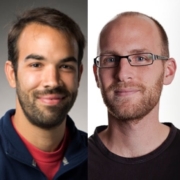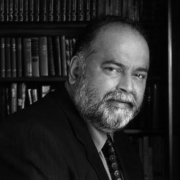
Noah Sobe
Transforming Higher Education
Today we explore UNESCO’s roadmap for the future of higher education. My guest is Noah Sobe.
Noah Sobe is the Chief of Section for Higher Education at UNESCO. The new report we discuss is entitled Transforming Higher Education: Global Collaboration on Visioning and Action.
Will Brehm 0:30
Noah Sobe, welcome back to FreshEd.
Noah Sobe 0:32
Thanks, Will. It’s great to be with you again.
Will Brehm 0:35
Congratulations to you and UNESCO on this new, pretty substantial roadmap report that has come out about the future of higher education. You know, you argue, or the report argues, that universities should sort of be framed as bridges between pasts and futures. What does that actually mean for higher education to hold that role, particularly today, in 2026? And what sort of gets in the way of achieving that bridge?
Noah Sobe 1:05
Thanks for that question, Will. I mean, I think, broadly speaking, we can think about education overall, at all levels, as, in one important way, an intergenerational conversation. And universities, higher education institutions, I think, are particularly poised in that space of moving between pasts and futures, in one part because of the strong intellectual traditions that they bring, the knowledges, the disciplines, the accumulated sort of, let’s call it wisdom maybe, achieved over time. And bring that into contact with, in many cases, young people who are going to take it forward in new ways. So I think there’s something of a bridging function in higher education in general.
So what does it mean for a higher education institution to hold that role today? I think it means that you spend some time thinking about the intellectual virtues of inquiry, critical thought, a sort of free exploration that have defined the university over centuries. And at the same time, you think about trying to style a new relationship to the future where the university becomes a potent space of future making. That I think is, for me, one of the key points of the report, that it’s not a future scenarios report. It’s certainly not a project of future-proofing the university. It’s an attempt to assist everyone involved in higher education to make higher education institutions the most powerful spaces of future making that we can make them.
What gets in the way of that, I think, is when we spend too much time on either side. When we consider the university just a place where we’re passing on knowledge from the past, or when we consider universities simply places about innovating and changing without that important dialogue.
Will Brehm 2:48
It seems like today is an interesting moment because of what so many people, I guess, call the polycrisis, and there’s all these different crises that are sort of happening simultaneously, which makes thinking about futures, or a single future in particular, not easy or imaginable. And it’s almost like there’s going to be many different futures that come into existence kind of simultaneously and coexisting. And then thinking then what’s the university’s role in that and its place in that sort of multiple futures through these different crises kind of ends up sort of suggesting to me that there might be many different ways universities look going into the future.
Noah Sobe 3:25
Absolutely. Absolutely. Well, you know, I think in some part universities need to be places of intense creativity and experimentation and play to explore alternative futures. In some part we are building and continuing to build on disciplinary knowledge using established techniques and methods, and of course, pushing frontiers, but kind of working within what we know. You know, in some instances, I think we’re going to have universities that are deeply engaged in their communities in ways that perhaps even dissolve the boundaries between what a university is and its surrounding community. So I think there’s a huge range of ways that higher education is going to be moving forward.
Will Brehm 4:08
And one of the guiding principles in the report that I think addresses this diversity is really having like committing resources to what you talk about as equity and pluralism. And so, you know, going further than just simply access, you know, having more people go to the university, but actually having different ways of thinking and knowing being common, accepted, and reproduced and produced within and through the university. You’ve worked in universities for a long time. How do you think that sort of idea of pluralism and equity sort of map onto curriculum kind of in the broadest sense?
Noah Sobe 4:41
First, I think you identified a key part of this new UNESCO report, which is that it does link together an argument that resources need to be committed to equity and access and making sure that intellectual talents are not wasted. We continue this very impressive increase in the number of students studying higher education. I mean, we’ve gone from about 100 million students in higher education in the year 2000 to over 260 million today, which is just an enormous growth. And inclusion and equity agenda has been a key part of that. So we need to keep that moving forward. We need to properly resource that. But at the same time, we need to resource a commitment to welcoming and sustaining a pluralism of knowledge, of ways of knowing and being in the world. Because that element of diversity, I think, is crucial.
And that, I mean, both come into the curriculum, right? Both an equity and a pluralism agenda are going to shape what knowledge is examined, is advanced in higher education teaching and learning situations. I think that commitment to equity and inclusion invite us to think about higher education curricula as spaces of potent intercultural dialogue where you don’t necessarily resolve the tensions between different ways of knowing, but you consider them productive and you live in that space. And that’s a space that actually moves you forward.
Will Brehm 6:04
What do you think is getting in the way currently of universities doing that? As someone who also works in universities, I feel like it’s very hard to create that idealized space that you’ve just sort of mentioned about the intercultural sort of dialogue where these different ways of knowing, being, and doing sort of coexist side by side without sort of making a value statement about either or. What gets in the way of us actually just enacting that now?
Noah Sobe 6:28
I think in one part, Will, we need to go beyond some of our standard embraces of respect and tolerance to make sure that diversity and pluralism are cultivated and sustained. So that takes some courage, it takes some resources, takes some moving away from business as usual. And I think it also requires just a deep commitment to the university as an open space of free exchange where people can try out ideas, where there’s a climate that’s welcoming for that. And, you know, where climates are not welcoming of that, I think, you know, we face real obstacles.
Will Brehm 7:06
I mean, it seems to me like, you know, this trying out of ideas is particularly hard when rankings and citations and all these different metrics that are being sort of forced on universities, on students, on professors. It’s sort of like that governing logic of these different metrics becomes so all-consuming that it’s quite hard to then think about trying out new ideas that might fail, that might not result in a Q1 publication, that might not, you know, attract new students. Like, how do we get through some of those structural dimensions of the way universities, the neoliberal university in particular, has been set up today?
Noah Sobe 7:39
One of the things we do is what you just did, Will, which is name them, right? And point out that those are all mechanisms that produce scarcity, right? They produce competition and they’re not necessary, right? Rankings in so many cases, you know, produce frankly like distinctions that fall within the stated margins of error of the measurements, right? And I think that there’s a real reason to have ratings and, you know, I’ll be the first to stand up for robust quality assurance processes, but we need to make sure that they’re about actually improving rather than ranking.
So the problem with scarcity, of course, you know, is that it mitigates against the openness and the inclusion that is necessary for the academic enterprise to flourish. And you know, I think there’s a tremendous amount of unnecessary competition in the higher education sector. We do see a lot of promising examples many times in urban areas where universities in a particular municipality are collaborating, doing joint degree programs, and those are great examples of ways that we can really move towards a different mindset, a different framing in the sector, one that’s much more oriented around collaboration and I think crucially solidarity.
Will Brehm 8:59
What role is AI playing in higher education today and how your team is imagining, you know, this roadmap for higher education transformation? Like, it seems like it’s a major disruption in so many sort of positive and negative ways. So like, how is UNESCO beginning to understand this?
Noah Sobe 9:17
I mean, I think we’re trying to figure it out the way everyone else is. As you use the term disruptive, Will, and I think we’re seeing sort of disruptive change in how, you know, knowledge is being produced, mobilized, managed. We’re seeing disruptive changes in how teaching and learning is transpiring. I think one of the important things that the new UNESCO roadmap on higher education transformation, this piece we’re talking about, Transforming Higher Education: Global Collaboration on Visioning and Action, calls for is a human-centered approach to managing and using AI.
One of the things that I find particularly interesting, Will, is that I think universities have a key role to play. I mean, universities have always been places where new technologies have both been developed and where people have experimented and figured out how to live with them. I see universities playing a critical role in modeling and developing and modeling norms for working with technology, working with the ed tech industry, and of course, a lot of work ahead of us all to figure out how to do that.
I mean, let me just give you one example. There’s this common phrase of wanting to ensure that there’s a human in the loop in an AI development or implementation cycle. It’s fine and good, but I think our position at UNESCO would be that we really need humanity in the loop. You know, we need not just a single individual, but some concern for our collective shared well-being.
Will Brehm 10:46
AI, obviously, is the big one in the room, but another one that is, I think, also equally important, particularly when it comes to, you know, trying out new ideas and placing the university at the center of thinking about the future of humanity or the futures of humanity, is academic freedom – the ability for, you know, academics to explore different ideas and go down different routes without fear of, you know, reprisal or someone coming in and saying you have to look at X, Y, or Z. How do you see academic freedom today and where does it need to go into the future as higher education is transformed?
Noah Sobe 11:20
So there’s no question that academic freedom, institutional autonomy are at the heart of the academic enterprise. But it’s more than that they make universities work, that they make the knowledge, the teaching, even the community engagement mission of higher education work. It’s that academic freedom plays a key role, a key social role, you know, in creating a space that higher education fills that is at once a very public space, but also apart. There’s also no question that academic freedom is key to democratic societies functioning well.
There’s no question, you know, that when we look around the world, there are tons of different threats to academic freedom. I think it’s important to pay attention to things like the ways that some of our, you know, research assessment exercises, our grant making mechanisms are structuring what’s possible and what’s not. The way that the commercialization of academic publishing is structuring what’s possible or not. I think it’s really important to take a broad lens on the threats to academic freedom that we face in the world.
And because defending academic freedom also needs to be done from a broad base, we need to think about addressing all those concerns. There are concerns about expression and the freedom to research. I think we should also be concerned about the academic freedom of students to learn in environments free from censorship, to have rich, robust curricular offerings. And then this is maybe one that gets less attention, but I think it’s quite important. We also need to think about the way that academic freedom also encompasses a certain, in addition to expression, right to expression, encompasses a certain right to assembly, the right to participate in professional associations, to travel internationally for faculty to participate in professional gatherings. I think those are all really important things that need to be preserved, you know, particularly at a moment where we see kind of rising concerns about research security and also a whole host of forces intervening in the institutional autonomy of higher education institutions.
Will Brehm 13:18
What would your advice be for like an academic on how to defend academic freedom? Because often academic freedom seems like this, you know, overarching idea that sits so much higher than like above the day-to-day work of an academic. It’s meant for governance processes or politicians to debate, but, you know, at the individual level, like what can we do to defend it and promote it?
Noah Sobe 13:39
I think the key thing that professors can really usefully remember is that academic freedom is in many ways a vehicle for moving into a space of, let’s say, international exchange and dialogue. And we need to preserve the ability to enter those spaces, to engage freely in those spaces and I think there’s a lot that people can do within their own individual institutions, their own systems, and then through their global networks to ensure that that’s sustained.
This may not sound like academic freedom, but I think another important thing to remember is basically like the global common good that’s created through, you know, what sometimes gets labeled the service work of professors, you know, when you’re reviewing books that have been submitted, when you’re editing a journal, like you are, you’re helping to create the spaces, the necessary spaces within which, you know, the activities of a university as a knowledge mobilizing entity, as a knowledge spreading, as a knowledge creating, as a creative space, you know, as a space where empirical evidence meets values and the two are put into conversation, you know, what we were talking about earlier, you know, as those sort of conversations that are riven with tensions and those are productive tensions, right? When you are doing all that work as an academic, you are advancing academic freedom and you’re advancing the global common good that our sector creates.
Will Brehm 15:05
Another area the report digs into is sort of interdisciplinary work, trying to break down some of the silos that exist in universities, traditionally exist in universities, let’s say. How might universities go about doing that in a productive way of breaking down the silos of having meaningful, interdisciplinary sort of work, research, teaching?
Noah Sobe 15:26
Thanks for bringing that up. Well, I think it’s a really important part of this UNESCO report, which of course is based on the World Higher Education Conference, the last World Higher Education Conference that took place in Barcelona, 2022, and a whole series of consultations and engagements that have followed since then, and of course, preceded that as well. And this need to find ways to break down disciplinary silos has been a current emphasis across all these conversations.
I think it’s critical though, to understand that this is not necessarily, and certainly not in this UNESCO report that we’re talking about, a critique of disciplinarity, right? I don’t think that higher education can work without disciplines. I think it works very well with disciplines, but that the real problem emerges when disciplines can’t speak to one another. So I would say that one of the critical things an institution can do is to make sure that anyone trained in a particular discipline is able to explain their work to people outside their discipline, right? It may sound simple, but it’s a real task, because you both need to understand and internalize the ways that your discipline works, the ways that it frames problems, but also be able to take an external perspective on that and explain it to others. And to me, that’s the really critical foundation for multidisciplinary inquiry.
Will Brehm 16:50
I’m 100% behind that idea. I absolutely am one who writes academic papers in sort of esoteric academic journals that only other people in that field are going to be reading. And that’s totally fine, right? That’s how we sort of think through ideas, advance knowledge.
Noah Sobe 17:03
Exactly. You need some of that, for sure. And then you need also to be able to sit down with someone from a different discipline and explain what you do and understand what they do. And that’s how you break down the silos.
Will Brehm 17:14
Absolutely. And it’s also other academics. Another aspect of it to me is also the public, the people outside of the university, or even just outside of our niche fields, and speak to people in a way that is clear and understandable and where you can actually kind of take the role of—a thing that I always bang on about is like academics need a lot more work on trying to see how they can be public intellectuals, but not like a Naomi Klein public intellectual. Not everyone can do that, but everyone can be in the public speaking about their academic work, but it’s a different audience and requires a different way of speaking.
Noah Sobe 17:47
Yeah. And I think academics, some at least, can do a little bit more to think about how they can articulate to others the relevance of their work. I have some colleagues from my former institution in classics, and the things they’re studying in ancient Greece and Rome are so relevant, and so many of them are able to explain that so beautifully. I think you’re absolutely right, Will, that it’s both about communication between disciplines and communication beyond disciplines.
Will Brehm 18:15
Another area that the report brings up is sort of how the traditional aged student, you know, that demographic is kind of not the only demographic that universities have served historically and are serving, you know, currently and into the future. So, you know, if we actually take the demographics of the student body to look differently, and we use that as a starting point, that it’s not just 18 to 22-year-olds, how do we then think differently about the university? What does that do for us?
Noah Sobe 18:43
I think a key part is that we reimagine universities as places that people enter and leave at multiple points in their lives. And I would like to just underscore the importance of being in a higher education environment, because frankly, right, people are learning all the time. This is part of being human is learning. But what an education institution provides is a certain kind of condensation of space and time in an intentional learning moment, learning community, learning environment.
And I think, you know, what we want going forward as universities become sites of lifelong learning is flexible pathways that bring those, bring people, allow for people to enter these moments of concerted learning, these spaces of concerted learning at multiple points in the lifespan, right? And of course, that may mean that in addition to traditional degrees, universities offer credentials. We already see this happening. We see micro-credentials. We see, you know, people returning to universities. I’m always cheered when I see, you know, the number of, you know, people who are retired from the workforce, you know, finding something of value and returning to study and using it to help them continue to live lives of purpose and to shape new purpose in their lives.
So I think there are a lot of ways that universities can successfully do this. You know, it requires in some cases a bit of a change from a standard business model of putting people through three, four years of a bachelor’s degree, et cetera, but realizing that someone might come in having done partial study somewhere else, higher learning in a workplace, let’s say, it means being flexible to that and creating pathways for entry at multiple points in the lifespan.
The thing I would add to that, Will, is I think part of making a university kind of a lifelong learning space and actor is to think about the ways that higher education institutions connect to other spaces like museums and libraries. Also K-12 education, you know, there’s important connections there. And that, of course, I think also opens up the pathways, but also makes the spaces that universities work in more open and inclusive and accessible.
Will Brehm 20:50
And that’s such a good example of that sort of bridging between the past and the future because it’s taking something that universities traditionally do, but sort of changing it, transforming it, innovating it in a way that makes it open, as you said, to museums and K-12 schools, but also recognizing people’s past experiences and saying that there is value in that. You can enter the university at different points and there’s a challenge for the university to then think, how do we create those pathways, like structurally, and every university is going to have to figure out how do you actually do that in a meaningful way. And then this is where the traditional part comes in while ensuring quality of those programs, right? And I think that sort of balance, that bridge is something that I, yeah, universities are working through now. I don’t think there’s a right answer or one answer, and I think universities are sort of managing that at this moment.
Noah Sobe 21:39
I think a key piece to put on the table here, Will, is if this transformation that we’re talking about moves forward, Will, one of the key things that is required of universities is that they spend more time thinking about the starting points and ending points of student learning in relation to individual students’ own objectives and trajectories. And I think this calls for a whole host of pedagogic changes, moving away from what UNESCO calls in this report traditional listen and repeat methods towards more active, problem-based, project-based learning, which transpires in so many different fields.
Will Brehm 22:19
This report is interesting. One of the reasons this report is interesting to me is because it really highlights how transformation is iterative, it’s ongoing, it’s intergenerational. It’s not this sort of like, okay, we’re now going to have this change process, and then we’re going to get to the end and then be done with the change process. It’s this constant sort of evolution that you highlight, which if you start from that perspective, from sort of an evolutionary perspective, from an iterative perspective, it begins to change how individuals might behave and act in a university.
So for someone who has traveled the world talking to different university leaders and students and visited many different universities, talked to politicians who manage universities and govern universities, what advice would you have to a dean in some faculty in a university about how they should approach this notion of transformation in higher education?
Noah Sobe 23:10
Two parts, Will. First, transformation should have directionality, and that’s one of the key things we tried to introduce in this report. Things are changing all the time, but what we really care about is steering them in the directions we want them to go. And that leads me to the second point, which is that UNESCO styled this new publication as a roadmap. And in fact, when your audience clicks through and opens it up, you’ll see that there actually is a graphic of a map of sorts that invites people to think about what their priorities are in their particular contexts.
So that’s my message to a dean, is to sort of open this up, think about the directions of travel that you want to pursue. Think about where you are, what you’ve accomplished, what assets you have, what you should continue doing that’s going to keep you moving in that direction. Maybe second, think about what it is that’s keeping you from moving in that direction. What do you need to abandon or stop doing? And then third, what do you need to reinvent or do completely differently to keep moving in that direction?
But that particular trajectory is going to be one that’s relevant to your university, the mission you have, the students you serve, the research that’s important to your community, and the role you want to play in the world. And the hope is that when people look at this roadmap that UNESCO has just issued, they see themselves in it, they can find themselves, they can see some of the things I hope they’ve already accomplished, and they can find some inspiration for things they want to go on to accomplish.
Will Brehm 24:42
Well, Noah Sobe, thank you so much for joining FreshEd. Congratulations on this new report. I hope everyone does read it who listens to FreshEd.
Noah Sobe 24:51
Thanks, Will. It’s a pleasure to be with you, as always.
Translate this transcript into any language. Before you do, we’d love to know a little about who this is for — it helps us understand which language communities find FreshEd useful.
Translations are limited to 10 per day per visitor to keep this free for everyone.
Related Guest Publications/Projects
Reimagining Our Futures Together: A New Social Contract for Education
Uncertainty as Ignorance? Governing Futures of Education
Reimagining Utopias: Theory and Method for Educational Research in Post-Socialist Contexts
Did the Future Arrive Before We Were Ready for It?
Have any useful resources related to this show? Please send them to info@freshedpodcast.com