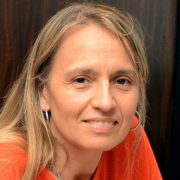
Christian Ydesen
Thinking through the Global Education Landscape
Today we unpack the past, present and future global education landscape, looking at various international organizations. My guest is Christian Ydesen, Professor in History of Education and Education Policy Analysis at the University of Zurich. He has written extensively on global education governance and will be running an international summer school this July that will unpack the theories, histories, and actors within the global education landscape. You can find more details about the summer school he is organizing at freshedpodcast.com/summerschool.
Will Brehm 1:36
Christian Ydesen, welcome back to FreshEd.
Christian Ydesen 1:38
Thank you very much, Will. It’s good to be here.
Will Brehm 1:42
So you have, for a long time, been writing about international organizations, looking at the history, thinking about global governance of education. And it’s quite interesting. I mean, one of the things that you point out is that international organizations have been talked about in two kinds of ways. And this is, of course, a pretty big generalization, but it might be helpful to frame this conversation. And one of the ways is around international organizations like UNESCO, the World Bank, all these sort of international organizations that formed after World War II are sort of the tools of Western hegemony. And they’re sort of absolutely structuring education systems around the world to the detriment of what national governments might want. And then another way is to sort of see these international organizations as, let’s say, neutral platforms that bring nation states together to sort of create alignment and technical solutions to the different problems that countries may have. How do you see it? Are there these like good explanations for what international organizations are or how we should think about them? And is there another way that you might propose to begin thinking about these things?
Christian Ydesen 2:52
Well, I think actually both these positions that you describe flatten what is actually a very dynamic and historically contingent field. So on the one hand, treating international organizations as neutral platforms sort of assumes that they simply coordinate what states already want. But historically, these organizations have been deeply involved in defining what education is, what counts as quality, and which futures are even considered desirable. And those definitions precisely are never neutral. They carry assumptions about progress, about development, about evidence, but also about legitimacy. On the other hand, reducing international organizations to mere vehicles of Western hegemony is also unsatisfying because it risks reproducing a very rigid West-Rest binary. And that does not really explain how policies travel, get reworked, how they are resisted, how they are strategically adopted, or how they are repurposed. So at its worst, I think it becomes a kind of positional closure. The critique is morally compelling, perhaps, but it’s analytically very thin. So that’s why I found actually reading a recent article by Kita Takayama, where he calls for an interdependent mode of academic engagement really helpful, because I think it encourages critique that is relational and historically grounded without slipping into these very purity politics approaches. So I would say my position is this, that international organizations are neither innocent nor omnipotent. Their influence is reproduced through shifting dependencies, through coalitions, infrastructures, and also through the fact that the national and local actors are not passive recipients. They are active participants in the making, and also the remaking of reform agendas.
Will Brehm 4:37
So how would you then talk about the types of power that international organizations have? You know, it’s a much more relational understanding of their interactions with all the different stakeholders that they might engage with. And so they might not be imposing, you know, like power in the form of say, pointing a gun at somebody, but they still seem to have quite a lot of power. Like you said, they’re shaping how we think about what education is. So how do you define that power? How can you start explaining that?
Christian Ydesen 5:05
Well, that’s a really good question. I think a concrete example of this alignment versus the direct power is to really follow how measurement infrastructures emerged historically, and then started organizing the field. So if, for instance, we take the rise of the global learning metrics and the indicator regimes, what often begins as technical project definitions, indicators, and standards gradually become something much bigger. It shapes what is visible, what’s comparable, what should be funded, and what can even be governed. So over time, these assumptions about learning policy tools, such as benchmarks, dashboards, claims like we are evidence-based, we are globally comparable, they become really tightly linked. And this is very different from direct power because nobody necessarily orders a state to adopt a specific reform, but instead, the power operates through what Sotiria Gregg and her colleagues, they call a metrology. Once the yardsticks are accepted, actors start governing themselves through the categories and the indicators. So in other words, you get kind of a scramble for recognition and authority in what looks like a technical space, but what is actually a social and political struggle over the terms of reality. And I’ve written something about that together with Gita Steiner-Kamsi and Kirsten Martens, where we talk about governance by numbers 2.0. And the point is that the role of international organizations increasingly become that of a trusted broker, selecting and curating and packaging evidence so governments can act in conditions of actually information overload and uncertainty.
Will Brehm 6:50
Yeah, that governing by numbers is pretty fascinating. And with the rise of dashboards, and I guess even AI, like, is AI getting involved in how we start thinking about this notion of governing by numbers vis-a-vis international organizations?
Christian Ydesen 7:06
Well, yeah, I think AI is certainly becoming really strongly on the table. I think AI, to a very large extent, intensifies these dynamics, because it claims to make visible not just outcomes, but actually also processes like engagement, behavior, interaction patterns, and microassessments, and even predict the future. And I think that’s sort of a qualitative difference between the sort of old model of measuring sort of very outcome focused, but now the AI sort of seems to also claim to elucidate the very processes. But I mean, yeah, the AI discussion is a really huge one. And it’s, I don’t think it’s about whether AI is good or bad. I think that the epistemic issue is that the platforms encode particular ways of knowing that they decide what counts as evidence, what becomes visible, what can be compared, and perhaps also what can be monetized in a world where means even more and more. So I think AI accelerates this by automating the classification and the recommendation and by embedding the governance directly into everyday pedagogical practices, because it operates at all levels, right? But the danger, the real danger, I think, is that very, very few people actually understand, and I don’t claim to be one of them, to understand what does the AI actually do. So it starts to operate like a black box, slipping beyond criticism and outside meaningful democratic discussion. So it becomes kind of immune to criticism in a way. And you can maybe say, are we then seeing this shift in how educational knowledge is constituted through this? And I think we’re already in it. You know, when AI becomes part of the basic infrastructures of schooling, knowledge is really produced as data-fied traces and legitimacy travel through models and the dashboards and the predictive claims, actually. I’m quite concerned about this, to be honest.
Will Brehm 8:56
Yeah, and AI is so fascinating, I mean, particularly in the education space, because it seems to me like it’s not only governing us in how we might understand knowledge and what knowledge is and the different biases that come out, but it also, I feel like it’s probably also changing how we behave and what we demand of an AI chatbot. You know, how labor is, sometimes it feels like the chatbot is kind of like a slave that you just keep, you basically exploit the labor of this chatbot and you don’t really worry about it.
Christian Ydesen 9:25
Yeah, without even understanding what’s going on. And I think that’s a very good point, because what you’re sort of saying is that it also tends to internalize a lot of things, right? And if we look at education right now, there are these strong pushes, I would say, in the direction of internalizing and understanding things in an internalizing way. So what I mean by that is that we really see a strong growth in the use of neuroscience and genetic approaches, which is also sort of internalizing learning, internalizing education. I mean, it’s not that if I use them as an example, it’s not that I’m opposed to these fields as such, but the issue is that the contemporary funding structure and the governance pressures, I think that these approaches, they risk become really dominant and perhaps even crowding out other ways of thinking about education. So when neuroscience or genetic claims are translated into these data-driven models and predictive tools, they gain really infrastructural power and start to appear objective, scalable, authoritative. And I think at perhaps a deeper level, my concern is that the neural and genetic approaches in combination with AI tend to internalize the education within the individual, as we talked about. And that means that learning becomes located in the brain, in the genes, in the cognitive architecture. And there’s perhaps too little space then for the social, for the relational, for the inter-human dimensions of education. And that’s why right now I’m really interested in also studying these approaches more, how they operate. I mean, not to dismiss them, but to understand their governing effects, actually, and to argue for an epistemic humility, because in my opinion, all knowledge forms have explanatory power, but none should be allowed to become totalizing. And there’s always a risk that knowledge becomes totalizing.
Will Brehm 11:17
Do some of these international organizations contribute to totalizing some of these knowledge claims in epistemology?
Christian Ydesen 11:24
I mean, that’s a big discussion around social emotional learning and resilience, sort of this claim that you can actually measure not just the outcomes, but what’s actually behind your responses. And I think that’s sort of the new black, perhaps, to some funders, to some actors out there. And that also gets picked up by the international organizations. And it’s interesting that, for instance, the OECD program about how performing education systems talk also about that in designing this, which is very much using also AI. They consulted Ubuntu and Buddhist and Confucian references. So in a way, we are back to what we discussed before about the epistemic approaches to education.
Will Brehm 12:09
Do you think that when these organizations sort of reference Ubuntu and Buddhist philosophy and Confucianism, do you think they’re doing it in a genuine way, let’s say? Or why do they do it? Is it just a way of sort of gaining legitimacy and sort of tapping into whatever the discursive moment is? Or is it a genuine engagement with these different ways of knowing, being and doing?
Christian Ydesen 12:33
Yeah, that’s a big question. And of course, also speculating a bit about the motives. But I think it’s very clear that the world of today and the whole sort of decolonial literature sort of suggests that you have to pay attention to what countries and traditions are saying in the Global South. So I think there is an element of gaining some kind of legitimacy. But I think it depends on what these references actually are doing in the policy process. Because if they are mainly used as moral decorations layered onto unchanged technical infrastructures, then we get what I would call like a moralization of technocracy. I think the language then might become more inclusive, but the governing logics of optimization and commensuration remain intact. So in looking for differences, I think it might be useful to look for at least three signals. So first, does it change what counts as evidence? Are local concepts of learning actually allowed to shape standards and evaluation? Or are they translated back into competency frameworks and indicators? Or the second one, does it change who has a voice, who has authority? Are epistemic communities from different traditions involved in agenda setting and metric setting or not just consultation? And the third point is that does it change what is actually governable? Do the infrastructures allow these non commensurable educational purposes to remain legitimate? Almost everything become comparable to count. I think genuine pluralization would mean actually redesigning participation and infrastructure. So diversity doesn’t just appear, but actually has a governing power. I think that’s really crucial.
Will Brehm 14:25
You know, we live in a moment now that I know someone that you read, Adam Tooze, he calls it the poly crisis. And there’s all these different crises sort of happening simultaneously. And what to make of this moment, what to make of the present is a really difficult question to grapple with. And it seems to me when you look around the world, there’s so much more contestation, there’s domestic first nationalism, resurgence sort of happening, the rise of authoritarianism, right wing populism. And it sort of seems to be undercutting a lot of the legitimacy of the post World War Two international organizations like the UN, UNESCO, OECD, the World Bank, and you even see the rise of sort of, let’s call it non-Western international organizations that are sort of beginning to emerge from the BRICS to the Shanghai cooperation organization or whatever it’s called that’s been sort of at least discursively being talked about. How do you see this moment? How do you see the present in terms of international organizations? And if we’re sort of the stability that might have existed before, is it sort of being shaken? And are we seeing new things emerging?
Christian Ydesen 15:31
Well, both yes and no, I would say. I mean, I’m a historian. So I mean, I will always sort of question that is this really new? I mean, this confluence of different types of crisis coming together to reorder to reshape and yeah, shake up everything basically. And certainly there have been many, many crisis. I mean, you can say that the crisis is like a permanent condition of what we tend to call the international liberal order, perhaps. I think the point here to make is that when crisis, if that’s true, that this sort of crisis are like a permanent condition, then international organizations increasingly begin to govern through the crisis rather than merely respond to it. And in some cases, they might even help orchestrate crisis narratives or become complicit in sustaining them because crisis creates also a powerful justification for intervention, for coordination and rapid reform. You could maybe argue historically that education has always become like a continuous adaptation machine in a way that learners, teachers and systems are expected to be permanently crisis ready. They should be flexible. And now we hear a lot about resilience, that future oriented. And this framing is, of course, very powerful because it also compresses the time horizons in a way that everything appears to be urgent. How do you prioritize that? You know, uncertainty becomes normalized and rapid intervention comes to seem like inevitable. So the risk I think is governing through permanent crisis sort of narrows what education is for. So questions of purpose, social responsibility, collective futures are displaced for a focus on this adaptability and the coping, the ability to cope. And at the same time, responsibility is shifted downwards, you know, onto schools, onto teachers, onto learners who are increasingly expected to manage these structural problems through individual resilience and self-regulation. So in my joint work with Elisaveta Ebner, who is my PhD student in Zurich, we show how international organizations repeatedly used the crisis narratives to recalibrate their legitimacy. So this is often taken, or it can take the form of rebalancing universalist commitments with more flexible, nationally adaptable frameworks, such as global citizenship education, which would allow organizations to remain relevant in fragmented and very contested governance landscapes. So this over time, I think this changes the international organizations, what they’re valued for. So rather than offering long-term visions of education, sustained normative orientation, they come to be appreciated for delivering fast certainty, portable solutions, indicators, frameworks, partnerships that promise action under these conditions of urgency. So what tends to reside in the process are more the slower, the deliberative debates about educational purpose, responsibility, and actually what kinds of social futures education should help to build.
Will Brehm 18:31
How then do you start thinking about these sort of new international organizations that we see sort of existing, coexisting alongside the more, quote unquote, traditional ones of the World Bank, OECD, UNESCO, things like the Belt and Road Initiative, things like the BRICS Network University, things like the Shanghai Cooperation Organization. How do you start making sense of these new or non-Western international organizations?
Christian Ydesen 18:56
Well, I think first and foremost, it’s a way of challenging or questioning international world order that we know, right? It’s a way of also building up parallel structures that can create new constituencies. And it really adds to this multi-stakeholderism, but perhaps also with on a deeper level that, and I think it’s about in a geopolitical sense that, for instance, the BRICS countries would like to keep their options open that they don’t have to engage with UNESCO or with the OECD or whatever, but there are also alternatives. And I think that’s craving for freedom of action in a way is one way of understanding what’s going on. And it means, of course, that the traditional international organizations, they have to strive even harder for keeping, upholding their legitimacy, and they just become one actor among many, many others. So they cannot take anything for granted anymore.
Will Brehm 19:56
Yeah, it makes, I’m reminded of Adam Tooze again, where he doesn’t like the idea of world order, because it’s so stable and fixed. And he likes the idea of ordering. And it sounds like that’s kind of what you’re talking about as well.
Christian Ydesen 20:09
Yeah, exactly. The point is actually that there never really was a world, a world order, you know, it’s always been up for grabs, always being reshuffled. But I will say that perhaps it’s now also with the technological dimension that we talked about before, it’s really intensifying in these years. And the only stable factor in history is change, as we know. So I mean, it just makes it really hard to say right now where we are. But clearly, now that the Sustainable Development Goals and the Education 2030 agenda is coming to an end quite rapidly, I mean, we really have to think closely about these things and find out what do we want to keep? What should change? I mean, what constituencies can be built around retaining education as a positive factor in the world. And it seems that the conditions for doing that are very, very different from back in 2015, when the SDGs came into the world.
Will Brehm 21:08
It seems like 2015 was a totally different world, you know, just even in my own personal life, it seems totally, totally, yeah, like another another world. So, I mean, how are you then beginning to think about this post-2030 agenda? I mean, it is four years away when 2030 will be upon us. And I would imagine many people are going to be starting to think about what a post-2030 agenda looks like. As a scholar, as a historian, as someone who has worked closely with different international organizations, how are you beginning to sort of structure your thinking around this pretty large and dynamic question?
Christian Ydesen 21:41
Well, I think, in a way, there’s also an opportunity in the in the present situation to rethink education, because everything is sort of up in the air. And I think, actually, that it’s important to have some ideals. And for me, the ideal is that every society should have an open, ideally democratic discussion about what do we expect from our education system? What is education even for? What do you want from our education system? I think that’s some key questions that often becomes, as I said before, very embedded in technocratic solutions. So you never really get to that. But perhaps the current state of affairs actually allows to have some of these debates. And that’s where I would like to say a bit about this approach about deliberative regeneration. I mean, deliberative regeneration is a very attractive idea, but it’s also very difficult because it treats legitimacy, not as a technical output, but as a relational achievement. And this relationality, I think, is very, very important. Also, going back to the discussions about the decolonial or the colonial, you know, these debates. So institutionally, I see at least four shifts that are needed. So one is this epistemic humility, that we have fewer one-number solutions and more openness about uncertainty, about trade-offs, about the limits of comparability also. And the second point is a rebalancing of expertise, sort of resisting the drift towards mono-disciplinary, dominated by economics, data science, rebuilding plural knowledge ecologies. And that goes back to the point I made before about the neuroscience and the genetics that I feel might come in and take over with too much force. The third point I want to make is democratizing infrastructures, that participation is not a procedural add-on, but a real influence over standards and indicators and scenarios where the futures are actually built. And the fourth one is moving beyond the resilience as adaptation towards more shared responsibility. That means shifting from coping vocabularies to structural commitments around financing, taxation, debt, and redistribution. And perhaps I know that work is now starting really in the big international organizations. And I think that this is also perhaps why the UNESCO launched this Ideas Lab series. And I think that’s actually some interesting think pieces, because it states, it stages disagreements about the future of international cooperation in education. And it doesn’t pretend consensus already exists. And we also, in all humility, organizing some webinars from the University of Zurich in collaboration with the University of Glasgow and University of Edinburgh, where we invite also people from all over the world, scholars, experts to come in and kind of have discussions around these topics. So this is now we have to work on the iron while it’s hot.
Will Brehm 24:39
And one of the other things that you’re doing is you’re going to have a summer school in Zurich in July of this year. And so tell me about this summer school and what students can expect to think about related to these topics?
Christian Ydesen 24:52
Yeah, well, so the summer school is called the Global Education Landscape, Histories, Theories and Actors. And it runs from the 5th to the 24th of July in Zurich. The idea really is to give participants a structured way to understand global education historically and in the present, while also keeping it very practical, actually. So it means that students will get to meet researchers, people working in international organizations, civil society actors, and they would work also on group projects in global education. So the point really is to equip students from around the world who are interested in global education to sort of get some sense of how to navigate this field could also be what career tracks are open to them and or how do they might, how might they think about these topics that we already discussed now in this podcast, perhaps helping them to reflect on or settle even some of their own priorities and what they find helpful and useful because there’s also a generational thing here. So it’s really, really important to bring young people in into these discussions. So it’s not just us, I was almost going to say old timers who are sort of setting up the trajectories for the future of education. So that’s really the idea with the summer school.
Will Brehm 26:02
It sounds like something that many FreshEd listeners would probably be excited about.
Christian Ydesen 26:07
I hope so. It’s the first time we’re running it. So it’s a three-week program. And yeah, it’s open to bachelor’s students and master’s students with English proficiency. So yeah, we’re very excited about it. And we’ll see how many people we’ll be able to attract.
Will Brehm 26:23
Christian Ydesen, thank you so much for joining FreshEd. It’s such a fascinating topic that I love how you approach it. It is humility, but it’s also sort of complexity and not necessarily having the correct right answer, but trying to understand things from these different perspectives. So it’s a really exciting topic and conversation. And if I was a master’s student, I would certainly be coming to Zurich this summer. Thank you so much for joining.
Christian Ydesen 26:46
Thank you very much, Will.
Want to help translate this show? Please contact info@freshedpodcast.com
Some of Christian Ydesen’s Work on Global Education Governance
- Global governance and the promissory visions of education: challenges and agendas (Comparative Education, 2024)
- Global Governance of Education: The Historical and Contemporary Entanglements of UNESCO, the OECD and the World Bank (Springer, 2023)
UNESCO Futures of Education & Post-2030 Agenda
- Futures of Education: Ideas LAB (UNESCO)
- Futures of Education: Research (UNESCO)
- Futures of education: the impact (UNESCO, 2024)
Understanding Polycrisis
- This is why ‘polycrisis’ is a useful way of looking at the world right now (World Economic Forum, 2023)
- Recap: Adam Tooze’s Tanner Lecture “Polycrisis” (Princeton University)
- Chartbook 407: Polycrisis revisited (Adam Tooze, 2025)
Have any useful resources related to this show? Please send them to info@freshedpodcast.com