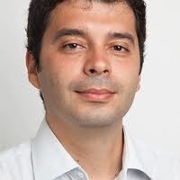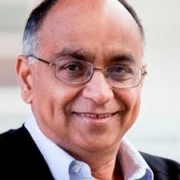
Savo Heleta & Mario Novelli
Higher Education in Conflict
Today we explore higher education in conflict. My guests are Savo Heleta and Mario Novelli. We focus our conversation on the new special issue of the journal Globalization, Societies and Education entitled: Supporting and learning from universities in times of conflict: towards resilience and resistance in higher education, which was co-edited by Helen Murray, Birgul Kutan, Samia Al-Botmeh, Savo Heleta, Sardar Saadi, and Mario Novelli.
Savo Heleta is a research associate with the Chair for critical studies in higher education transformation at Nelson Mandela University. Mario Novelli is professor in the political economy of education at the University of Sussex.
Will Brehm 1:38
Savo Heleta and Mario Novelli, welcome to Fresh Ed.
Savo Heleta 2:21
Thank you very much for having us.
Mario Novelli 2:23
Thanks, Will, for having us.
Will Brehm 2:24
So higher education and universities kind of seem like they are under attack in so many parts of the world today. You know, in many places, it’s not new that universities are sort of, quote unquote, under attack. So can you give me a sense of the scale and the scope of universities in conflict settings today?
Savo Heleta 2:43
This is a very important and a big question. And this has been happening for a very long time. I’m from the Balkans region. I’m from Bosnia. And, you know, we can go back to, you know, the collapse of the Soviet Union and the wars from the Balkans to Somalia, Sudan, around the world, up until currently what’s happening in the Gulf and in Iran. And all in between, we have had many conflicts where people and the countries pay huge prices. And in all that, we also see sometimes deliberate attacks on higher education, on institutions, on scholars and students and administrators, and sometimes just being, you know, collateral damage in a wider conflict, seeing destruction and killings and displacement. And I think we always had these experiences. But of the past few decades, I think we have started to record it, to pay attention, to pay more attention. It’s still not enough. And this is what our special issue is highlighting, that, you know, with all this that is happening with scholarship, with engaging with scholars and writing about this and studying this, we have to do a lot more. And we have to also especially pay attention to the areas of the world that are not engaged enough through scholarly engagements. You know, we’re not hearing enough from the scholars who are displaced and attacked. And so we have to do a lot more.
Will Brehm 4:17
I mean, you bring up Iran and that, you know, that is happening as we are speaking. It’s only a few days old since the US attacked Iran or Israel and the US attacked Iran. And then it seems to have be spreading across the Gulf region, as you as you mentioned, Savo. I mean, Mario, what do we know about universities in Iran at this moment? Like, I know, it’s sort of the fog of war and hard to know what’s happening. But do we have any sense of what’s going on with universities now?
Mario Novelli 4:43
We don’t. But it makes me think about the political and strategic nature of conflict and the way that states, governments target universities for particular reasons at particular times. So I don’t know who is organizing the targets that are being attacked in Iran. I haven’t heard about universities being attacked to date, but the first day of the attacks, a girls school was attacked. One hundred and sixty five people were killed. The US and Israel says that it doesn’t target schools. We know that schools and universities were systematically targeted over the last two years in Gaza. So I believe that was a deliberate target to instill fear amongst the population. One of the greatest ironies for me is that on Monday, Melania Trump chaired a special session of the Security Council on children and conflict and mourned the death of soldiers, US soldiers. And never mentioned the hundred and sixty five children that were killed by US and Israeli bombs. And for me, that says a lot about the hypocrisy of the times that we live in, where international law is being violated by a genocidal Israeli state and its US ally. And we are all walking around listening to arguments around the aggressive nature of the Iranian state. You know, it’s the this is the emperor’s new clothes. People are telling us that this is normal. I feel so ashamed at the moment, listening to my own government’s discussions around this and wondering how can we break through? And I guess that gets at the heart. What is a university? A university should be the conscience of our society. It should be speaking back in these moments. And I don’t know whether we are up to that, but I certainly think that’s where we should begin this discussion.
Will Brehm 6:25
Seems like there’s universities where there are sort of active conflicts taking place. And then there’s all sorts of questions that come up about how do you continue delivering what a university does during those moments? What’s what’s appropriate? What’s right? How do you work through unstable conflict emergency settings to like have a lecture? Like, what does that actually mean? And then there’s the other side that I think, Mario, you’re also bringing up is, you know, what does it mean for countries that, you know, aren’t in active conflict but are implicated in these global conflicts? And what’s the role and responsibility of a university in that setting? And it seems like there might be separate but overlapping issues to discuss. So maybe Sava, like, how do you begin to think through how we should start thinking about a university when we then think about conflict and emergency settings?
Savo Heleta 7:12
We can think of the university in a conflict setting, in an open conflict setting. We can think, you know, Gaza, Sudan, I mean, even broader in Palestine, you know, over many decades of occupation, a university existing and resisting and trying to educate its population, preserve its existence, societal existence and history and culture and all that. And particularly what we have seen in Gaza, you know, when it comes to deliberate attacks, it’s that importance of the university for Palestinian people and Palestinian future that came under attack. Because it’s, you know, sometimes in higher education, we hear these very defeatist kind of arguments about, you know, university, whether it is important or not. And, you know, the knowledge and all that. But I think the Palestinian example is a prime example of the importance of the university, because those who don’t want to see Palestinian existence are not just killing the people, but killing the university, because they see its importance and its powerful role in society. And because of that, I think we, on the outside, in higher education, if we care at all for the university, for the values that, you know, they plastered all over the, like, if we go anywhere in the world, we talk, you know, we can see critical thinking, knowledge, importance, all the different things, global learning, global citizenship, all these different things. If we care about any of that, we have to stand with people and the colleagues and the students and the institutions in Gaza, in Sudan, all around the world, to be there, to listen, to learn, to help, to engage, to even figure out wherever else in the world we are, how, you know, things might happen and come our way as well.
Mario Novelli 8:59
I think the experience of art for us over the last two and a half years, so we had an initial conference in the summer of 2023, bringing together scholars from around the world. Sava was one of the keynote speakers, Sardar Sadi, our Kurdish colleague, and Samyal Bodme from Birzeit University. And we had scholars from a range of different countries. And I think the process has been an educational process for us as editors, to understand the variety of conflicts, the different ways that higher education intersects with conflict. And we’ve carried that journey through over a process of two years, exactly what Sava is talking about, a process where we did internal peer review before we submitted to the journal, to work with colleagues, to listen to them, to support them, to provide feedback. In a sense, the whole process was a process of solidarity and the process of mutual learning. So we entered into it as a kind of, in a sense, a kind of, of course, we wanted an intellectual product to the end of it. But it was also a journey for us to get a better sense of listening to voices from around the world and trying to understand that. And I think one of the things that we understand from that process is the kind of historical ebbs and flows of this kind of history. Sometimes universities are in the eye of the storm, sometimes not. Sometimes universities are sites of repression and resistance. Sometimes they are objects of repression and control and also the geographical ebbs and flows. And I think we’re in the period where the spread of conflict has increased. And, you know, early in the year, I visited the US and did some talks around scholasticide in Gaza and what was happening, including in universities. And what was surprising for me was the militarization of some US campuses now, restricting students from entering because of fear of protests, students being arrested and deported. So we have from a kind of a US side, we have these and of course, conflicts have broken out in many parts of the world where often the university is a central site of contestation as the site of reproduction of new cadres, the site of students with their minds in the future and living in a world where those futures seem very vague, lack of opportunities, an increasingly unequal world. So in a sense, I think part of the reason that the university is in the eye of the storm now is that it is a center of the reproduction of elites. It is a center of contestation and many different social forces are fighting over that at the moment. And I think that’s why part of the discussion that emerges also in our special issue is around the kind of nature, the complex nature and shape of some of those processes.
Will Brehm 11:29
Yeah, I mean, I like how you brought it into processes and flows, because I mean, I would imagine every conflict is kind of unique in many ways, right? It’s probably really hard to make these direct comparisons between, you know, what’s going on in, you know, Sudan or what’s going on in Ukraine, what’s going on in Gaza, what’s going on in Iran, and then also what’s going on, say, in a place like the U.S. where it’s so militarized and, you know, ice is breaking onto campuses and clearly in conflict in its own way. But then looking sort of more at these ebbs and flows over time and, you know, how processes sort of take shape, I think it’s a really productive way. Mario, when you were sort of talking, I wondered if, you know, this current moment, is this kind of like still a post 9-11 moment that we’re living in when it comes to universities?
Mario Novelli 12:13
I mean, I think this is the end of that phase and the beginning of a new phase. And, you know, I wouldn’t just focus on post 9-11 realities, I would say, post neoliberal, post 9-11 realities, we’re involved in a seismic shift in geopolitical relations, the rules of the global economy, and the rules of the international order are shifting and changing. And the university is caught in the middle of that. So it’s a period where we don’t know what is coming. But we can see that things have shifted under our feet. And the question is, is trying to work out what’s going now. And I always go back to this Emmanuel Arrigo’s book on Adam Smith in Beijing, she wrote 20 years ago, but which said that the U.S., you know, is a declining empire. But the one thing that it remains to have is its military prowess, its military advantage. And the danger is that all empires don’t go without a fight. And I think that’s what we’re witnessing at the moment is the excessive use of military force as a counterbalance to having lost the cultural, political, social and economic battles that hegemony is normally produced by. Why the university is in the eye of the storm, I think is a complex one. I’m not 100% sure. I have a sense like in the West, that a lot of social forces that managed to defeat the kind of progressive movements in 1968, the 1968 revolutions, as we call them, in a sense, they won the economic battle, but they didn’t win the cultural battle. And I think the cultural battle is there. So there’s a lot of culture wars going on in the West around control of the curriculum. If you look at, you know, new laws that have been passed in Florida in the last few weeks about the teaching of sociology, it can tell you a lot about why the U.S. takes so seriously curriculum and issues of education. So there is that. But then, of course, in different parts of the world, the battle is around incarceration of multiple academics in Turkey, in India. We have two pieces around that in the special issue, students and the role of students in social movements. So lots of things going on at the moment, which I think is part of that transition that we’re going through, which, you know, we don’t know which way it will go. Do we? I mean, we’re sitting here in the day three of a conflict and we really have no idea which way it will go.
Savo Heleta 14:29
And I think for me, it’s been very interesting to see and also to engage with colleagues, particularly in the U.S. Is the Mario mentioned the post neoliberal world and higher education’s place in it. I’m not quite sure we are in the post neoliberal world, but the way that neoliberalism has shaped higher education around the world and particularly in the Western world, for example, in countries like Britain and the United States, where higher education has played a key role in those countries kind of expanding their soft power around the world. But ideologically, it’s been under attack, getting rid of the public good aspects of higher education. It’s all about individualism. It’s all about neoliberalism, capitalism and ideas that underfund higher education because of ideological reasons. And, you know, we see this attack. It’s been happening for a number of years now, but, you know, it’s intensifying. And one thing that I’ve noted and I’ve spoken about this last year at a conference in the U.S. where a lot of colleagues in the U.S., for example, are so limited in terms of how they see what’s happening to them. And they’re not you know, they don’t it’s this exceptionalism where, you know, of course, you’re not going to compare yourself to poor countries. But I told them to understand what this attack on higher education in the United States is going to do long term. You should look at the attack on higher education during World Bank and IMF and U.S. imposed structural adjustment programs since the 1980s that decimated higher education in most of African countries. To this day, the effects are so bad. And, you know, it was kind of like I could see people, you know, being taken aback because like, how do you compare us to those poor countries? But I’m not I mean, why not? Number one. And number two, look at the processes, look at the impacts. Look at once you, you know, and I think there’s a lot of short term thinking on the impacts of these attacks, various kinds of attacks, ideological and all that. It’s all about, oh, what is it going to do in the next semester? Student numbers. What is this going to do over the next two, three decades? And I think we need to do both. But we need to really pay attention to long term impact of these different kinds of attacks on higher education.
Will Brehm 16:51
Can you give specifics on sort of when you say an attack on higher education, what are the things that are that are changing, that are collapsing, that are causing the sort of the public goodness of higher education to sort of disappear, as you were saying, and moving like what are those things that are so essential to higher education?
Savo Heleta 17:10
I think for many years, but I mean, I’ve been working in international higher education for a number of years. And I think higher education has been a very good business for many years, for many parts of the world. You know, it’s about the product and exporting the neoliberal idea of higher education. You know, it’s about students as customers. We’re selling products, you know, it’s about the costs and who can go, who can attend the university. It’s about elitism, all kinds of other things. And I think to some extent, there are people who see this as a problem. But when you have the populism and fascism and, you know, authoritarianism that starts to see this as a problem and attacks, not just the profit making in higher education, but higher education as an idea, as you know, the knowledge and, you know, the education and I mean, Mario mentioned earlier, you know, then you start banning books and banning ideas. And, you know, punishing people and, you know, forcing people out. And I mean, what we see over the past number of months, you know, that you can do research in the U.S. on issues around gender equality, diversity, decolonization, even climate issues. And so, yeah, all this is enormous. It’s impacting what we do, how we do it, with whom we collaborate, on what we collaborate. And I think our place and our role, if we are critical, if we are progressive, if we are really invested in higher education and knowledge, you know, for this public or global good, whatever, however you want to define it, is to really not give up on thinking. Engaging, writing, and working with people across the different settings to understand our situations and other people’s situations and our global situations.
Will Brehm 18:55
How have, like, you know, since this special issue brought together so many different people writing about higher education and conflict, many of those people probably have experienced it firsthand. How are academics sort of carrying on, like, navigating this complexity of higher education under threat, either externally by, you know, literally bombs, but also politically by certain governments that are sort of imposing certain ideologies and narratives of, you know, what can and can’t be taught. But also institutionally themselves, some universities are acting like businesses and making decisions that are, you know, that quote unquote neoliberal university and creating sort of governance structures that undermine the very heart of what public university is. So, like, in your experiences, and maybe I’ll start with Mario, like the people you’ve been working with, how are academics sort of navigating such a contested space where conflict seems so multi-layered?
Mario Novelli 19:48
Okay, I think, you know, those kind of questions, they force you to go to familiar places where you have some in-depth knowledge. And so I’ll try to answer that concisely with a reference to Colombia. A couple of decades ago, I led a student delegation from the UK to Colombia, and we traveled to different universities across the country in the midst of a civil conflict, very violent civil war with massive displacement and where universities were in the eye of the storm. And when we arrived in Cali, in Colombia, Colombia’s second biggest city, we were on the Universidad del Valle campus and there was a protest. The protest was around a free trade agreement that Colombian government had signed or was proposing to sign in the midst of a university, public universities that had been starved of funds due to austerity, structural adjustment programs where they were laying off staff. And so that was the kind of contest. So you’ve got kind of global free trade agreements and protests around the deleterious effects of that. The university, the public university under threat, jobs under threat, futures under threat. And the ESMAD, which was the military police, came onto the campus to attack the police, to attack the students. Sorry. And in the process of attacking the students, they shot and killed Johnny Silva, a young student. We were on the campus at the time. And that experience allowed me to understand the dynamics of attacks on higher education that, you know, it’s not just about police violence. It’s also about student resistance. There is a kind of dynamic. So you have to precisely, as Savos said, you have to understand the underlying causes because stopping the violence, if you don’t stop the underlying drivers, is a process of pacification. It’s not a process of justice. It’s not a process of social justice. So sometimes human rights organizations just want to focus on the effects, stopping of the killing, stopping. Of course, I support that. But you also have to understand the dynamics that are driving the resistance that leads to that repression. And I think, you know, the Columbia example captures in that. And we have several articles about Columbia in the special issue that kind of show different dimensions of that process in the universities of living through a civil conflict, learning about that. Academics working to build post-conflict realities, different post-conflict realities, bringing communities together, interventions, intercultural interventions to try to bring communities together. So there’s been a process of learning inside the university to address those. But there have also been processes of learning in the trade union movement, in the student movement to resist some of those changes. So it’s both a civil conflict, but an economic conflict, a social conflict. And in a sense, the university, as we used to say in the sociology of education, is a microcosm of society. No, it captures many of those. And I think particularly the public university, because it brings those together.
Will Brehm 22:53
What about you, Savo? Like in your experiences or the people you’ve worked with, like how are they navigating higher education in conflict?
Savo Heleta 23:01
Mario has used an example from Columbia. I’m going to use the example from South Africa. So I’ve been in South African higher education for almost one and a half decades. And I was a master’s student, a PhD student, and I worked in South African higher education. I would say my life-defining and intellectually-defining moment was 2015, 2016. Roads must fall and fees must fall. Sweden protests in South Africa. And that was so important because I have a lot of issues with my own educational experience in South Africa. With, you know, whiteness, racism, Eurocentricity and everything else. But I couldn’t theorize, I couldn’t define it. You know, I thought it was my own, you know, kind of like issues that I could see. And it was only when the students started organizing and mobilizing and theorizing and, you know, challenging the university as an institution, a Eurocentric institution in South Africa, that I realized, you know, I wasn’t just losing my mind on my own, that there were many more people that were thinking about this. At that time, I was working for a university and I had very good contacts with students because they were some of my former students. And it was very interesting to see, to experience all that, to live through all that. As somebody working at a university, wanting to engage with students and then being seen by the university administration as a problem because I am talking to the students, I am engaging to the students. You know, seeing students labeled by the university as problems, as hooligans. And I just wanted to go out and ask them, what is this all about? You know, what are you, you know, what are you trying to do? What are your goals? You know, who are you reading? You know, tell me, what is this decolonial thinking? Tell me who I should also read to try and make sense of what is happening. At a time at this institution where I was working, I almost lost my job for doing that, for trying to engage with our students. And I think that gives you a lot. And then seeing the violence against the students, violence by the students, then working with the students to make sense of all this, writing with the students about all this. It really changed my way of looking at the institutions, added a lot more critical questions that I need to ask of the processes, histories. And as Mario said, it’s not just about that moment, that protest. We got to go back and forth and make sense of experiences, processes, epistemic violence, all kinds of other things and neoliberalism and, you know, underfunding of higher education. And if you underfund higher education in a society defined by racism in South Africa, that means that it is going to be Black students who are going to be affected the most. And what are we then doing? Like, what is the point of all this? And so for me, being in all part of all that and seeing the student activism and the important critical questions that students were asking that were not being asked by the academics and administrators and university leaders. And then, you know, seeing also the reactions of institutions to people like me who were saying, you know, but we need to talk to our students. We need to listen to them, you know, and being seen as a problem for saying that. And then today having, you know, what the students were advocating as a buzzword that is kind of not going any way, but became popular. And we have a paper in the special issue that touches on some of these issues, specifically looking at South Africa. So as Mario used an example from Columbia, you know, I think for me, you know, seeing that. And then, you know, I can see the same way of universities responding to legitimate student activism when we look at what is happening to student activism against the genocide in Gaza and it’s cholestaside. And I mean, not just in the US, but in the UK, you know, across the world. And, you know, we have these institutions that keep saying that, you know, we are here. We’re in the business of developing critical thinkers. But, you know, some of the critical questions are too difficult and they need to shut up because, you know, we’re not going to go there. And so I think these cross-sectional issues and cross-country experiences that are often very similar really are telling us that, you know, there’s so much we need to understand and we can learn from people in the midst of these situations. And yeah, so I think what we tried to do with this special issue was to create a space to understand, learn, engage, and try to make sense and also highlight how much more we need to know. And, you know, capture the rich knowledge of people living through those processes.
Mario Novelli 26:40
And I think, you know, for me, that was so much of the field of international higher education is written and narrated by people in the Global North. So it’s so important to provide spaces for scholars in the Global South living through these conflicts who have lived and feel and experience and think and theorize those processes. And I think that is precisely this whole discussion around the importance of a kind of plural ideas, plural knowledges, thinking a way of understanding society, which I think is so important, so very important at the moment. And you can really see it in terms of the way the authors of these different articles in this special issue.
Will Brehm 27:16
And it sounds like the way you’ve brought them together over many years and you work together. There was this sort of network and community that got created where it wasn’t just sort of like my own experience and then that’s it. It’s my own experience in conversation with someone else’s own experience. And then that sort of generative dynamic creates the theory, I would imagine. And so I guess, you know, that’s on the sort of individual scholar level. You know, when it comes to universities in conflict and higher education in conflict, how do universities connect? Do we see a similar sort of network and community that’s getting created and, you know, supporting different universities around the world that might be in conflict? You know, to put it another way, should we expect some university to sort of reach out to the University of Tehran and say, you know, we’re here to help and we’re here to support you through this moment? Is that a common thing that you see?
Mario Novelli 28:08
I think we have to recognize there is a political economy of higher education support that reflects the uneven nature and power relations within the global economy. So, you know, some conflicts are picked up, some are ignored. We could contrast Western responses to the conflict in Ukraine in terms of higher education support and the infrastructure of solidarity that was created, genocide, scholasticide in Gaza, very different. But equally, the solidarity processes in the Palestinian conflict were much greater than, for example, to support the Kurds in Rojava and other higher education processes. So our own solidarity processes are uneven. Yes, I think we should be contacting Tehran universities and building academic links, student links. If ever there was a moment for people in civil society to step up, it’s now when our leaders are such a disgrace that we really need to step those processes up and to develop our connections and then how those processes happen. I mean, we have international scholarships. We’ve seen examples of those things. Also, institutional support. I, in the midst of a process of partnering with Birzeit University, University of Sussex, we’re trying to work on the co-accreditation of university degrees because the Israeli government has just disaccredited Palestinian universities. So their certification is no longer valid inside Israel, where many Palestinian graduates work in East Jerusalem and need the qualification. So we’re working now with Birzeit University to try to address that with the Faculty of Education. These are small scale, but they create relationships, which I think are important. We’re doing these on really shoestring budgets. But I think that all those processes are important. There are other processes going on, I know, through networks that I’m involved in, of working with scholars in Gaza, working with students, supporting institutions. So there are a whole range, I think, of important processes that we could be involved in. And of course, the literature critiquing different forms of solidarity and how that happens and unequal power relations and all those things are also important to reflect upon.
Savo Heleta 30:07
During my keynote in Sussex that initiated this process and then in my keynote paper, I spoke about and then I wrote also about the politics of political economy and inequality in the solidarities, you know, reflecting one side, Ukraine, and on the other side, places like Sudan, Gaza. And, you know, I remember at that time, it was in the middle of 2023, you know, I spoke to and there were colleagues from Ukraine, some university leaders from Ukraine at the conference in Sussex. And I said, look, I mean, it’s not your fault that all these European countries, you know, countries and funders and institutions are coming to, you know, help you while ignoring all the others. It’s them, it’s their fault. And so we see that and we see more and more of that. We see all these opportunities for some people and often because they look, look white. I mean, we were literally told during the Ukrainian conflict by, you know, Western media that, you know, these people look like us. You know, they need our support and all these others, you know, can just disappear, basically. So there’s that. And I think as long as, you know, if we’re not only critical of this and engaging critically on this, you know, we kind of allow it to happen. So we have a responsibility in international education or higher education in general. We have a responsibility to critique and question. And on the other side, I think, you know, there’s also this, Mario also mentioned the politics of our solidarity where, you know, we all focus on one issue and ignore many others. And I think, you know, sometimes people say, well, I, you know, we can’t do, you know, all these things. No, we can do a number of things. And I think we have a responsibility. If we don’t do it in higher education, where are we going to do it? Where are we going to be critical, open, engaging? So I think there’s a lot of responsibility. And I think, you know, if we’re not there now, you know, in the midst of these massive crisis, then don’t show up ever. You know, don’t be there ever. And I think, you know, we have all these morals, values, and things that we talk about, you know, the partnerships and, you know, the equitable partnerships, this and that. And often, I’ll try to finish with one last example, again, from South Africa, where, you know, I’ve seen some South African institutions not wanting to say anything about scholasticide in Gaza over the past two and a bit years, because they worry that they’re going not be going to be able to get German funding, British funding, US funding, because if you say something against scholasticide, or you say that, you know, you, you know, this is, you know, this is unacceptable and shocking, you know, that the Germans and the Americans are not going to give you funding. And if that’s how we think about global collaboration and partnerships in higher education, then we better close the shop. So I think there’s so much more we need to do. And if we see our leaders as scholars acting that way, we got to speak out. We just really have to speak up.
Mario Novelli 32:58
I’m listening to Savo, it makes me think that this is a moment for solidarity, but it’s also a moment for dignity, that sometimes we have to make sacrifices to move things forward. It’s not a time to be silent.
Will Brehm 33:11
Well, Savo Haleta and Mario Novelli. Thank you so much for joining FreshEd.
Savo Heleta 33:15
Thanks a lot.
Mario Novelli 33:16
Thank you very much.
Want to help translate this show? Please contact info@freshedpodcast.com
Guest Publications/Projects
Not My Turn to Die: Memoirs of a Broken Childhood in Bosnia – Savo Heleta (AMACOM, 2008)
Mentioned Resources
Birzeit University (Palestine)
Adam Smith in Beijing: Lineages of the Twenty-First Century – Giovanni Arrighi (Verso, 2007)
#RhodesMustFall Movement (South Africa, 2015)
#FeesMustFall Movement (South Africa, 2015–2016)
Universidad del Valle, Cali, Colombia
Scholars Against the War on Palestine – Scholasticide Toolkit
Recommended
Scholasticide: Educational Lawfare as a Marker of the End of Civilianness
UN Experts Deeply Concerned Over ‘Scholasticide’ in Gaza (OHCHR, 2024)
Fees Must Fall: Student Revolt, Decolonisation, and Governance in South Africa – Susan Booysen
Have any useful resources related to this show? Please send them to info@freshedpodcast.com