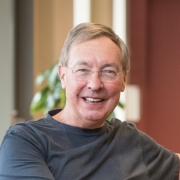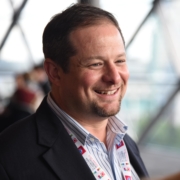
David Edwards
Supporting Teachers in Conflict
Today we explore some of the big issues teachers are facing around the world, particularly in conflict areas.
My guest is David Edwards, the general secretary of Education International, the global federation of teacher unions representing more than 33 million teachers. David is also a board member of FreshEd.
Will Brehm 0:48
David Edwards, welcome back to FreshEd.
David Edwards 1:02
Nice to be back, Will.
Will Brehm 1:03
On the International Day of Education, you and a delegation of union officials and representatives were trying to make your way into the West Bank in Palestine. Can you tell me what happened?
David Edwards 1:14
Sure. There’s sort of two different ways that you can get into the West Bank. You can come in through Tel Aviv, through Ben Gurion Airport, or you can come in through Amman and then come across the bridge, across the Jordan River, across the bridge, where you have about three to four different checkpoints you have to clear. For Palestinians, that’s the way you get in to the West Bank. And we had a delegation coming from all over the world, and so we decided we would meet in Amman. And actually, the General Secretary of the Palestinian Union of Teachers came and met us because we were going to also be hosted by the Ministry of Education, see some universities, the mayor of Ramallah, a number of different folks. So we had a bunch of people waiting for us in Jericho just across the other side.
And so I’d done it about four different times, I guess, over this past year. I wasn’t really thinking about it, but I was realizing that there was a possibility that we might not get in. And I told the delegation that we might not get in. When we were on the bus, I told them that I had a Plan B, which was not nearly as good as the Plan A. It had a lot of Zoom connections attached to it.
But anyway, so we all met. We met in Amman, got on the bus, went through the whole first checkpoint. The Jordanians got through, no problem, fine there. Went across to what’s called the Allenby Bridge checkpoint, which is where you come into Israel. And there’s sort of a tourist line and like a VIP line. And we just kind of got in the regular sort of tourist line. And we were going through, and I had had sort of everybody with me, and I was kind of in the front. And Saeed, who was the general secretary, he goes through all the time. And he was going through and said, everything’s looking good. He got cleared. He went through.
I went up, explained. I had the invitation letter where we were doing. I said, we’re coming. We’ve been supporting professional development program, a teacher course. And we have about a number of people that are graduating from it. I have people with me who’ve been supporting the course, distance education, social-emotional learning, trauma-informed pedagogy. And they want to be able to see it. They want to be able to be there with the Palestinian teachers that we’re working with, with our members. We’re Education International.
And I realized one of the delegates, a member of the delegation, had gone to the guard just to my right. So they weren’t in my line. And I could just hear out of the corner of my ear, “you’re British. Are you a member of the Labour Party?” And I kind of quickly looked over, and it was someone from a member organization, the UCU, the Higher Education Union in the UK. And I was trying to get her to come back. And then the guy at the kind of said, “I need all the passports.” Oh, come on, we’re just we’re going to go. It’s fine. I’ve done this before. We’re going to go. And he said something to me that just sort of gave me a little bit of pause. And he said, “I don’t believe you’re here for the teachers of Palestine. I think you’re up to something much more nefarious.”
“No, here’s my friend just went through. You can talk to him, have a seat.” And then about a couple hours passed. Yeah, about two hours passed. And then they called up the first. They wanted the Brits first. And I was thinking about is this about countries recognizing Palestine because UK, right, Australia. And then they called up the head of the president, the South African Teachers Union, SATU. I think, OK, South Africa. Oh, boy. And I could see they all were on their phones. They were opening up their WhatsApp chats. They were showing probably statements on their websites of probably things that they were saying around. I don’t know about the high death rate, death toll, children, schools being destroyed. So it was just going like that.
And then a couple more hours passed. And then finally they called me up.
Will Brehm 5:22
And what happened?
David Edwards 5:23
Oh, it was an interesting question for me to be asked. The first one, which was name all the countries you’ve been to in the last five years.
Will Brehm 5:30
I guess for listeners, you have to understand what David’s role is as general secretary of Education International. So, like, can you even name the last, you know, 10 countries you’ve been in?
David Edwards 5:39
No, but I basically just thought, well, I’ve probably been many over five. And so I started going through and I started in Latin America and kind of working my way up and then across and over. And I was trying to think, was that in five years? And then started in Africa and I was moving up. “No, just the Middle East.” The guy sort of barked at me, “just the Middle East.” I said, oh, the Middle East. OK, well, obviously here. And then he said “Iraq. You were in Iraq.” I said, yes, I was with the Iraqi Teachers Union. They’re part of our GoPublic campaign. They just actually won a quite big, sizable wage increase, salary increase there. It’s a great organization, a lot of young women members. He said, “oh, what about Lebanon? You’ve been to Lebanon.” I said, yeah, Lebanese teachers, you know, they were on. They didn’t get paid for eight months. Are you aware of what happened during, you know, around COVID time?
And so they were just kind of going through all these things. He said, “why don’t you just admit it? Why don’t you just admit it? You’re trying to go to Gaza.” I said, go to Gaza? No, I’m I’m just “you’re supporting terrorists.” No, no, no. “I’ve already seen your colleagues have already told me you work with UNRWA.” And I said, I don’t work with UNRWA. My friend is, you know, the head of education at UNRWA. I think it’s quite awful what’s happening to UNRWA. Yeah, if you look me up, you’ll know that I’m not shy about my views in terms of the importance of UNRWA and the fact that their headquarters in East Jerusalem was just torn down.
Will Brehm 7:05
Well, what’s UNRWA for listeners who might not know?
David Edwards 7:08
That’s the United Nations Refugee Works Agency. And that’s the U.N. body that’s primarily responsible for the education, well-being of Palestinians, both within the West Bank, Gaza, and also in Jordan, Lebanon and outside.
Will Brehm 7:21
And why aren’t Israeli officials suspicious of?
David Edwards 7:24
Well, I have two theories on it. I mean, there’s this sort of, I guess, official is that on October 7th attacks, that somehow UNRWA was involved in the attacks. There was an investigation into that. There was a report. There were, out of the tens or hundreds of thousands of staff, I think there was some connection with one person or a couple people. But actually, the Israelis never provided UNRWA with the evidence that they had. And they also pointed out that they vetted all employees that work for UNRWA have to be vetted by the Israeli army.
But yeah, so UNRWA has been under a lot of pressure lately. And so they’re trying to find that if you had some sort of connection to UNRWA, which then might be grounds to not let you into Israel. Yeah, because they were saying that UNRWA is a terrorist organization. Basically, I think that there was some sort of bill that had been passed. I think within the last time I was there in this time, there was a law that was passed around NGOs in general, but mostly in Gaza, those who are operating in Gaza and having to pass through some vetting process or something. But we’re not an NGO that operates in Gaza or we are a federation of teachers unions internationally.
Will Brehm 8:32
And you were trying to get to the West Bank, not to Gaza.
David Edwards 8:35
Yeah, I wasn’t trying to get to Gaza, I was trying to get to the West Bank, trying to get to Ramallah. And I kept explaining where I was trying to go, because they kept saying, “where are you really trying to go?” And then the conversation really deteriorated, where they were kind of talking about “who cares about Palestinian teachers? Why do you care about Palestinian teachers?”
Will Brehm 8:53
And how do you respond to that?
David Edwards 8:54
Well, I said, I could ask you the question, why don’t you care about Palestinian teachers? Because obviously they’re working under incredibly difficult conditions, being paid just a couple of days a week. They’re being shot at on their way. They don’t have resources. They’re incredibly stressed because of the checkpoints and the new checkpoints. They could spend up to three to four hours just going one way to where the school is that they teach. So they’re losing their time. “I don’t believe you care. Who cares about Palestinian education? Who cares about these? Who cares about them?”
And then I could see that it was almost like I felt like I was having a conversation with someone who wasn’t talking about human beings and people with rights. And here I kept saying, but it’s the International Day of Education. We’re coming. It’s about the right to education. It’s about the right for every Israeli and Palestinian child to have an education of quality. It’s a very big day. And they’re going to be graduating. And we want to be with them. And it was quite frustrating. And then he disappeared for quite a long time.
Will Brehm 9:48
So are you sitting in a room like paint me a picture of the room you’re in?
David Edwards 9:53
So we’re all in one sort of like waiting area room with these sort of plastic chairs, I guess. In total, we were there about seven hours. And there were sort of, you know, little booths at the front that people kind of pass through. At this point, we’re there. Everybody else had already passed through, you know, all the tourists, all the, you know, all the pilgrims, everybody else, all the Palestinians. It was getting later and later in the day. And I was actually becoming concerned that the border was going to close behind us. And we weren’t going to be able to actually get out. So I started having a different set of concerns in my mind.
I was texting the Palestinian teachers. I was also texting just to let, you know, my Israeli teachers, you know, the Israeli Teachers Union know that I was there just in case. I was thinking, what if I have to stay? Who’s going to take them back? Got to figure out, like, let the hotel know. I’ve got to figure out if I can get a van. You’re trying to do all of this while sitting on these little plastic chairs and then being interrogated as to what your motive is to be in Israel and in Palestine.
So they pull you up from the chair. They take you over to a corner of the room where you can’t really see anybody. And they stand you in the corner. And then they interview you there.
Will Brehm 10:59
More than one person interviews you?
David Edwards 11:01
There are two people interviewing. I was making pretty good headway with the first one. The second one, not so much because he then went into my contacts and he put in, like, an area code for Iran. And, you know, certain things are happening in Iran right now. The teachers unions are quite involved. We’ve lost a lot of members have been killed, have been harmed. The executive board of the CCITTA, the Teachers Union of Iran, they were imprisoned. So, yes, conversations. They were looking up, you know, anybody and everybody on my and they were going to try to call people on my phone, make me call people. It was surreal. It was really surreal.
I was just looking back at everybody, everybody’s face and everybody. They’re just so solid. Everybody looks like I’ve been there. Nobody else has really been there very much, you know, had ever been there. Most the majority had never been. And so they were really looking forward to this.
Will Brehm 11:49
And so how does it end? You know, how does it end?
David Edwards 11:51
He finally we’re sitting there after my final one. And I turned everybody go. He was asking me about an interview I gave to a television program the last time I was there, which was World Teachers Day and back in October. And I said, I’m not feeling good about this. There were some Canadian parliamentarians that had been turned away a few weeks before. So we had been hearing about some that had been turned away.
And then they said they gave me a little piece of paper and they said, “you need to register with the military and with the new Ministry for Customs and Anti-Semitism if you’re going to operate in Gaza.” And I said, I’m not. We’re not an NGO, though. He said, “that’s it. This is over, though. You’ll have to arrange for a bus to take you back. You’re not coming in.”
Will Brehm 12:30
And so you had to go back out the way you came in, basically, and go back to Amman.
David Edwards 12:35
Right. Each step of the way, why we were at the sort of zero hour and, you know, why if they could just let us and this bus driver that we, you know, really appreciated, you know, convinced to take us back. The hotel received us and but it just took hours to get back. So it was it was late at night, you know, before we got back there on the other side.
Will Brehm 12:56
How are you feeling through the whole process? Like, it seems that it’s such a long time to be, you know, interrogated. I know I always feel a little bit nervous anytime I cross any border in, you know, you just feel like you are at the mercy of the border patrol, the people looking at your passport and you just sort of have to go with it to do it for eight hours to do it under sort of severe interrogation, having someone look at your phone. I mean, what was the emotional state you were in?
David Edwards 13:21
The feeling I was having and everyone was having was whether we think they seem to think they’re trying to silence us for some reason, because there’s something they don’t want us to see or talk about. But I don’t know if you’ve seen teacher trade unions angry before, but we’re quite good at not being at vocalizing our views and and projecting those and amplifying those. And so I was there’s an indignation. I know a lot of work had gone in to setting things up there. So, yeah, I was disappointed. I was angry. I felt a little embarrassed just because I brought people in and and maybe I should have thought that there was a better chance we weren’t going to get across.
But I just kept getting text messages from from my Palestinian friends, the members, the teachers who were just sending us these little voicemails like “this is what we live.” And I sent a message. I said, I said, “guys, we might be inconvenienced. Right. But this is what you live all the time. And, you know, this just further strengthens our resolve. And this experience actually will it’ll it’ll it’ll make us want to talk about it more. It’ll make us want to tell their story more. It’ll make us more.” And that’s what’s happened. I mean, since each and every one of them has spoken to their home media and their members and they become even more vocal about the experience.
Will Brehm 14:35
Do you have a new sense of empathy for some of those teacher union members around the world that are that are living these sort of conditions all the time?
David Edwards 14:44
Yeah. I mean, I always say I went from being a bit of a policy wonk into a bit of a more of a human rights defender and and much more deeper in terms of the individual stories and the lived reality of teachers all over the world. Most poorly paid all over the world, you know, in terms of status all over the world, feared by fascists, feared by authoritarians trying to be controlled their curriculum, their their professional space, you know, and all sorts of different ways who they can teach, what they can teach about.
And this fits. It fits with what I was what I’ve been seeing in other parts of the world. So it fits. But I guess the scale of it in terms of how many people have died. I mean, if you read there’s a really great report that that Pauline Rose and Yusuf Said did for Cambridge Real Center looking at the education situation in Palestine and Gaza right now, where they’re actually even estimating looking at the teachers who have lost limbs, what is going to cost for rehabilitation, what is going to cost their homes. Just the toll, the cumulative toll of all of that suffering weighs very heavily on me.
And yet, when you talk to them, there is so much hope and dignity and the ability to articulate their place in history. You know what they want their students to be able to know and do and learn. It’s it just doesn’t square. And so because of that, I always feel that I places, particularly Palestine, but in other places around the world, it can be Myanmar. It can be Sudan. It can be Yemen. It can be other places. Ukraine. I feel a real obligation to get their stories out.
Will Brehm 16:12
What’s striking to me is that it seems like on the one hand, education is positioned as being sort of a silver bullet to so many of the social and economic problems that different countries in the world faces. And NGOs and the UN. And, you know, it’s very hard to sort of disagree with that sentiment that education is a positive, good thing. And, you know, and then it’s sort of some people go down the world of like technical solutions of how do you make education better? And and it sort of seems very almost apolitical, like it’s above politics.
But then the experience that you had and sort of what you’ve been just saying is that there is actually this fear that some groups hold about education and and of teachers as if they’re the ones causing and contributing to sort of a really divisive politics. How do you make sense of that contradiction?
David Edwards 16:57
We take the long view in terms of our history. So during the Nazi occupation of Norway, Norwegian teachers refused to take the Nazi pledge and teach the Nazi curriculum. And everyone wore a little paperclip there. And they made that decision. They went to work camps as a result of it. That’s just part of our DNA.
And it’s it’s always going to be political when you’re going to be teaching about identity, when you’re going to be teaching histories, when you’re going to be arming people with the critical capacities to be able to make sense and compare what propaganda is being told and what facts look like. Or if there’s no age, the sense of no agency, you just need to accept this. Or if there’s a coercive type government that it’s trying to just sort of wipe out an entire language group. I’ve been in places where language is made illegal overnight, although all the children speak it.
Now, there’s no technical bullet to solve that. Right. I mean, that’s actually needs a political solution. You know, the situation now is very much there a lot around the curriculum and the politicization of the curriculum. And this notion of incitement and whether or not the Palestinian curriculum incites violence or is all these reports these donors are currently giving right now.
I was just listening to this, talking to some of my colleagues and the vice minister of education and the ministers just talking to them. And, you know, they’re trying to convince bureaucrats, you know, who are very far away, who are basically freezing funds and support for political reasons. And they’re saying that the curriculum is incites violence.
Will Brehm 18:28
So you’re referring to the EU freezing funds because because of the idea, this idea that the Palestinian curriculum is sort of educating students into accepting violence.
David Edwards 18:38
Well, yes. But the definition of that incitement, you know, there was the George Eckhart Institute is the one that UNESCO uses. And they do a lot of sort of curricular studies and IBE and others do that. And they found, I think, was like only seven percent of the entire curriculum. You could maybe characterize in that way. And even there, it was a bit of a question. And I was asking my question about, you know, for the Israeli curriculum. But I also am aware of scholars at Hebrew University and elsewhere that are also talking about the ways in which Palestinians are portrayed in Israeli. And, you know, and that’s not something that people have a whole hard time about sometimes somehow.
I mean, I think there are those that, you know, were the two state solutions and reconciliation someday on the table. I think that looking at both of those would be really important. But, you know, one of the examples in one of the reports called the Colony Report was basically showing that there were kids looking towards Jerusalem in an elementary school textbook. They were looking towards Jerusalem. Their eyes were looking through towards Jerusalem. And that was the incitement that was being pointed to.
Will Brehm 19:42
Correct.
David Edwards 19:43
And so if you’re a teacher or if you’re a parent and if you’re a student, you’re whoever. You know, I grew up learning about George Washington and Abraham Lincoln and, you know, all these things. And I mean, the first story we probably learned about General Custer was not the one we should have learned. The one that I hope young people, well, we’ll see what happens in the States, too. Right.
But, you know, these are contested topics and they’re contested because they’re political and because it’s what’s the state is power. And, you know, the resilience of a people to continue and to be able to imagine themselves continuing that there’s some hope, many of them in refugee camps with the Palestinians. They live in refugee camps and are thinking about returning to their their homes or their their grandparents’ homes.
I think particularly at a time where the Knesset is voting to annex the West Bank and limit the number of NGOs that can come in. And we see greater, greater number of settler attacks on teachers and schools. I mean, all these things that are happening, if you don’t have a Palestinian identity, if you don’t have a Palestinian state, if you don’t have an UNRWA, you don’t have all of these pieces. I think it fits a certain agenda that not all Israeli people. I mean, I would say the vast majority of Israeli people don’t follow this, don’t want, probably don’t even aren’t even aware that it’s happening like that. Maybe that’s part of the idea of keeping us out and keeping keeping teachers away from teachers.
Will Brehm 21:03
How does Education International going forward support the teachers in the West Bank, support the teachers even in Israel? Because I would presume that you’re not getting back into Israel or Palestine anytime soon.
David Edwards 21:16
No, it doesn’t look like it. We have two sort of regional structures. The Israelis are in the European regional structure. The Palestinians are in the what’s called the Arab cross regional structure. They both participate at the global level. We have, you know, women’s conferences and leadership work. We do pedagogical trainings. We do all sorts of things. We do stuff on environment. We do stuff on conflict. They’re all going to be taking part in those things.
But in terms of being with them in their homes, in their schools, in their context, helping them as they’re negotiating difficult. I mean, for the Israelis, the cost of the war and the defense spending on education has been profound. Right. And for the Palestinians, the amount of days that they can actually be paid to teach and what that does for. So we will continue to to connect online with them. We will continue to. I’m sure they will still travel out. They will still receive support.
I think the real struggle right now was that the fact that for the Palestinian teachers and actually all public servants in Palestine, that the Israeli government has not allowed the duties, the tax revenue that’s been generated to to actually flow into the PA. So it’s not just teachers. It’s all public employees. It’s nurses. It’s the police. It’s every there’s a there’s a collapse of of all of that. And I think that’s quite distressing because what do you have if you don’t have any public services at all? You don’t have any private opportunities. I mean, you have the Board of the Board of Peace, which I don’t know. We could do a whole episode on that and my probably my views on that. But I hope we don’t, because, you know, I think they’re already a little bored of peace, but it’s hard not to despair.
Will Brehm 22:49
It is. It is. And maybe in effort to try not to despair, to conclude here. So although you weren’t able to get into the West Bank and attend the graduation, did the graduation take place? And like what happened?
David Edwards 23:01
Yeah. So we have now a thousand women trainers who are training teachers in terms of distance education and using all sorts of different kinds of pedagogies all across Palestine. And actually, even some that are teaching kids that are in in Gaza. So they graduated. We connected with them. We congratulated them. We virtually bestowed their their diplomas to them. And we doubled down on our commitment to them and the next cohort and the cohort after that, that this doesn’t mean that we’ve given up. It’s even more so we’re going to be supporting even more. And we look forward to the day when we can be with them in person and congratulate them because they are, you know, they’re the absolute future.
I don’t despair. I’ve got hope, Will. And I can see change. I can see, you know, it’s one of those things where if you don’t experience it, it becomes just sort of this issue that’s on the news or something you read about. Or or maybe my more progressive lefty friends talk about a lot or there are protests and people kind of watch those protests and go, wow. But once you’ve seen it, once you have friends, once you’ve seen the scale and you’ve seen the humanity and the faces and the stories, it’s really not a left right issue. It’s a human dignity issue. It’s a human rights issue.
And I do think that more and more people are understanding that that’s what it’s all about. And our countries are recognizing Palestine’s right to exist. And I’m hopeful that this generation of teachers and the next generation of students connected with the students around the world, as we’ve seen, connected with the teachers around the world that we’ve seen, will continue to tell the story that brings us closer to justice and peace.
Will Brehm 24:33
Well, David Edwards, thank you so much for joining FreshEd again. Thank you for sharing your story and please keep up the good fight.
David Edwards 24:39
Thanks, Will. It’s always great to be with you.
Want to help translate this show? Please contact info@freshedpodcast.com
Education International’s Work in Palestine
Education International calls for renewed solidarity with educators and students in Palestine
Research on Education in Palestine
After more than two years of war, Palestinian children are hungry, denied education and ‘like the living dead’ – report (University of Cambridge, 2026)
Palestinian education ‘under attack’, leaving a generation close to losing hope, study warns (University of Cambridge, 2024)
UNRWA Education Programs
Education (UNRWA)
Education in emergencies (UNRWA)
Palestinian Curriculum
Report on Palestinian Textbooks (Georg Eckert Institute, 2021)
Going back to school on Palestinian textbooks (Middle East Institute, 2021)
Have any useful resources related to this show? Please send them to info@freshedpodcast.com