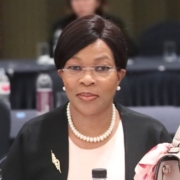
Stefania Giannini
UNESCO's Fight for the Right to Education
To kick off the year, Stefania Giannini joins me to talk about the past, present and future of international education. We discuss the challenges facing the rule-based international order and what that means for education. We unpack the global teacher shortage and the reality of some countries spending more on debt servicing than on education.
Stefania Giannini is the Assistant Director-General for Education at UNESCO and served as the Italian Minister of Education, Universities and Research between 2014 and 2016. We spoke just before the International Day of Education on January 24 and focused our conversation on UNESCO’s new report “The Right To Education: Past, Present, and Future Directions”.
Stefania Giannini 2:25
Thanks for having me.
Will Brehm 2:31
Recently, UNESCO launched a report entitled The Right to Education, Past, Present, and Future Directions. In the foreword that you wrote in that report, you make the observation that the right to education is at a pivotal moment. Why do you think it’s a pivotal moment now?
Stefania Giannini 2:42
I think that it’s a question of the timeline, the roadmap we are, you know, running through four years now to 2030. It’s a milestone moment to take stock of progress made when it comes to the right to education. And it’s a question of, let’s say, being aware and raising awareness for those who are not every single day as we are in this sector dedicated to education about the many challenges, the new challenges that education internationally faces. Let me start from the first point. We are in a pivotal moment as we need to acknowledge the significant progress made. You know, when UNESCO was established eight years ago, when the UN was established actually at the same time, let’s say less than 50% of children and youth in the world have never stepped foot in schools. So the right to education, which means the fundamental right to learn, we are born to learn, was not for all. If you look at the same data today, as we are talking, more than 90% in primary schools, let’s say 86% in secondary schools, all the while have this right to learn and to go to school. And this is an important achievement. This is an important progress made. But we also know that despite progress remains, you know, this progress remains too slow and uneven. And that’s where UNESCO data come in. 272 million still children out of school, the majority of them, more than half of them, of course, in the Global South, especially African countries. And another very scary point is the number of children forcibly displaced by war, by persecution, by natural disasters. And all these people are, of course, deprived of many, so many fundamental rights, health, social cohesion, the right of housing, everything we know as refugees, you know, people who are obliged to stay in conflict, in context of conflict, 120 million. That’s the figure I have in mind. But most importantly for us, they are deprived of their own right education. So that’s why we see a critical moment now to take stock of progress made to identify challenges and to collectively take action to make the right education really for all.
Will Brehm 5:27
It’s good to recognize that history. And we will get into some of the issues facing education going forward that you highlight in this report. But I think what’s interesting about this idea of this pivotal moment is that it’s also happening at the same time that a lot of these institutions like the UN, like UNESCO, seem to be under a lot of constraint from, you know, let’s say, new types of domestic politics that are sort of, you know, country first rather than international collaboration multilateral, which is in a sense the pillars of what UNESCO was founded on. So, you know, I’d love to know, like, in your day to day, do you see things changing in UNESCO? Like, has your work changed in the last few years because of this sort of rise of, say, nationalism that is undermining some of the work, the exceptional work, as you’ve highlighted, that UNESCO has done for the last 80 years?
Stefania Giannini 6:24
Good question. Listen, values stay, okay? Principles stay. All the things we are here about for not only education, which is important, it’s kind of glue across our mandate, but also the need to promote and protect the culture as a basic fundamental right. The need to, let’s say, raise awareness in society at large of the importance of science and how much is important, to what extent is important to address the many challenges from climate change to, you know, pandemic when COVID happened, to make decisions, science, database, all of these issues stay. No risk that the UN, UNESCO, and all people who are working for people, that’s the point, people working for the best, for people, give up, okay? Then why I do agree with you, unfortunately, that we see an unprecedented crisis of multilateral system, and it’s a crisis of trust. You know, trust is a key point. Trust is important for economy and trade. Trust is important for politics, the relationship between elected leadership and electors in democracy, and whatever the institutional architecture, those who are in power and those who are, let’s say, requested to support the power. Trust is important for love. Trust is important for our daily life, right? And there is a big, huge crisis of trust. That’s why, you know, the language of power, the language of strength, the language of force, I’m sure you have in mind, as I have in mind, some recent quotation, is a kind of becoming more popular than it was a few years ago. And I think that this is mirroring another important change, which is, quoting from Pope Leo’s recent statement, war is back in vogue. War is back, the reality in so many countries, 60 active conflicts worldwide now, you know, impacting, affecting people’s lives, and from Gaza to Sudan, from Ukraine to the Middle East, and many other, let’s say, less well-known conflicts and wars. And this is a new normal, unfortunately, or the risk is that it’s becoming, we get used to that. And that’s where the role of an agency like a national platform like UNESCO is about. So bringing together people to see, to stand, and to find solutions. Now these are the three tasks that we have. See the situation as it is, bringing data, that’s why we publish regularly reports on the state of the art of education, on the state of the art of science, culture, and so on. Stand and not giving up when it comes to reaffirming the values and the principles we are for. And last but not least, giving solution, having, you know, concrete tools. Let me mention one concrete point. We saw last year through another global report on teachers and the teaching profession that there is a gap, a shortage globally of some 44 million teachers to reach goal number four within 2030 agenda, quality inclusive education for all, right? And it’s a huge gap. Can you imagine governments in the world finding financial resources for hiring, recruiting, training, qualified, motivated teachers? And that’s what we can do. And that’s where we mobilized the international community last year. Big important milestone event in Santiago de Chile, the very first world summit for teachers, of teachers. Teachers were very much in the driving seat in this process. And now we have a declaration, we have a, you know, a roadmap that we call the Santiago Consensus. And you can find there concrete measures about the financial part of the problem, the, let’s say, quality of teaching, how we can improve, and so on and so forth. So this package, unique expertise that the multilateral system can bring to society is more than ever important. But of course, you are aware that it’s not, it’s another world. It’s not a transition. It’s another world.
Will Brehm 11:05
Yes, totally, totally another world. And maybe we can dig into that global teacher shortage, because in that report, it’s quite amazing to read about 44 million teachers shortage. It’s kind of hard to even conceptualize what 44 million teachers actually is. And what’s interesting is, you know, since this report is around the right to education and sort of the legal frameworks, the international legal frameworks that we can use, what was interesting is that the report sort of talks about the ILO and UNESCO’s, the legal frameworks that they do have.
Stefania Giannini 11:35
Yeah, the two recommendations, 1997 and 1967, which is the very first, yeah.
Will Brehm 11:43
Exactly. Like they were so long ago. And so, you know, it’s sort of like, you know, how can international law catch up to the teaching profession, which has changed so dramatically from the 1960s?
Stefania Giannini 11:54
First of all, we have to understand what you’re talking about when you say that there is a teaching crisis. No, we talk very much about the learning crisis, which is another important side of the coin. But the teaching crisis is a little bit less in the radar, you know, media and attention also from educators and people who are like I am in education my life long. And I think it’s, first of all, a big challenge to make again teaching an attractive profession. So it’s a challenge of recruitment. It’s a challenge of retention. And it’s a challenge of status and working conditions of teachers. So the need that we see, it’s a need of, let’s say, improving all these different dimensions. So salaries, of course, training, giving the teachers the right tools to be comfortable in a classroom that is, as you rightly said, reminded us, it’s not that the classroom we had a few years ago because of technology coming and disruptively becoming the elephant in the room, so to say, especially AI, of course. But once again, it’s a question of updating the mission of teachers. Right. And AI, for sure, is the main topic. I was in London a few days ago attending this global AI summit convened by the British government. And interesting data were presented there. And we see that, let’s say, 75 percent now of countries are dealing with their own AI national policies, especially focusing on teachers and how teaching should be part of this action plan, which means concrete terms, which means the skills teachers need, as all of us, as all citizens, to better understand how technology works and to use technology for their own support in their own profession and not being scared by a potential future replacement by AI of the teacher in the classroom. At least this is not our belief, our vision. And the second point is very much about giving the right normative frameworks to redefine what being a teacher today means. And that’s where these two important normative instruments, international, the only two we have, you know, international frameworks, which conceptualize the teaching profession, you know, 50 years ago, more than 50 years ago, the first and recently, more recently, but still in the last century, 1997, the ILO-UNESCO is emphasizing dimensions of the professional status that are not updated. And then and that’s why we started, I mentioned that there was a summit on teachers last year in Santiago, this process that will get to a revision, a complete revision of these two normative instruments. And this is important for governments, for teachers unions. They are very much on our side, they’re very much, you know, co-creators, let’s say, of these instruments to contribute.
Will Brehm 15:26
When it comes to something like AI, because it’s such a fast moving space. And, you know, the report does take a pretty cautious approach. And I actually really appreciated the way certain ideas were worded and AI ethics really came up. And I wonder, you know, as a multilateral institution that has a lot, you know, member states, of course, but at many of these different summits, there’s non-state actors that come as well, because they are hugely important in education, as well as in other sectors. Like, how are you dealing with AI companies? Like, are they being invited to summits? Like, should they be invited to summits? It’s such a big, fast moving space. And these AI companies are now clearly some of the largest companies in the world. They are changing life and work and society and education. How do you think about including them going forward?
Stefania Giannini 16:16
Without a new unprecedented alliance between the private sector, particularly, as you mentioned, high-tech companies, I would say ed-tech companies, no? Because we see a flourishing new market, let’s say, a new constituency of ed-tech companies working on AI in education, and the public sector, and the governments, and the ministers, and educational communities, including teachers, unions, parents and families, we are not going anywhere. The future of education, this is quite clear to all of us, by definition, will be about disruptive technological change, which is, of course, is the latest in a longer history of technology change in education. We are all aware of that. But the difference now is about the scale of role and impact of generative AI, in particular, I’m thinking, but all AI tools, AI power tools, and the speed to which AI is entering classroom. You know what? I was in London a few days ago, I told my, let’s say, fellow ministers, as I’m a former minister, as you may be know, years ago, you know, my generation of ministers were trained and were requested to run a marathon, okay? So, you take your pace, of course, you are looking for a short time, quick wins, because that’s what politics is looking for. However, maybe somebody through the marathon will keep the torch, as it happens, no? Replacement, reshuffle, but in any case, it’s a long run. Now, you guys, you ministers in power, in office today, you have to change the pace. You have to be marathoners, but also sprinters, because if you are not sprinters, you are not taking, you know, you’re not doing the job as you should do. And I mean, I think the metaphor gives a little bit the sense of the eugenics, right? Now, coming to the UNESCO perspective, let me put it like this. We have to overcome through this new alliance with the private sector, bringing together and what we are doing in a magic moment every year, which is the Digital Learning Week, the first week of September, bringing all this community together. We have to focus on a very balanced approach to AI through education. It’s not about banning, it’s not to be scared, because it doesn’t help. I mean, in any case, the market is going on and technology is going on, whatever we like or not. And it’s not being driven by the market. It’s not by, you know, about living companies doing their business and trying to protect our domain. It’s really very much promoting, concretely contributing from our perspective, which is a human-centered perspective, which is about the learners and teachers at the very core of the education systems. And it’s about, most importantly, what technology is for. Technology is for the quality and the improvement of the quality of learning. That’s what you’re talking about. And technology must be also contributing to well-being of teachers and learners and not the other way around. And that’s where, for instance, for children with disabilities or through these more personalized learning pathways, we can really, you know, see the positive side of the story.
Will Brehm 20:09
And so I guess the follow-up question there would be around, like, how do you then navigate sort of balancing using technology in all of its sort of positive ways for learning and education, as you were sort of describing that, you know, in bringing the conversation to as many people so we can sort of direct it together and make sure that human sort of centric approach is there? How do you balance that with kind of that contradiction that these particularly generative AI companies use so much energy and water and contribute to climate more than past edtech and, you know, technology companies generally, which kind of then begins to undermine some of the UNESCO sustainability development goals, which are about, at least one of them is about, you know, reducing carbon and a lot has to do with environmental sustainability. So it’s like, how do you navigate that tension?
Stefania Giannini 21:07
Two years ago, so now we are 26, so September 24, we dedicated this important big global moment that we call the Digital Learning Week here at UNESCO to what we called digital green skills and citizenship. And we were the first, at my knowledge, to raise the point and say, listen, the more we go digital, and this is a trend that once again, whatever we like or we don’t, it’s the trend, okay? Like when cars and electricity came to replace, you know, the previous system of lighting and mobility. I mean, it was a trend and you could not stay insisting on riding horses and using candle to light your houses. So it’s the same kind of approach. The more we go digital, the more we must stay on the green partnerships that we are building since many years. Now we are all aware that we have one planet, we have to protect this planet. It’s a question of consumption of resources. It’s a question of also being once again, on the same page, within the same alliance with these product owners of technology that are by definition, the big high tech companies, and to make them socially responsible for their own business, the way they run the business. Then of course, it’s not up to us to find the technical solutions. But I’m sure you are aware that the same year, 24, a new small company that now is growing up incredibly fast in China, DeepSick, came out with a different model for their generative AI chatbot and the way they were, let’s say, designing and developing their products. And since that moment, I think many other companies in the US, in all the countries that are still very much the main hubs in the world for technological development are focusing on this digital green citizenship, let’s say. When it comes to us, it’s about skills, it’s about mentality, it’s about the values. And our agenda is equally digital, as digital as green.
Will Brehm 23:45
Another big topic that comes up in the report is around debt servicing. And there were some really just sort of staggering statistics that the report highlights. So for instance, it says that many African countries spend almost as much on debt servicing as on education today. And that something like 2.7 billion people live in countries that are spending more on interest payments than on education. These are staggering sort of figures. As UNESCO, how do you navigate and deal with such complexity where some of the members, obviously, some member states owe other member states money, and that debt that they’re paying back to each other is impacting what they’re able to do to achieve the 2030 agenda?
Stefania Giannini 24:35
Fortunately, you just mentioned the right figures. As far as we see, as we know, debt servicing has become recently one of the most serious structural threats to the realization, the implementation of the right education, as we see it today. But what do you think what we could do at UNESCO to contribute to address seriously this topic? Of course, we are not a financial institution. I mean, it’s not our job, right, to suggest the concrete technical issues and ideas to put in place new policies. What we are doing seriously is, number one, to understand and make also all main stakeholders understand that this is not just a financing issue. This is a political issue. And this is a rights issue. That’s why the report on the right education actually focuses on this topic as well. And when debt crowds out education spending, the consequences are predictable. Teachers go unpaid. Recruitment is frozen. Schools, you know, somehow deteriorate. The less developed countries, the worse, of course. And also families face rising out-of-pocket cost, because this is another consequence of all of this. And then, according to our data, the Global Education Monitoring Report, as you know, is another flagship of the house, measuring the state of the art of education, including financial component. We see that global aid, global aid, international aid for financial support for education is projected to fall by more than 25 percent in the coming months and years. So there is a big issue about financing education, which includes dramatically the issue of the services. That’s why, I mean, we don’t have the magic stick. We don’t have a single solution. But we see concrete options. Let me mention some of them. Strengthening coordination between ministries of finance and education is the first step. We started this dialogue two years ago, three years ago now. And we are pushing for making this an all-government business, a political issue, and not a technical one, and not, let’s say, a financial one exclusively. Then, improving public financial management. We need in education ministries people who are able, who have the skills and the knowledge to implement the right policies for debt swap, for instance, in the global south, for managing new negotiations with, let’s say, donors countries. And this is not the case. I can tell you, this is not at all the case. So this is building the capacity in national governments. Then, of course, it’s more technical, maybe, but it’s important. Last point, improving debt sustainability. Because many times, you know, through IMF, through World Bank, all these international architecture for financing development, they bring tools. But these tools, such, once again, debt for education swaps are not so well defined to be sustainable in the long term. So this is another area of work. And as UNESCO, we are honest brokers in the system. We are, let’s say, a global platform bringing together, through the governance of SDG4, this high-level steering committee, where ministers and, on a rotatory basis, one country at the state level and the UNESCO Director General are bringing the entire community to focus on different important points. And financing education better and more effectively is one of them.
Will Brehm 28:33
For my last question, I would love to just sort of let you reflect or think ahead to 2026, as we begin this year. You know, as you just said, the broker, the platform for international education, bringing together all these different member states and non-state actors coming together through different summits and different platforms and networks and conversations. What are you looking forward to? Like, what’s on the agenda? What are the big things that we should be keeping our, you know, eyes out for over the next 12 months?
Stefania Giannini 29:05
We started this conversation from an important point, which is the triple crisis we are facing, which is a political crisis, which is a financial crisis, which is a crisis of values. In other words, I mean, a word ago, some key words I already mentioned, some of them were popular words, very much used in all different international contests. It’s not the case. It’s no longer the case. So in front of this situation, I see UNESCO as the sentinel of the world. More than ever important to stay on our moral compass, stay and stand for education as a fundamental common good and a fundamental human right. Without education, personally, I wouldn’t have really done anything in my life as I did. I come from a modest background and I owe everything I could build in my life. Also on a personal note, family, I mean, children, educating them to follow this moral compass we need, which is the, you know, the vocabulary that still must be promoted, which is tolerance, respect instead of a power game, which is about being driven by curiosity instead of being driven by fear, which is what we see a little bit in international system of competition instead of cooperation. So I think that our role is to be the honest, permanent sentinel of the world whenever and wherever the right to education, the right to culture, the right to diversity, the right to science is broken. We must be there. We must be remind the world that this progress made cannot be undermined, cannot be, you know, denied.
Will Brehm 31:13
Stefania Giannini, thank you so much for joining FreshEd and I look forward to seeing what happens in 2026.
Stefania Giannini 31:19
Thank you so much for having me and a happy new year to everybody.
Want to help translate this show? Please contact info@freshedpodcast.com
Related UNESCO Publications
The right to education: past, present and future directions
New UNESCO report calls for renewed commitment to the right to education
UNESCO in action: Education highlights in 2024
Recommended Resources
Evolving the right to education
AI and the Futures of Education
Sustainable Development Goal 4: Quality Education
Global Education Monitoring Report
Have any useful resources related to this show? Please send them to info@freshedpodcast.com