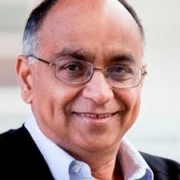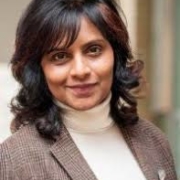
Leping Mou & Radomir Ray Mitic
Cultivating Engaged Citizens through Higher Education
What’s the value of higher education in terms of civic engagement? My guests today, Leping Mou and Ray Mitic, try to answer that question empirically.
Leping Mou is a lecturer in education at the University of Glasgow. Ray Mitic is an assistant professor of higher education at William & Mary. Their new paper is entitled: “The Value of Higher Education in Cultivating Engaged Citizens: Longitudinal Evidence from the Liberal Arts Model”, which was published in the journal Innovative Higher Education.
Will Brehm 1:20
Leping Mou and Ray Mitic, welcome to FreshEd.
Leping Mou 1:26
Thank you for having us.
Radomir Ray Mitic 1:27
Thanks for having us.
Will Brehm 1:28
Congratulations on your new paper. It was fantastic to read and get into. So we are at a moment in higher education where it is under extraordinary political and financial pressure, you know, and not just in the United States, but in so many countries around the world. Funding is being cut, humanities departments are being closed, and there’s sort of this growing political consensus that universities should justify themselves in purely economic terms. And this has nothing of AI, which is, I think, causing even more challenges. So as researchers who study sort of what higher education actually does, what’s your reaction when you watch this sort of growing crisis in higher education unfold?
Leping Mou 2:04
So from my perspective, as a higher education researcher, we are seeing this as a trend in different countries, where higher education has increasingly been shaped by the neoliberal trends or the pressures, with more focus on direct outcomes, such as the employability, while other aspects of personal development or citizenship cultivation are often overlooked. So as educators and researchers, we have talked a lot about the value, the mission, the vision of higher education. But the challenge is how to communicate this to the public, like the parents, the students, and also the policymakers. We need evidence from research to show that there are not simply values or opinions that we are holding up to, but the evidence itself points to the broader contribution of higher education. So that’s why I, as a researcher in higher education, have become increasingly interested in empirical research on higher education outcomes, like student development, student success, and also the university’s contribution to long-term success or what we see as life flourishing.
Will Brehm 3:05
And at the center of your paper, there’s often this distinction that you make between sort of the economic and the civic rationales for higher education. I guess the economic one is quite easy. It’s this idea of, you know, it’s for employability, students learn skills and knowledge that then the labor market is demanding at a certain time. The civic one maybe is a bit more complicated or complex, or maybe not as well understood. But regardless, they’re kind of not new arguments for, you know, the purpose of higher education. But you’re making them in this sort of very specific moment that I think is so interesting. So can you kind of sketch out for me and listeners, what does it mean to say that universities actually are for forming citizens rather than just forming workers?
Leping Mou 3:45
I think that’s an ongoing debate. And the main purpose of higher education and why people go to university have long been recognized across different cultures and societies. Besides career preparation and skills training, an important role of higher education is to support students’ holistic development, helping them grow as people with critical thinking, creativity, lifelong learning capabilities, and a sense of social responsibility – how they could contribute to community and society. And this has been widely discussed in higher education literature. As we know, we talk about higher education history, like from John Henry Newman, the Cardinal, we are familiar with his seminal work, “The Idea of a University” – almost 200 years old. And to the current debate, like a more recent discussion around the massification and universal higher education, universities have always had multiple purposes and functions.
And these ideas also echo across different cultures and contexts and societies. For example, based on my research on liberal arts education in Chinese societies, including Mainland China, Hong Kong, Taiwan, one shared core purpose frequently emphasized by educators is “person-making.” When it’s translated into English, it’s called person-making, but in Chinese language, it’s called zuoren, means being a person. It means the cultivation of character, moral development, and becoming a responsible person in the society. But recently, we see that especially after the pandemic and during the current economic downturn in some countries and areas, there has been much stronger concern about employability and securing stable jobs after graduation. So as a result, these kinds of economic concerns can overshadow some of the broader civic and educational mission of universities and people increasingly start questioning the value or the cost of going to university, whether it will be paying off.
So at the policy level, we also see funding cuts and the closure of humanities or social science programs, which are often regarded as less profitable. So the tension has become much more intense and universities facing financial pressure often have to make decisions shaped by the marketization or institutional survival, which gradually shifts the higher education towards a more professionalized and vocationalized model.
Will Brehm 5:47
So before we dive into the study itself and sort of what you were trying to look at and how and what you found, can you explain what liberal arts education is? I feel like I went to a liberal arts school in the U.S. and so I kind of, I feel like I know what it means, but I also don’t know if I know what it means more generally. Like I know it based on my own experience and maybe listeners around the world might also not know what a liberal arts education means in particular. So Leping, what is liberal arts education? How do we begin to understand it?
Leping Mou 6:16
Yeah, I think maybe it sounds a bit more familiar to the U.S. audience as liberal arts college or liberal arts education is being more pronounced or people here have heard about. So liberal arts education is a term that has been used quite broadly. Like in some situations, people use it simply to refer to arts and humanities disciplines or programs, while others try to associate the word liberal with political liberalism. But in the context of higher education, liberal arts education refers more specifically to a model of undergraduate education. Although it is often seen as a characteristic of American higher education, as we discussed, similar ideas or models can also be found in different societies around the world.
So the core philosophy is that education or higher education, the four-year undergraduate education experience should nurture the whole person, developing broad knowledge, critical thinking, character, and a sense of civic or social responsibility. So the model has become increasingly popular internationally. For example, in Asia or East Asia, there are a group of universities that joined the alliance called the Alliance of Asian Liberal Arts Universities. Liberal arts education is not just about curriculum or discipline, but also about the broader learning environment and student experience. It often includes the elements or the features of liberal arts education includes small class teaching, residential learning, mentorship programs, service learning, and close faculty-student interactions, all aimed at supporting students’ holistic development.
Also in non-English contexts, the term can also carry different cultural meanings. For example, in Chinese contexts, where I’m familiar with, it’s often translated into which refers to the broad-based education, whole-person development with attention to both knowledge and character cultivation. So in this study specifically, we focused on liberal arts education as an education model and we examined how the elements or the factors of university experience and campus life are associated with long-term civic and political outcomes.
Will Brehm 8:09
So maybe I’m going to bring in Ray at this point and pick up on what Leping was just talking about, what you were actually looking for in this study around certain outcomes. Can you explain, you know, like what was it that you were looking for in this study? And then what data did you go and use to try and understand, you know, some empirical answer to that question?
Radomir Ray Mitic 8:28
I think in terms of the outcomes, we’re kind of interested in civic and democratic outcomes that we can track, you know, well beyond the college graduation years to see whether the activities that they engaged in while in college, particularly elements of a liberal arts education that Leping had just discussed, to see if there is a statistical relationship over that time. So you’ve got a research question about what does a liberal arts education do in terms of long-term civic democratic outcomes? And then you need a data set to do that. And fortunately, we were able to work with the University of Michigan, which housed the College and Beyond II data set. It’s a larger project that’s looking at the outcomes of liberal arts education. It was supported by the Andrew W. Mellon Foundation. And then most recently, the American Council of Learned Societies and the Arthur Vining Davis Foundations put together a fellowship to find researchers that are interested in answering these kind of long-term questions of what is the impact of a college education, in particular liberal arts education.
So they initially had the records for about 25,000 individuals that had graduated with their bachelor’s degree in 2010. They surveyed about 15,000 of them with a little over 2,000 individuals that provided complete responses. Leping and I had both undergone training at the University of Michigan on the ins and outs of this data set. We learned from the people that actually did the data collection, the data cleaning, and were able to serve as sort of informal guides on kind of how to use this data set.
So in terms of the outcomes that we kind of focused on, one was on generative behavior, which is essentially the things you do to set up the next generation for success. So things like mentoring, talking to children about things that are educational in nature, trying to help people through difficult situations. So a very sort of grassroots, sort of that civic muscle that, you know, if you think of a scholar like Putnam who talks about bowling alone, where he kind of laments the loss of these sort of civic bonds, these relational bonds between people in a given area. Generative behavior is kind of those muscles that we need to develop as people to display empathy and to really see beyond ourselves.
And we also looked at political engagement, understanding that a lot of change that happens in our world is the result of concerted efforts to, you know, be informed by reading about national or international politics, you know, voting, volunteering, and things of that nature. So in terms of a longitudinal data set, we needed enough time so this 10-year gap matters because we can’t really capture this immediately after graduation. People need to reflect on it. Also going back to the kind of idea of what a university education is for, it’s to prepare people for life, and that goes well beyond the 22-year-old traditional college graduate – that goes the entire life cycle. And a lot of our current discussions that do focus on short-term indicators like unemployment and starting salaries don’t really kind of tell us the full picture. So this longitudinal data allows us to think more seriously about the long-term development of graduates and the broader impact over time.
Will Brehm 11:24
I want to ask a methodological question around how do you even begin to measure, or maybe what are some of the problems and difficulties with measuring something like political engagement or civic bonds or, you know, like that sounds pretty difficult to capture in a numerical indicator of sorts.
Radomir Ray Mitic 11:38
It’s a challenge that has been vexing scholars of civic and political and democratic engagement for some time. It’s kind of a more nebulous concept where we think about all of the things that could be considered civic and democratic indicators, and what we have found is that researchers have really tried to simplify things into these smaller constructs. Again, you know, asking questions about whether you’ve mentored a child or worked with someone on an important decision that they have to make, or whether you voted yes or no, or how much time you spent volunteering.
So in terms of the measurement, you know, not to get too much into the weeds with measurement theories and stuff like that, is to really have a good base of like a definition of what you are measuring and asking questions that are very tightly associated with that concept. And we didn’t recreate the wheel in this study. The CB2 dataset uses well-established, well statistically validated survey items that have been developed for the last couple of decades that researchers have used. So we’re kind of standing on the shoulders of giants here and being able to rely on what other people have done. And some of this has also been supported by great qualitative research as well that kind of brings together that sort of what we call validity of our constructs that we’re measuring here.
Will Brehm 12:47
And are you trying to then find sort of how some of these measures that this survey has come up with, how they are correlated to students who went to liberal arts colleges?
Radomir Ray Mitic 12:55
So in the longitudinal survey, the respondents answered a handful of questions that were taken from these established surveys. So they, you know, did you do X, Y, and Z? And then we were able to statistically basically combine those into a single score for those individuals. And that was borne out by our reliability and validity sort of procedures.
Will Brehm 13:13
And so let’s turn to these findings, like what did you end up finding when you did some of these statistical correlations?
Radomir Ray Mitic 13:20
So we essentially ran two regression models, one focused on predicting generative behavior and the other one focused on the political engagement outcome. In terms of the generative behavior finding, we found that there were several elements of a liberal arts education that was associated with generative behavior. And I’ll caution, you know, anyone reading the paper or listening to this interview that these are correlations, not a causation – this was not an experimental study.
So the elements that we found statistical relationships for generative behavior was taking part in a course or activity that had a diversity focus, service learning or community-based learning, being part of a service organization, sense of belonging. So whether individuals felt like they belonged to the institution was a strong predictor of whether they engaged in generative behavior after college. We also found that, for example, education majors, you know, perhaps not surprisingly as a helping sort of profession or major was strongly associated with generative behavior.
For predicting civic and political behaviors and beliefs, we found, again, that taking part in a course or activity with a diversity focus was strongly correlated, studying abroad, service learning or community-based experience, participation in student government, again, a sense of belonging, again, feeling like you belong with the institution was a significant predictor. And then we did see some major effects as well with individuals in, you know, business, education, biology, health sciences were less likely than the mean to take part in civic and political activity.
Will Brehm 14:47
Thanks for the quick sort of rundown on some of these correlations. I guess the question, and maybe Leping I’ll bring you back in, is sort of what does all this mean? What significance do you read into some of this empirical statistical evidence that Ray has just summarized quite neatly, and you have a nice table in the paper that does so as well? What jumps out to you as being sort of the, you know, something that is of interest to the study of liberal arts education more generally?
Leping Mou 15:12
Yeah, I think the most interesting thing is that the findings, maybe not surprisingly, but generally consistent with existing theories and previous research on liberal arts education, but they provide the evidence, especially with longitudinal data, that after 10 years of graduation, these are the outcomes, these are factors we find are still influencing or impacting people’s behavior and their beliefs in life.
Yeah, I also want to add a little bit about the importance of this kind of longitudinal data, that it has been long recognized by educators that education often has lasting effects on people. So in some of my other research in liberal arts education, like, for example, in Chinese societies, educators use the phrase, there’s a metaphor, or there’s what we call a proverb, which means, it takes 10 years to grow a tree, but 100 years to cultivate a people or a generation of people. So it’s a metaphor, but it captures the idea that education shapes people, and their contribution to society often, over the long time, it’s not just the immediate outcome after graduation.
Radomir Ray Mitic 16:11
And if I could add in there, I think just put an exclamation point on it, the college environment matters. You know, we think of college as a place that we get people that come in with experiences and the college environment changes them over time. I know this was not a causational study, but we’ve seen not just in our study and a lot of other longitudinal studies is that the environment matters and a good environment that helps people feel that they belong and fills their brains and their bodies with these civic behaviors and beliefs that it will be a good return on investment for these activities beyond just their starting salary. I think we have a good validation to that here.
Will Brehm 16:46
Is that point sort of this notion of sense of belonging? Like, if you feel like you belong to that institution in which you went to university, that that actually can shape your civic sort of values in the future?
Radomir Ray Mitic 16:58
That’s kind of our working hypothesis as we continue this kind of work. We refer to colleges and universities as laboratories of democracy, and they do mimic in some ways what the wider society is going to be like. So if someone feels that they belong and is going to be involved in a lot of these different activities, we’re talking about student government, study abroad, diversity experiences, are they more likely to be engaging members of our society as a whole? And to flip that, it’s like if the college environment is sending a signal that you are not invited, you are not welcome here, and we have a lot of that in society these days, is that it’s going to depress individuals from wanting to take part in society and be good neighbors, be stewards, be people that are going to be on boards and just engaging with their fellow citizens around them.
Will Brehm 17:37
Interesting, and it also makes me think some of those differences that you saw in majors, like the different studies that students were taking had sort of different effects or correlations in this study. And so maybe I shouldn’t read too much into this, but it seems like the very subjects that are kind of under threat and trying to be defunded. And I hear in the UK where Leping works, there’s humanities courses being shut down, or in Australia, there’s sociology courses being shut down. Just seems like some of those subjects are the ones that seem to have the highest correlation or the strongest correlation to some of these civic predictors later in life. So Leping, how much should I read into that sort of finding?
Leping Mou 18:12
Yeah, I think when we think about the difference among the programs, one important point as Ray has emphasized is that correlation is not causation, and also we should read the findings more carefully thinking about this regression analysis that shows association rather than a direct causation. So we are not simply concluding that studying arts and humanities automatically cause people to become more politically engaged. My understanding is that relative to arts and humanities majors, graduates from several professionally, technically oriented majors report just lower civic and political engagement scores, but it doesn’t mean they are not engaged. So there are likely both education and selection effects involved, like students who are already more interested in civic issues or public debates may be more likely to choose and study those arts and humanities programs. And also that speaks to what we emphasized about the model of liberal arts education, the learning environment. In some programs, there might be more activities for students to engage in those kind of community-based learning environment for interacting with each other.
Radomir Ray Mitic 19:20
While the question was about the majors, one of the great things about liberal arts education and the courses in arts, humanities, sociology is that they’re not restricted to just those majors. We need engineers. We need business folks. So a university that has these courses as part of a liberal arts core has these activities that are open and available, and particularly when we think about things like study abroad has a cost component that they are accessible to students from all majors, and that we find ways to get students in these activities. You know, it’s not so much the major effect. It’s the idea that this is something that can and should be the experience of every student at the institution.
Will Brehm 19:54
Yeah, that’s a really good way to sort of frame that. Leping, I want to bring you in because I know you’ve studied this particularly in some of the East Asian countries, because I guess the question I have is how transferable is this to sort of other contexts? And I guess earlier on you said something around how there’s cultural differences. And I’d love to know, you know, like based on the study that you’ve looked at, how do you think about sort of transferability of some of these findings to other contexts? And how do you also think about the sort of cultural sort of uniqueness around liberal arts education and how we might interpret some of these findings elsewhere?
Leping Mou 20:27
I think this study, thanks to the CB2 data that we had an opportunity to examine liberal arts education within the context of U.S. public universities. But at the same time, the liberal arts education has increasingly become a recognized model around the world, including in many non-U.S. contexts with shared values around broad-based learning or whole person development or civic education. So I think there are likely some transferable aspects in terms of how this teaching and learning experience and also the campus experience may contribute to students’ development and long-term outcomes. At the same time, different institutions and society adapt liberal arts education in their own ways. For example, in Taiwan, in Tunghai University, where I research, there is a mentorship or residential style, they call it family systems, which is based on the Confucian understanding of family that creates distinctive model of faculty-student mentorship and peer interaction. So while there may be shared philosophies, the actual practice and cultural meaning can vary significantly across contexts with the specific models. So that is why future comparative research is also important. It would be very interesting to develop new datasets to examine how different models or elements of the liberal arts education, when adapted to different contexts, operates across national institutional contexts.
Will Brehm 21:47
What about social class? How does that fit into how we think about liberal arts education around the world? Because from the U.S. perspective, well, I don’t actually know. I mean, my sort of hunch in the U.S. perspective is that liberal arts education is often very expensive, it’s often private universities, and sort of certain types of students are even capable of going to them. So does that mean that the civic participation is also classed in the future? That, I know, is totally, totally different from your topic, but I just thought I’d bring it up.
Leping Mou 22:14
Yeah, I think that’s an intriguing question when we think about higher education models in this world after the massification or universal higher education, that maybe specifically within the liberal arts college, they have all those elements that are supporting students for the overall development. But other research also point out that liberal arts elements, it can be existed in different types of universities or even like vocational colleges or community colleges. So that’s why we are using these elements as the predicting factors to look at the association or relationships.
Radomir Ray Mitic 22:45
Yeah, it’s a fascinating question. It’s one that I’ve thought about a little bit in the context of some other work I do on graduate education. It’s like, well, if undergraduate liberal arts education is stratified by race, class, et cetera, then that has severe implications of who goes to graduate school later. And we’ve seen with the number of graduate assistantships going down that it’s really going to then cascade into what is knowledge production, which knowledge gets produced, which artists, music, sociology, histories get taught and learned for the next generation as well. So while I think you bring up a prescient point here is that we do see a potential stratification here when it comes to who gets these opportunities. And I think that that’s incumbent upon institutions, but also the governments that fund them to be able to provide these pathways.
Will Brehm 23:27
Maybe that brings us to the final question to kind of go back to the beginning framing question of we’re in this moment of higher education. Everyone is talking about it as being in crisis and it’s so multi-layered and there’s so many different attacks on higher education. Higher education institutions seem like they need to change and funding models are changing and internationalization rules are changing and visa issues are changing for students all over the world. What does your study, what might it say back to some of this crisis?
Leping Mou 23:55
I think as I mentioned earlier that there has been a lot of debates about the purpose and value of higher education, but we also need evidence. So I think this research contributes by providing concrete longitudinal evidence that speaks to some of the broader civic and social outcomes in higher education that has been as long as like a belief or debate. So we definitely need more research of this kind to engage policymakers and also the general public in this discussion. So at the same time, I have to admit that as a researcher, the most important challenge is about data. So longitudinal research is quite rare and expensive to conduct, especially studies that follow graduates over many years or even decades. So in the current research funding environment, projects like this might not be easy to sustain. So I think that also speaks to how we need government funding or other funding sources to support this kind of longitudinal research.
Radomir Ray Mitic 24:51
This is an interesting challenge, an interesting time for higher education because yes, we have the evidence, we have the peer-reviewed publications. You’re helping amplify this voice just by us being on this podcast today. But for families and governments, I think that’s still the challenge is to be able to amplify this evidence in a way that can change hearts and minds. We talked at the opening a lot about return on investment and things like that. Those problems don’t go away. Like our students still need to make a good living. The student loan crisis is still an issue. So yes, we can talk about how there are these civic returns to higher education, but we have to be able to do it in a way that also speaks and doesn’t ignore some of the other challenges that are facing higher education in the United States and around the world. And at this point, we’re just two researchers that are adding our voice to it, but also trying to gather more people to sound the drum, so to speak. And then those are the individuals that can speak in our state capitals, be able to get it out there on social media. But ultimately, a lot of the stuff is done through exactly what we’re researching, like electoral change and just educating as best as we can and informing the public to have people in place that can make funding decisions that can result in a civic return on investment that we’ve shown here.
Will Brehm 25:58
Well, Leping Mou and Ray Mitic, thank you so much for joining FreshEd. Congratulations on your new paper and good luck trying to make that broader societal and global change.
Leping Mou 26:08
Yeah, thank you for the great conversation.
Radomir Ray Mitic 26:10
Thank you for this opportunity.
Translate this transcript into any language. Before you do, we’d love to know a little about who this is for — it helps us understand which language communities find FreshEd useful.
Translations are limited to 10 per day per visitor to keep this free for everyone.
Not for Profit: Why Democracy Needs the Humanities
Bowling Alone: The Collapse and Revival of American Community
How College Makes Citizens: Higher Education Experiences and Political Engagement
Liberal Arts Education and Colleges in East Asia: Possibilities and Challenges in the Global Age
College and Beyond II (CBII) Alumni Survey
Have any useful resources related to this show? Please send them to info@freshedpodcast.com