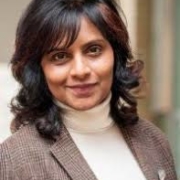
Olga Mun
Alternative Imaginaries of Sustainability in Higher Education
Today we try to imagine alternatives to the traditional ways of understanding sustainability in higher education. My guest is Olga Mun.
Olga Mun is an early-career researcher and co-convenor of the Climate Change Education Reading Group at the Department of Education, University of Oxford. She’s recently co-written with Gulzhanat Gafu and Aizuddin Mohamed Anuar a piece for the Comparative Education Review entitled “Obal and Budi Philosophies as Reparative Visions of Sustainability in Higher Education: A Creative Manifesto.”
Will Brehm 1:06
Olga Mun, welcome to FreshEd.
Olga Mun 1:08
Hello, Will. Thank you for hosting us.
Will Brehm 1:11
So I want to start just sort of with some basics, basics around some terms that you used in some of your new papers. What is Obal and what is Budi? And how do you explain these to someone who perhaps has never encountered such concepts before?
Olga Mun 1:26
Thank you so much for a great question. And I’ve said thank you for hosting us because this paper was co-authored with Dr. Gulzanat Ghafoor and Dr. Aizuddin Mohamed Anwar. So Obal and Budi are both, we call them non-Western philosophies. Sometimes we refer to them as indigenous philosophies. However, scholars in Kazakhstan are now problematizing the term indigenous and some prefer to say a nomadic philosophy when we talk about Obal. Let’s say we talk about non-Western philosophies. So the core ideas are not to harm people, nature and the world. Budi and Obal are different concepts and philosophies and worldviews, but also similar. But I think what makes them distinct from some of the Western human-centric understanding of the world is that they equally prioritize the health of the nature and people. So there is no hierarchy in terms of who is more important, a human or a bird or a stone. So in theory, if you practice Obal and Budi, you have to value all forms of life. And in Kazakh language, even if you talk about animals, it’s quite important to also respect their rights. In terms of Obal, the core idea is to not waste resources in terms of food, water and land. It’s also not to harm animals or ecosystems. So for example, we have analyzed proverbs and they would explicitly say that the health of the animal depends on the health of the water, for example. And also it has a social aspect to it. Basically, this is a philosophy that promotes the ethics of care, peace, and it encourages people to take care of, for example, widows. And it’s basically like peace philosophy. And in terms of the Budi, it’s similar to Obal that it doesn’t encourage overconsumption. So for example, some of the proverbs in my free translation would say abundance is shameful, but having low resources is actually desirable. In a way, to me, they’re anticapitalist philosophies of not overconsuming, not harming anyone. And they highlight the environmental ethics. In terms of the Budi, so the core idea of Budi is to be wise in virtues and it highlights doing good and prioritizing community harmony and consensus.
Will Brehm 3:48
Are there sort of easy, direct translations into English for these words?
Olga Mun 3:53
From my understanding, there are no direct translations, but we can also, of course, double check with Dr. Anwar and Dr. Ghafoor because they’re native speakers of both languages. But based on our analysis, it’s more of a set of values rather than a direct translation. Some people try to translate it, let’s say, to behave in an Obal way, let’s say, it’s to behave kindly. But it’s more than that. It’s not only behaving kindly, it’s behaving generously. It’s not actively harming people. Some people will say this is Obal, for example, meaning that it’s not that it is shame, for example, in Kazakh language, there is this concept of Uyat. But it’s more than that. It’s more expansive. And the same with Budi. So there are a lot of elements to it. And Budi is much better theorized in both Malaysian and English language literature than Obal. So Budi, I think maybe you can find equivalent words or concepts in English language. But when we talk about Obal, most people will not even think of it as a philosophy within Kazakhstan because of the Soviet colonization. To be a philosopher means to read Aristotle, but not necessarily think of your proverbs as a philosophical teaching. Maybe it will be seen as art, as poems. This is a typical representation.
Will Brehm 5:18
In other pieces that you’ve recently written, you’ve also looked at some other terms and you sort of honed in on some non-English terms to help sort of our conceptual thinking in comparative education and in sustainability studies in particular. I guess I’m trying to ask, if you step back from this, are you trying to sort of build kind of a new vocabulary to help comparative education scholars in the West, in English speaking world, to sort of have a different way to begin to understand some of these, the idea of what sustainability and education is? Is that kind of the larger political project here?
Olga Mun 5:52
Yes, yes. It’s definitely an epistemological, political project. And I would say it’s not we are trying to build it, we are building this vocabulary. And we are inviting our colleagues to actually use the vocabulary, engage with the scholarship. So I started this project in 2022, like explicitly by writing my first piece on Korean philosophy of Jung in higher education. So that article I wrote when I was working with Professor Simon Marginson, we were trying to rethink the global public good role of higher education. And I was collecting fieldwork in South Korea and I said, why do we cite Western theories? I’m sure there are Korean concepts that could be also quite relevant. And the concept of Jung is also a similar philosophy of kindness to Obal and Budi or Buen Vivir, but it’s much less theorized in comparative and international education or in English language scholarship in general. So for that article, I collaborated with my South Korean collaborator, we have analyzed scholarship in Korean, and we have developed the concept of Jung. We are of course not pioneers, we don’t want to create this narrative of being the first, which is violent, but we wrote about Jung as a new sort of understanding of global public good role in higher education in CIE, but also as a method. And then I expanded it to the concept of Asar, which is another Kazakh philosophy of solidarity and mutual care. But that is more with a focus on humans, it does not explicitly highlight the role of nature. And the reason why we tried to expand this vocabulary, and then we had a project which was funded by Kiel University and collaborated with Dr. Aizuddin, we have analyzed proverbs and because sometimes I was researching the topic of epistemic injustice in CIE for the last eight years, and usually we are describing the injustices, and then academics stop from saying let’s say, we don’t want to be providing prescriptive formative solutions, but at the same time, it’s difficult to then always end at the point of a critique. So we know that women have difficulties in academia or minorities, but then we always hope that somebody else will come and address the epistemic injustice in CIE. And I was waiting for seven years for that scholarship to appear. And of course, we do have now much more scholarship that talks about epistemic injustice, traditionally engaging with the same texts by Miranda Fricker and Kristie Dotson, who are fantastic philosophers. But usually CIE scholars, the we, I’m complicit too, we take philosophical concepts, then we use empirics and that’s that. But with my work, I wanted to say we can write, maybe not perfectly, but we can theorize with the concepts from the global south, or the global majority, right, as some people would prefer to say. This is serious knowledge, this is not just a cute proverb, you know, this is another way of living. So we’ve been doing that for the last few years.
Will Brehm 8:43
And is this why you’ve written this new piece in Comparative Ed Review as a manifesto, like it was deliberately trying to be provocative in some ways and actually say a different way is possible?
Olga Mun 8:53
Yes, yes. And also, I have realized that sometimes it’s hard to define what is CIE. Of course, some scholars define this very clearly, but I publish so widely in higher education journals, in feminist journals, and I’ve realized that CIE scholars are not reading those journals. So I’ve realized that these disciplinary mini-empires and divisions are making it harder for us to actually see the depth of the scholarship. So I explicitly published it in CER, first of all, thanks to the editors of the special issue, Tristan McCowan and Professor Elizabeth Buckner, but also to reach the audience of our CIE community, to qualitatively, it’s not humble of me to say it, but to shift the discourse, right? I’m a little bit tired of talking about the same topics all the time, assessment, measurement, international comparisons. I’ve been talking, and our colleagues have been talking about it for the last, I don’t know, several decades, and it seems like nothing is changing. We talk about epistemic injustice, imbalances between Global North and Global South, but then how do we address them? How do we repair them? So that’s why I moved into the decolonial and reparative work.
Will Brehm 10:04
And in particular here, it’s a lot about issues around sustainability education. And so maybe we’ll dive into it because the case is made that the sort of typical frameworks that we have when it comes to sustainability education globally, usually default to United Nations, UNESCO, the SDG4 or all the different SDGs that relate to sustainability. Why do you think we tend to default to those and sort of what’s the problem in doing so?
Olga Mun 10:29
So this is a good question. I think, personally, I don’t see a lot of challenges in terms of having some of these international organizations for the public good. And myself, Professor Tristan McCowan, and our colleagues, Roxane Caire, we wrote a whole separate article on whether we should be using SDGs as a reference point at all. And I’m a part of the work group on reimagining the world beyond SDGs and beyond 2050. So on the one hand, I understand that, let’s say, if you’re a policymaker, you don’t have time to read five academic articles, you understand that realistically, you can’t embrace radical perspectives. And you refer to, let’s say, philosophers like to say, at minimum, at least some requirements that are SDG. And I understand why this is happening in the context of temporal precarity. But I think, of course, they could be limiting. And we know that there is so much scholarship on this, of how the international criteria, they marginalize local knowledge, and they neglect local voice. And sometimes, let’s say, how do you reference the story of your grandmother in a UN report? You can’t, right? So you try to find credible, quantitative paper that is more generalizable. But in many cases, statistics is so imperfect. And we also have scholarship on that, as well, in CIE, of how numbers are being manipulated or misrepresented. So that’s why sometimes when the global frameworks dominate the landscape, some countries, for example, in Kazakhstan, they use a lot of resources, financial resources, to employ people to then analyze all of those criteria. And instead of actually maybe using those resources to help flood victims or people on the ground. So in many ways, yeah, there is this tension between international, local, national, what is valued, who is to blame? This is a difficult question to me, because I put a lot of responsibility on national governments as well. So I think fundamentally, the decision makers are the national governments, not international organizations. But I think this interplay, yeah, we have a topic for a few PhD dissertations.
Will Brehm 12:32
So you start the article with this pretty striking image of a university underwater, a flooded university. What sort of drew you to that framing? And what were you hoping to achieve by doing so? And how does it connect back to this notion of Obal and Budi, which were some of the unifying concepts that you were sort of working with in this paper?
Olga Mun 12:52
So yes. So basically, when we were writing this paper in 2024, I personally had a bit of a professional identity crisis. I was writing about bibliometrics in Kazakhstan, and I was thinking, what am I doing? 100,000 people were displaced by the floods in Kazakhstan. The whole country was affected by the floods. And similarly, the floods happening in Malaysia. And we were looking at such niche, narrow topics. And we are always encouraged in Oxford to just narrow it down, narrow it down. Don’t look outside. Just get it done. Finish it in two or three years. It’s just a ticket to your academic career. But I was thinking, we are missing the larger point while we are narrowed, focusing on metrics. People are dying. The ecosystems are dying. Can we really afford to look away and pretend that we are these neutral academics who are just, you know, building our own careers in a neoliberal academia? So that’s why we started from this essay of universities underwater. In terms of Oxford, actually, last year, we had the worst drought in a few decades. A more accurate picture would have been the university in the desert, perhaps, not underwater. We literally didn’t have water across the universities. We were asked not to use and consume water for watering the beautiful lawns that you see on Instagram of Oxford University. It was all dry. It didn’t look as it looks on Instagram. So that’s why we wanted to be a bit poetic, maybe dramatic, but also realistic. It was constantly, it was really flooded. So many universities and students were suffering, animals who have died, and yet we would talk about funding foreign branch campuses as a priority for internationalization of higher education instead of talking about actually, yes, okay, maybe some universities are not research leading or communities that were impacted, but their lives matter, right? And we connected it to Obal and Budi because this kind of neglectful behavior is not Obal or Budi. This is selfish. This is neoliberal. I don’t want to use it easily, the word Western-centric, because it doesn’t have to be Western. There have been empires in Asia and in many other contexts, but we thought, how do we communicate that these topics are important to people in Kazakhstan and Malaysia as well, but also with respect to their own knowledge? We didn’t want to come across as academics who come from Oxford and teaching the local community. They have their own knowledge, actually. We are learning from them. We are learning with them. So that’s why we tried to connect it creatively because in the existing, at least English language scholarship, no one was doing it explicitly. So we tried to both conceptualize and then reframe it for the CIE audience that way.
Will Brehm 15:30
I guess the question then is around like, when it comes to flooding in some Kazakhstan universities in 2024 or droughts affecting Oxford University where you are, why aren’t the UN sustainability framework and the global agenda, 2030 agenda, why isn’t that useful to help us understand what’s going on and try and then make changes globally?
Olga Mun 15:52
This is a good question because I think sometimes our thinking is very siloed. And 10 years ago, I was a youth representative for the University of the UN. 10 years ago, we talked about youth voices at the UN. This year, we are still talking about youth voices at the UN. I just came back from Paris where I attended the Youth Day and International Education Day. And sometimes we think of it separately. You know, higher education research is higher education research. Climate change is for different, food security is different, but they’re all interconnected in terms of the impact of sustainability and you bridge higher education sector on climate. The biggest impact is by old university buildings. And in Oxford, it has plenty of old buildings. But in the popular rhetorics, all international students are flying too often, right? It’s not true. You can’t actually, without international students, British higher education would collapse. It’s a lifeline for British higher education. So yeah, to answer your question, some of this siloed thinking, I think is quite harmful.
Will Brehm 16:55
By implication here, Obal and Budi, those sort of philosophical concepts, they don’t produce siloed thinking in your interpretation and in the way you want to use them.
Olga Mun 17:05
Yes. In our imaginary world, if universities in Kazakhstan and Malaysia actually embraced Budi and Obal, actually in Malaysia, Budi is embedded in some universities. For example, if you read the article, you will see that some universities use Budi quote and worldviews as their university missions. In terms of Kazakhstan, I think Obal is practiced by academics and students and staff informally. But of course, formally, the universities are predominantly fully embracing this Eurocentric modern way of the vision of what is a university. So in our vision, there would have been no fees, the universities would be truly promoting global values, there would be equal treatment of home and international students, there would be environmental curriculum embedded in all modules. In some countries, of course, environmental curriculum is already embedded. In the UK, it isn’t. In theory, in our vision, there are practical ways of how you can embed Budi and Obal in teacher training, in student services. For example, in South Korea, Jung is much more embedded in higher education. For example, when you start your university degree in Korea, you are sent on a service trip, for example, to a rural area and seen as a way of contributing, as a way of being a student. Of course, I’m not idealizing it. South Korea has one of the most privatized higher education markets in the world. But I cannot imagine in Oxford, a service trip that would be organized by the department. I don’t want to be too critical of Oxford, but it’s a lot about partying and formal halls and balls and drinking and to having fun and this kind of notion that higher education is for you, it’s your human capital, you’re paying for it, big money, and you deserve to get something in return, primarily for yourself. And then for the community, maybe. When you graduate, the only communication you will hear is about fundraising, both in the US and the UK. If we were to embrace Obal, we would prioritize global public good, peace education in engineering or even across. We understand it’s a bit idealistic and maybe not a bit idealistic, but at the same time, we think that as higher education scholars, we have a responsibility to produce scholarship that could be socially relevant.
Will Brehm 19:33
Can I just clarify around the SDGs as being a reference point, a global reference point? And there’s all the problems that come with that, as you’ve been outlining. The intent here is not to kind of replace one reference point with another reference point, is it? Like, you’re not sort of making the argument that Obal or Budi should just sort of become a new global reference point that every country and every university should be attaching itself to. You’re sort of making a slightly different argument, if I’m listening correctly. Is that right?
Olga Mun 20:05
Yes. We don’t want Obal or Budi ranking. Who is more Obal or who is more Budi? Definitely. If I were to say it’s an abolitionist pedagogical and philosophical tool, but I don’t want to speak on behalf of two of my co-authors, maybe they will disagree with me. This thought just appeared in my mind now, but I do think it’s more radical than that. It can be gentle, but at the same time, I think we have reached a point where we have to radically reimagine it. The higher education is just so unhealthy, both for humans and the planet. We also don’t want to be prescriptive. So we don’t want to say, you know, you have to be Obal or you have to be Budi, or that’s not Budi behavior. But we just wanted to put those views on the table. And because we have analyzed resources in three languages, in Kazakh, Malaysian and English, and to some extent, Russian, but we need new thinking. And this is actually not new thinking. This is nomadic thinking, but we need fresh ideas to reimagine higher education. And that was the goal of our project.
Will Brehm 21:09
And so I want to ask a sort of personal question around how you navigate that academic and political and epistemic project that you’re working on with various colleagues around the world in different languages, as you just said. How do you do that working at one of the most elite universities in the world that is steeped in tradition and perhaps, you know, very much part of the colonial project of creating certain epistemes that have become dominant? How do you navigate sort of working in an institution like that and having seemingly very, very different ideas?
Olga Mun 21:42
I think Oxbridge institutions have not only been historically engaged in exceptionally problematic practices, they’re still engaged in these practices, their daughter remains are still in the Oxford University’s museums. I’ve been thinking about this question for the whole day today, but also previously. And I think it’s very difficult for me to understand what is Oxford University. I think in a collective imagination of people outside the university is this one homogeneous elite space. But to me, being a woman of color who was born in Kazakhstan, who have heard so many jokes about Borat and Kazakhstan and Pakistan throughout my time, both in Oxford and Cambridge, and I worked at both universities, sometimes when people tell me, oh, you’re so privileged. And I was thinking, am I? Am I really privileged? Because I was asked about my passport and visa on my first day, that reduced me to tears. You know, most of us and people who look like me and sound like me don’t have permanent contracts. Most of the teaching in Oxford is done 60%, I think, on precarious contracts. Most of the doctoral students in Oxford are unfunded in social sciences and humanities. So is a tenured professor in Oxford a part of the same institution as I am? I don’t think so. To me, they are the institution and I’m a guest. And I think this is one side of the coin. Another side of the coin, of course, I am privileged. I do have access to an exceptional library. I do benefit from the prestige of the university. I think all academics at Oxford benefit from the credibility access. Even if you say something silly, people think, oh, she’s at Oxford, maybe she’s saying something right. And I think I am very well aware of that. And this is an important aspect of epistemic injustice, who has credibility deficit and who has credibility access. But also if you look at it intersectionally, perhaps like a white man with a US citizenship has much more privileges being employed anywhere, like at Nazarbayev University in Kazakhstan, than me from Oxford. Because for some people, I would always be this kind of young academic female who writes about idealistic funny things. And I think having doing decolonial work should be happening in Oxford. So I think we should not be saving the world. Maybe we should be saving the world from Oxford. But, you know, it’s like we have to decolonize ourselves first. We have to see how are we treating international students, how are we treating precarious staff? Why are cleaners and porters paid so little in Oxford? Who is the member of the institution? So I think Oxford should be decolonized first. And that’s why I’m doing this work precisely at Oxford. And I’m not doing it perfectly, but we did have a postcolonial collective and we’ve been writing postcolonial theory with Aizuddin and Arze Habibi since 2018 or 19, since the first time we met each other. So and of course, there have been a lot of activist work in Oxford. And most of the actually most interesting work in critical scholarship in Oxford to me comes from students and from student activists. So they are to me the heart of the university. They offer climate change courses for free. They are against bordering regimes, but of course, not all. So yes, to answer your question is it is an elite space, but I don’t think I’m an elite academic. I’m not sure if I ever will be because of my identity and the social politics of knowledge production of whose knowledge matters or not. Because even if you are a woman and you win best article awards and you publish in top journals, you still might not get a job and somebody will get a job who has a different profile but has a European citizenship and better social capital. And yeah, that’s why I think a lot of people misunderstand what it means to be at Oxford. I think for many people, it’s more about surviving rather than thriving. Against all odds, I’ve been told that I will never publish this article on Obal and Budi. It got published to triple positive reviews and it won the best article award. So you always hit one wall after another. And as a young, early career academic, it’s difficult to always fight back against the systems because maybe it’s easier to just say, okay, I will count how many articles academics and from-house and publish, I will publish something quickly just to get it done. But this work is more difficult, but I think it’s more meaningful. And in the future, CIE debates, I think there will be more serious discussions of people who are against decolonization and those who are supporting it. And I think there’s a lot of misunderstanding of what is decolonization and there’s a lot of misunderstanding of what decolonial thinkers are trying to achieve. And I always try to practice what I preach. We are organizing campaigns, we are organizing events that are free, that are multilingual, that engage community artists. We are trying to pay artists if we have a grant. So we are trying to make the university a better place. And as opposed to some academics who just say, it’s the best place in the world. And if you can’t afford it, don’t come here. And a lot of people say that. So to me, this work is not always rewarding, but we do it because I think we think it is a valid body, because it is ethical, because for us, it is, of course, predominantly about knowledge production, but also it’s about lived experiences. And it’s just difficult to talk about education policy in Kazakhstan and that there is no research capacity. If most people who are building that capacity don’t even read knowledge in Kazakhstan, because in Kazakhstan, 98% of research in social science and humanities is published in Kazakh language. But we have academics who say, well, there is no research capacity who don’t even speak Kazakh. How can you make such a claim? That’s why we talk about the concept of ignorance. And to be able to talk about it in Oxford is scary, because it could have implications how you will be seen as a scholar. But I think ethically, it’s more important to do what’s right morally rather than what’s popular or trendy. And maybe it’s not popular or trendy now, but in time when the communities will be speaking back and they are speaking back now more loudly. At least we will be proud with what we have published because we have published what matters for our communities first and not for the sake of winning another big grant.
Will Brehm 27:22
So as a final question, what would you like to come of this manifesto? I mean, it sounds like obviously you’ve been writing a lot about like this manifesto in many ways captures your own experiences over the last couple of years being a PhD student, early career researcher. What wider impact are you keen on sort of or hoping that this article may have?
Olga Mun 27:42
We’re just beginning. So I’m planning a whole new series on rewilding CIE starting from October. So I want to show the whole world that there is just so much of wealth and abundance of knowledge that is being neglected. And to me, decolonization is about highlighting the pluriverse. It’s not about canceling somebody. It’s not about not reading Aristotle or it’s not about reading postpositive scholarship. Not at all. We are saying let’s read everything. But at the same time, there is just so much more knowledge that you’re not engaging with. And we want to write more about this. So in my new project that I won a grant for in Oxford, I’ll be writing about other indigenous, nomadic, non-Western philosophy of sustainability, new concepts, potentially from India, from Galapagos, from around the world. And we are just starting. And we just want to show how beautiful the world of CIE is. And we want to show that it’s not about not being critical of China. Right. So the current debate in CIE is that if you criticize Eurocentrism, you know, you’re neglecting that other contexts are also imperfect or authoritarian. None of the decolonial scholars would say that some contexts are not authoritarian. Of course, we know that. I come from an authoritarian context myself, but at the same time, and we are not saying that everyone is practicing Obal and Budi in Kazakhstan and Malaysia. It’s also not true. But we are just saying that these ideas exist. We know how to write about them. We have the capabilities to analyze them. And we want for people to see the other side of this context as well, because for so many years, the deficit narratives of capacity building scholarship has been so prevalent, still is. And it’s good scholarship, but at the same time, why is there no research capacity? For example, even if you believe in that narrative, why were all the best universities built in Moscow? Why were all the best universities built in London? Why is it it’s not possible for people from Kazakhstan to get a visa to come to Britain? You know, is it the responsibility of people in Kazakhstan or is it because of the hierarchical systems that are existing in the world? So, yeah, just an invitation for us perhaps to stay in touch and for the community to see that there is a lot of energy among, how do I frame it? Not the new generation of CIE scholars, maybe I’m already the middle generation of the CIE scholars, but students want to see the differences in the world. Students don’t want to see the same ideas circulating. Students understand that the polycrisis was caused by a certain economic model. And we are responding to that.
Will Brehm 30:23
Olga Mun, thank you so much for joining FreshEd. Really a pleasure to have you on and congratulations on the new article.
Olga Mun 30:30
Thank you so much.
Translate this transcript into any language. Before you do, we’d love to know a little about who this is for — it helps us understand which language communities find FreshEd useful.
Translations are limited to 10 per day per visitor to keep this free for everyone.
Related Guest Publications
Recommended Resources
Tracking Epistemic Violence, Tracking Practices of Silencing – Kristie Dotson (Hypatia, 2011)
Have any useful resources related to this show? Please send them to info@freshedpodcast.com