OverviewTranscriptTranslationResources

How do teachers learn to teach? My guests today, Maria Teresa Tatto and Ian Menter, discuss the many paths to become a teacher in England and the USA and the policy environment that is shaping current practice.

Learning to be a teacher, they argue, requires much more than simply having a lot of content knowledge. Just because you may know math really well does not mean that you would be a good math teach. Teaching is a skill that must be systematically learned and practiced.

Together with Katharine Burn, Trevor Mutton, and Ian Thompson, Teresa and Ian have a new co-written book entitled Learning to Teach in England and the United States: The Evolution of Policy and Practice, which was published by Routledge earlier this year.

Maria Teresa Tatto is Professor in the Division of Educational Leadership and Innovation at Arizona State University, and the Southwest Borderlands Professor of Comparative Education at the Mary Lou Fulton Teachers College. Ian Menter is Emeritus Professor of Teacher Education at the University of Oxford and a Fellow of the Academy of Social Sciences.

Citation: Tatto, Maria Teresa & Menter, Ian, interview with Will Brehm, FreshEd, 109, podcast audio, March 26, 2018. https://freshedpodcast.com/tatto-menter/

Will Brehm 2:00
Maria Teresa Tatto and Ian Menter, welcome to FreshEd.

Maria Teresa Tatto 2:03
Thank you, Will. I’m very happy to be here talking with you about our book.

Ian Menter 2:09
And so am I. I happen to be in Arizona with Maria Teresa at the moment. So, we’re close together but talking to you quite a long way away.

Will Brehm 2:19
I want to jump into your new book -congratulations, by the way. You know, thinking about the different pathways that one can become a teacher in England and the USA. So, you know, what are the different ways that people become teachers in England?

Ian Menter 2:35
Well, in England, traditionally, during the second half of the 20th century, they would apply to a university or college and seek to enter either a one-year graduate program, or a three or four-year degree program, and qualify as a teacher if they got through that program successfully. But over the last 20 or 30 years, we’ve seen many new pathways opening up, some of which don’t involve universities in the way that the traditional programs did. And some of which are actually employment-based, so that beginning teachers are employed by a school rather than being registered with a university. And so, in fact, a colleague of ours calculated that there are now 38 different ways in which you can become a teacher in England. So, it’s quite a myriad of routes compared with what it was in the last part of the 20th century.

Will Brehm 3:41
And how does that compare to the USA?

Maria Teresa Tatto 3:44
In the US, in contrast with England, close to 80% of those who want to become teachers enroll in traditional routes in colleges of education in higher education institutions. In the mid-1990s, the so-called alternative routes began to emerge. And we now have about 20% of the teachers who become teachers enroll in those routes. For example, the most notable are Teach for America, or the ABCTE program of the program of the American Board for the Certification of Teacher Excellence and also the TNTP Teaching Fellows, for instance, they operate in several states in the US. There are other more local programs, but you know, in general, to answer your question, most still enroll and become teachers through traditional routes.

Will Brehm 4:46
And so, these alternative routes like Teach for America, this is where one would receive a teaching certification outside of teacher colleges?

Maria Teresa Tatto 4:58
Well, some Teach for America students cooperate with colleges so that there is joint collaboration there. However, there are other possibilities in which there is a short period of preparation in comparison to traditional routes. And people can become certified to become a teacher.

Ian Menter 5:23
In England, the situation is quite similar in that, in most routes, although there are a great number of them. Most routes have some involvement of a university or a higher education institution. There are very few teachers still who actually qualify without any engagement with higher education. But the kind of proportional contribution of higher education has been reduced on a number of these new routes.

Will Brehm 5:54
And is there something like Teach for America in England?

Ian Menter 5:59
Yes, indeed. We have our very own Teach First program, which started in 2002 and has expanded steadily since then. It was originally modeled on Teach for America but is quite different in many particular respects. It is taking now, somewhere between 1,000 and 2,000 entrants every year. It is moved into the primary school sector as well as the secondary school sector. But it retains its original aim of placing bright, young trainee teachers in schools, which are facing major challenges and seeking not only to produce great teachers, but to have an impact on those schools and improve the quality of education there. So, it’s always been an ambitious program. And there have been some very successful teachers who have emerged from it. But it has quite seriously challenged the role of the university in preparing people for teaching.

Will Brehm 7:08
Overall, are people who are joining the teaching force, is that number increasing or decreasing in the USA and in England?

Maria Teresa Tatto 7:17
In the US, it’s decreasing. I will quote something from a national survey of college freshmen. In 2016, the number of students who say they would major in education has reached its lowest point in 45 years. Just 4.2% intend to major in education, which is a typical first step to becoming a teacher, compared to 11% in the year 2000, 10% in 1990, and 11% in 1971. So, this is a decrease in part due to conditions in schools after number of reforms that have made testing mandatory and have introduced accountability models in schools. Teachers seem to be very stressed about the situation and change actually the working conditions that they have in schools.

Ian Menter 8:24
And in England, we are currently facing a decline in the number of people applying for teaching. Indeed, the government is continuing to spend quite a lot of money on promoting teaching as a profession with national advertising campaigns. I mean, the common view held by many teachers and by the teacher unions is that potential applicants have increasingly been put off the idea of teaching, because of the policy changes that have impacted on the profession, including some of the same things that Teresa was just talking about. I mean, the amount of bureaucracy now in teaching, the amount of testing, the amount of inspection, all these things are creating a workload, which is not only very large, but it’s also fairly stressful. And so, unfortunately, we are seeing a number of people not applying who might otherwise. But then, of course, I expect you’re going to ask us, Will, about the retention as well because that’s become a big issue as well. Gatekeeping people in the profession once they have joined it.

Will Brehm 9:38
So, what are the retention numbers in the profession?

Ian Menter 9:41
Well, in England, we have had some fairly horrendous figures recently about the number of people who are no longer in the profession five years after qualifying. It’s approaching 50% of those who enter a teacher education course will have left, will not be in teaching five years after completing their teacher education program. Which, of course, is a hugely expensive undertaking. It means a lot of money is really being wasted. But it’s a sad reflection of how people are not finding teaching to be the kind of fulfilling occupation that they had hoped for.

Maria Teresa Tatto 10:28
Yeah, this question is similar in the US. About 50% of the people who graduate from programs stay in the teaching profession after 3-5 years of teaching. And this is worse in the areas that we call STEM, where people have opportunities to go and get better and higher-paid positions with the kind of knowledge that they have. If they are good in math and science, they are likely to be able to get into better careers, and they are better remunerated.

Will Brehm 11:07
Is this simply a function of the policy reforms that have happened? You know, focusing on accountability and teaching to the test?

Ian Menter 11:15
Well, in the case of England, I don’t think it’s the only factor. I mean, there’s pay as well. And teachers pay has not kept pace with inflation, for example. And so, there’s been some disenchantment around pay levels. But more generally, I think we have to look at the wider economic situation. And Teresa just mentioned, people who have degrees, for example, in science or mathematics, being able to find more lucrative and probably less stressful occupations outside of teaching. This is similar in England. People are able to make choices. And if there are opportunities that will reduce the stress or pay better, then I am afraid people may go for it. This all sounds very negative; I realize that. But we must balance it partially by saying, in spite of these factors, there are people in the profession who are actually enjoying their work and are doing a very good job. People who have found ways of living with the demands, contemporary demands of the profession, and still find it fulfilling, partly through promoting their subject, I guess, in particularly in secondary or high schools. But also, through the fulfillment of actually feeling they’re making some kind of difference for the young people that they’re teaching. So, let’s not all be doom and gloom. We just have to find ways of making it more possible for more of the people who are entering the profession to get that kind of fulfillment out of their work.

Maria Teresa Tatto 12:59
I think, in the US, while policy had the effect of introducing increased assessment, you know, testing of pupils and heavy demands in teachers work, it also had the unfortunate effect of changing public opinion about the worth and value of teachers to the point in which that public opinion does also have an influence on how teachers themselves perceive their work to be. However, I agree with Ian in terms of the large number of teachers who are in schools doing a good job and enjoying teaching. But when you talk to teachers, and the teachers in our book, there are several trends that you can see. And some of those trends are the workload, and the compliance with the standards, and having to prepare pupils for the test, which seems to waste some of the enjoyment of teaching. You know, the discovery, creativity, and so on, that teachers enjoy doing with their students.

Ian Menter 14:19
Our book is based on work in England and in the USA. But if you do look at some other countries, it is clear that it doesn’t have to be like this. And the example that most people refer to is Finland, where there can be up to 10 people applying for one place on a teacher education program. And that seems to relate very much to the point that Teresa has just made about the public standing of the teaching profession. Teaching is a very highly regarded profession in Finland. It is a profession that can only be entered through a master’s level entry program, which will involve sustained study in university as well as sustained experience in a school setting. So, you know, there are some significant international differences and comparisons to be made. And England and USA probably have more similarities in this respect than they have differences, and we have to look elsewhere to see some other examples of how things could be different.

Maria Teresa Tatto 15:32
Yeah, as an example, and just to say a little bit more, this policy of No Child Left Behind did change the idea about what a qualified teacher means. And basically, by changing that idea, which, you know, the policy defined a qualified teacher as somebody who knows the subject very well, and the assumption is that they can go into schools and teach. People who entered the profession under that model do not need to have long years of experience in the school. For example, the internship that teachers get in universities. Or they don’t need to have large introduction to psychology, to the pedagogical techniques, and to what is called the pedagogical content knowledge. So, by saying that, you know, knowledgeable people can become teachers goes against the value, you know, the teachers who have become teachers through the traditional routes. And also, the teachers who are already in the profession then whose knowledge is not seen as important or as valuable as it could be. It’s kind of deprofessionalizing the notion of a teacher, which is what Ian was saying. The notion that in order to become a teacher, you need years of study and years of practice to learn how to really address the learning needs of diverse students.

Will Brehm 17:04
Right. I mean it’s interesting to think that so long as you say, are good at math, and you are assumed that you will be a good teacher. As if teaching isn’t this skill that takes years of practice, and experience and learning and -it’s quite amazing to think about what is a qualified teacher, and how it’s been so sort of skewed and narrowed to just this content knowledge.

Ian Menter 17:29
I mean, if we could perhaps refer to the research in our book at this point. What that particularly, I think, demonstrates the research we did there is actually just building on the point you just made -how complex the process of learning to be a teacher is. It’s not a simple question of learning a bit of theory, a bit of subject knowledge and developing a bit of skill. It’s about all of those things, but in interaction with each other. And what we found in looking at beginning teachers learning to teach both in England and in the USA is that the relationships that the young or early career teacher, the beginning teacher experiences in the school setting and in the university setting are just as important as the factual knowledge or the skill development that they may experience. So, I think a key message of our book is that teacher education needs to be very, very carefully planned, cooperatively between all of those who have responsibility. So, that is, the staff in the university, the faculty there, but it’s also the teachers in the schools. And it’s also about helping the beginning teacher to understand the challenges that they are going to be facing while they’re going through the process. So, if all of that’s achieved, and we did have examples of very successful practice in our research. If all of that’s achieved, we can actually enable beginning teachers to learn effectively, and in fact, to get fulfillment out of their future teaching.

Maria Teresa Tatto 19:19
In the US, for example, the population here is changing dramatically. We have a population of children who come from different backgrounds, who need special attention sometimes. And, you know, having teachers prepare in a very brief manner doesn’t really equip those teachers with the kinds of knowledge and skills that they need to address the needs of the kids who are underserved, who need teachers the most. So, this is a very specialized type of work which is recognized in other countries such as Finland and receives not much recognition under current trends in US and in England.

Will Brehm 20:03
I mean, it seems like the idea of Teach for America or Teach First in England would be counter to a lot of what you’re saying about this in-depth knowledge that needs to be gained through years of learning and years of practice teaching. So, it almost seems like Teach for America and Teach First are sort of the polar opposite of what you’re talking about.

Maria Teresa Tatto 20:30
I should say that you know, observing the Teach First in England and Teach for America in the US; actually, these two approaches are different in the way that they are implemented. So, in the case that I observed in England, which is the one that we report in our book, the support for teachers in Teach First is very carefully planned. Mentors are very attentive, they have gone through the program themselves, and they know the population of children that are in the schools and the needs that the kids have. In Teach for America, it seems to be a less carefully planned model. Especially what happens in the schools. They have been trying to change things a little by thinking of teachers as leaders. But as Ian was saying, if you don’t plan carefully the experiences that teachers are going to have in the schools, and you don’t have a mentor and a structure model that will support these beginning teachers, they have a really, really hard time to the point that they really just stay for two years, and then they drop out. I did see in England also teachers having a really hard time with Teach First, but the difference that I saw there is the support that that particular school – I cannot talk for Teach First. I think Ian could talk in general in England- but at least in the school that I observed, the whole school model, the whole support was structured and carefully planned to support these beginning teachers. And still, they did have challenges and problems. It was still quite stressful.

Ian Menter 22:22
Yeah. So, I agree with Teresa. I wouldn’t see Teach First as a polar opposite to good practice in teacher education, particularly in England, because it is carefully structured. And it does have involvement of study of education, as well as practice of education. There are two additional points, though, that I would make. One is, Teach First has the advantage, if you like, of actually recruiting very, very talented and enthusiastic people. There is a very rigorous selection process for Teach First, and that’s something -if we had more people applying for teaching on to other programs in England, we would dearly love to be able to pursue. So, you get very strong people coming into the Teach First program, and as I said earlier, there are some very, very successful teachers who’ve come in through Teach First. But as Teresa just mentioned, I mean, there is no obligation on people coming in through Teach First to do more than two years. A training year and then one year of teaching. So, actually, again, 50% of those Teach First entrants leave after their second year of the program when they have finished the formal part of the program. So, again, it makes it a rather expensive and almost indulgent way of entering the teaching profession. Many of them go off to other careers at that point, having done two years of what might be seen as public service in the state school teaching sector. Go off into careers, for example, in banking or other aspects of finance. So, you know, there is very positive features of Teach First, but it still has many problems. And it is interesting to me, who worked in Scotland as well as England, that until this point, at least, Scotland has resisted approaches by Teach First to start up there. They don’t see it as a fully legitimate way of entering the teaching profession because of the kind of fast-track nature of the program.

Will Brehm 24:47
What about in Finland? Is there anything similar to Teach First or Teach for America in Finland?

Maria Teresa Tatto 24:53
I believe there is not.

Ian Menter 24:55
There are similar programs in something like 30 countries now. Teach for India, Teach for Australia, etc. But as far as I am aware, Teresa, you are confirming that Finland has not adopted that approach.

Maria Teresa Tatto 25:13
It does go against the whole idea of what teachers should be. In Finland, there is something that they call the science of education. And within the university, education is recognized as one of the disciplines in the university, which is a status that is different than it has in England, or even here in the US. So, you know education is at par with other disciplines. And so, preparing teachers is seen as an equally important endeavor as preparing doctors or preparing engineers.

Will Brehm 25:52
How do these sort of alternative pathways compare to the university internship model that you’ve explored at, I think it was Michigan State University and Oxford University?

Ian Menter 26:05
The idea of the Oxford internship scheme, which has some similarities with Michigan State, as you will hear from Teresa in a moment. The idea was first implemented way back in the early 1980s when for the first time in England, we had a very sustained, collaborative development of a teacher education program involving not just the university, and not just local schools, but also the local education authority, the local council that at that time had management responsibility for schools. So, the program was developed collaboratively. And for the first time, really, we had a fully sustained partnership between those different partners, which involved systematic and prolonged training and debate and discussion between the partners, so that the whole program was developed as a cooperative activity. And it had a principle of learning through inquiry built into it right from the outset. And it’s very much a kind of research-based and research-informed approach. It became recognized and still is recognized as one of the most successful teacher education programs in England. It’s been rated very highly whenever it has been inspected. And it is recognized throughout the professional community, teachers, and teacher educators, as a very effective program. It has to be said, it’s a relatively small program, taking fewer than 200 new people each year, and only working at the moment with intending secondary school teachers. But it has been very successful. And it was one of the two main programs we looked at in this book. We looked at two programs which we believe did have a track record of success in the sense of trying to explore what happens in a situation where practice is generally recognized to be very successful.

Maria Teresa Tatto 28:23
Yeah, the program at Michigan State University is also a program that is very much research-based. And in the late 80s, there was a big effort to create a partnership. In fact, there was some influence from the Oxford model in the Michigan State University. It said that MSU actually went a little bit further to develop what is called professional development schools. The Horn Group reports this series of three reports that imagine or re-imagine what it would be to have a different model to prepare teachers and a different idea of what a teacher should be. It really inspired a movement to create a teacher education program that was based in strong partnerships in the schools. Where also similar as to what Ian was saying, to have a collaborative role between the people in the school, the faculty in universities where everybody will, you know, benefit in order to support the learning of future teachers. Where faculty and teachers together research their own practice so that they will document how they were attempting to prepare teachers and what was working, what was not working. There was a whole scholarship that came out of the 1980s-1990s documenting, you know, what it was like to prepare future teachers. Where teachers were, like in the mid-90s, conceived as learners. And once that switch happened, thinking of teachers as learners, there was just this explosion of ideas and trying to understand teacher thinking, and what it was like to take on the role of a teacher, you know, or the identity and so on. So, the programs at Michigan State University have maintained for 22 years in a row or more the reputation of being the best program in the nation in preparing elementary and secondary teachers. And the US News and World Report just came out stating, again, that we are at the top of the list as well, this year. So, it is a very strong model in terms of partnership. The internship in the Michigan State University model, to answer your question about the difference between Teach First internship and the Michigan State internship model, is that it’s very carefully designed in terms of the collaboration that exists between the university. The last year, for example, Michigan State is a five-year program. So, in the fifth year, the interns spend a full year in the school except for one day that they go to university. And that day, there is a day of planning, reflection, and thinking about what they are going to do on the subsequent weeks. So, they actually plan what they are going to teach, how they are going to teach it, how they are going to reflect on their teaching, how they are going to evaluate their pupils to see whether they learn what is intended. And many of them actually videotape themselves doing these, and they’re quite critical about their own performance, and they write papers about what they could improve. The mentors in the Michigan State models are carefully selected in most of the cases to be mentors who are aligned with the Michigan State model or who have been teachers themselves prepared by the Michigan State University model. In cases where the mentorship doesn’t work well, sometimes it’s because, you know, pressures in the school or because the mentors themselves have not been prepared through the Michigan State University model.

Will Brehm 32:43
Do you think it is possible to scale the Michigan State University model and the Oxford model to more pre-service teacher training, teacher education in England and in the US? I mean, is that a feasible goal?

Ian Menter 33:02
I think it could. I mean, in a sense, these two programs have had a significant influence in both countries. Certainly, in England, the Oxford Internship Scheme was one of those that inspired if you like the move towards systematic partnership between schools and universities that did sweep across teacher education in the 1990s in England. You know, there were very positive moves about recognizing the contribution of schools to teacher education, which had been seriously undervalued in the conventional models that I talked about right early on in this discussion. So, I do think there’s been a lot of learning. And, of course, we have looked from Oxford to learn from other colleagues, both in England and internationally over the years as well. Things have not stood still. On the question of scaling up. I don’t see any reason why the principles of a scheme like the Oxford one shouldn’t be more widely adopted. They’re not particularly expensive. They’re not, I mean, we run on the same resource as programs elsewhere in the country. What I would say, however, is it does take time to really develop the knowledge and expertise within the professional community in the university and the schools to see the benefits of such an integrated scheme. So, one shouldn’t expect sort of immediate overnight success. On the other hand, if you see something that seems to work very consistently and very well, why not learn from it? And rather than throwing out babies with bath waters, rather than English colloquialism that but rather than to sort of overturn practice that is good in a number of places, why not learn from what is best and build on that. And just one final comment. I mean, we have suffered recently in England from this very short-sighted notion of teaching as simply being about enthusiasm for a subject and being able to convey it. And the idea of learning as simply as an apprenticeship. Well, you know, there is an element of apprenticeship in becoming a teacher. There is no doubt that one learns from experienced teachers. But it is very clear to us, and the research in the book shows this very clearly, that is not enough. There is a very complex and challenging program of learning that has to be carefully structured and planned to be fully effective. And that takes time, care, and consideration. And I think we could learn a great deal from these kinds of schemes. The same, no doubt, Teresa, with your scheme in Michigan.

Maria Teresa Tatto 36:11
Yes, well, the Michigan State University model, actually, I have written about this with my colleague, Janet Stuart, about the model for the teacher education for the 21st century. You know, it was something that, you know, expanding teacher education from four years to five years, to having a more selective criteria for entrance into the program, and then to carefully develop a curriculum that will allow teachers to progress. Seeing becoming a teacher as a developmental process, which actually aligns very closely now with what we call the task standards, as we documented in the book. So, the model has been an inspiration to many programs in the nation. And it has already, you know, … it is something that several programs have tried to develop in their own institutions, including the development of professional schools that exist still in several parts of the country. The idea of having faculty researcher on practice, you’ll see these in several presentations in several places, different faculty reflecting on what it takes to prepare teachers. But I will say that the model of partnership, and the kind of partnership that both Oxford University and Michigan State University aspire to, is very challenging in the current era of standards and accountability because, as Ian said, it takes time, it takes a lot of effort from teacher educators to concentrate on what the important task of preparing teachers is. But now, accountability demands require teacher educators to do other things in addition to teach future teachers. You know, it becomes a more bureaucratic procedure. Collect data about how your program is doing. And it is not that programs have ever avoided accountability. Programs have been very good at keeping track of their successes and their failures, but increasing layers of requirements, increasing accountability, procedures, those take away from the work of teacher educators. In addition, sometimes in universities, the work, the teacher education faculty, those is not as valued. And especially if that is, you know, connected with the schools. So, spending a lot of time in schools is something that takes time away from doing research, from publishing, and for those traditionally valued standards that the university has. So, things have to change in universities in order for these models to flourish in the way in which they were planned. At the moment in which faculty care more about publications and about doing research than spending time in schools with teachers and with mentors and, you know, use observing and nurturing these beginning teachers, at that moment, this idea of the partnership, you know, begins to fail. So, there are a number of things that need to be in place for this type of models to be scalable.

Will Brehm 39:59
Well, Maria Teresa Tatto and Ian Menter, thank you so much for joining FreshEd, it’s a pleasure to talk.

Ian Menter 40:05
Thank you, Will, it’s been good talking to you and very interesting to have this discussion. Many thanks.

Maria Teresa Tatto 40:12
Thank you, Will. I was so much looking forward to this interview, and I’m just very happy that we had this exchange. It’s wonderful work that you do.

Want to help translate this show? Please contact info@freshedpodcast.com
Have useful resources related to this show? Please send them to info@freshedpodcast.com


OverviewTranscriptTranslationResources

Ted Dintersmith is not your normal Silicon Valley venture capitalist trying to save the world through technology. He’s much more complex.

After producing the film Most Likely to Succeed, which premiered at Sundance in 2015, Ted embarked on a trip across America. For nine months he visited school after school, meeting teachers in ordinary settings doing extraordinary things.

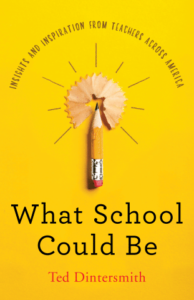
Today Ted joins FreshEd to talk about his new book What School Could Be: Insights and inspiration from teachers across America.

Ted is currently a Partner Emeritus with Charles River Ventures. He was ranked by Business 2.0 as the top-performing venture capitalist in the U.S. for the years 1995-1999.  In 2012, he was appointed by President Obama to represent the U.S. at the United Nations General Assembly, where he focused on education.

Citation: Dintersmith, Ted, interview with Will Brehm, FreshEd, 108, podcast audio, March 19, 2018. https://www.freshedpodcast.com/dintersmith/

Will Brehm:  2:03
Ted Dintersmith, welcome to Fresh Ed.

Ted Dintersmith:  2:05
Great to be here.

Will Brehm:  2:06
So in the fall of 2015, you literally went back to school for an entire school year, not just one school that you went to, but hundreds of schools across every state in America, what on earth made you decide to embark on this journey to go back to school?

Ted Dintersmith:  2:26
A lot of people ask me that, particularly my friends and my family members, because it is a little ambitious to go to all 50 states in a nine month period. And the trip really didn’t take entirely the shape I expected. So initially, I felt this, and I still feel I mean, every single day, I feel the urgency of anticipating what the future is going to be like for our young adults, and having schools adapt and modify and transform themselves to keep pace, which I think very few schools actually are doing for good reasons, because the innovation economy’s sprinting ahead. So I sort of said why didn’t I go on this really ambitious trip to make sure people understand there’s urgency here. But as I traveled and I took it very seriously, I heard the, believe it or not, the advance campaign planning team who did all the work for Mitt Romney’s 2012 presidential campaign. So it’s like, every day from morning, you know, breakfast till the end of the day, which would, the end of the day was typically 10, 10:30 at night with a community forum, I’m just meeting all these people, I’m going to all these schools. And yeah, boy, I just learned so much. I talked to so many interesting people, I saw so many interesting things. And so I thought, it’s like the classic thing, I thought I had something to say to America. And instead they had a lot more to say to me. And then that ultimately led to my writing a book about it.

Will Brehm:  3:50
So okay, so you went across the country speaking with thousands of people, what did you hear? What were people telling you about the state of education in America?

Ted Dintersmith:  4:01
Whether there’s just a million different perspectives on this, and you realize how incredibly complicated and intertwined our education system is, with schools, subject to all sorts of external forces, you know, state legislators, school boards, college admissions, parents, real estate agents, on and on, there are million different things that come into play, when it comes to the decisions that get made in schools. I’d say, if there’s one major takeaway is that in education, we largely have a system that is run by non-educators telling educators what to do, it’s sort of a few things in American society where that takes place. And you find that a lot of the people who project their views on the school really are thinking about the school they went to 30, 40, 50 years ago. And they’re not able to step outside of that kind of dated perspective on what’s to be accomplished in schools, or maybe more importantly, how to assess whether schools are doing a great job. And so you realize that, and this is similar, I think, to one of my perspectives from business is I generally learned a lot more about a business when I talked to the people actually kind of in the trenches doing the work than when I talked to senior managers, and I worked with some very good senior managers. But if you really want to understand what’s going on, talk to the people doing the work. And that’s what I was able to do. And I think it’s unusual because you know, I recognize I’m humble about the fact that I’m a person with a business background interested in education. And when I say that, as soon as you say those words, I have a business background now, and you’re interested in education, a lot of people in the classroom, you know, like the blood drains from their face, because they’ve seen that movie before. And it’s not a particularly good movie. But I found what I really put the time into, listen to them to hear about what they were experiencing. And in particular, to see some of the amazing things they were doing. It was really energizing.

Will Brehm:  6:05
So why is there a disconnect between the people running education and the people basically doing education, right? Like, why are the upper level managers so disconnected?

Ted Dintersmith:  6:17
In my book I talked about this, and the common denominator, and it’s not 100%, nothing ever in life is 100%, but a lot of the people that make their way to the top of these bureaucracies, you know, states, federal, you know, two things. One is they generally have very strong academic credentials. So school work for them, they expect it should work for everybody, they have no beef for the fact that they, you know, got into an elite undergraduate school and then went on to get their PhD from Harvard in the Graduate School of Education. So they are fundamentally aligned with the process of school. And they are also people that were able to work their way through and up to the top of large bureaucracies. So they know how to work a system, they have a mindset around policies and procedures and metrics, and they do what I think they’re inclined to do, what they’ve succeeded within their own personal life. And then they take that and apply it to schools across America. The problem is, a lot of kids have incredible gifts that go beyond the realm of the academic. And when you start to standardize education, so you can measure the progress of kids, I think you largely destroy the learning.

Will Brehm:  7:33
So on this trip of yours, was there anything in particular that you changed your mind about after meeting all of the educators and students and parents and principals? Like, what was the biggest thing that you came away saying, Wow, I really think differently about that now?

Ted Dintersmith:  7:50
Well, I clearly shifted not dramatically, but whatever respect I had for teachers going into the trip, which was a reasonably high level of respect only got higher. I mean, the number of teachers that would share with me, you know, in tears, you know, a variant along these lines, which is, every morning, I have to decide, do I do what’s best for my students, or what the state tells me to do? There are a lot of teachers in that category. You know, an incredibly moving day for me, is going to the national teachers Hall of Fame in Emporia, Kansas, and you see this knoll where they have these plaques and monuments and, you know, not massive monuments, but commemorating the teachers who gave their lives in classrooms for their students. And it just hit me, you know, like, we trust these teachers with the lives of our kids, but we don’t trust them with their own lesson plans. I mean there’s something really wrong there. And so that was one of my biggest things was just sort of an increase in respect and appreciation. As well, you hear all the time people say, you know, well, our teaching forces are innovative or one that really troubles me is why our public schools can’t innovate. And, you know, you realize, you put public schools and No Child Left Behind straight jackets for 20 decade, in 20 years. You tell them what they can’t do day in and day out, and then you criticize them for not being innovative. I mean, that is not fair. Despite it all I met a lot of teachers doing incredible things in public schools that I write about that just blew me away when they were able to think differently about how they want to engage and inspire their kids.

Will Brehm:  9:32
I want to ask you a list of terms basically that are sort of these I don’t know popular faddish policy terms in education today that we hear a lot in the media and a lot of politicians and big education reformers, quote unquote, reformers talk about and I want to hear your perspective of these terms, but from the perspective of all the people you’ve met. And so the first one is 21st century skills. We hear this a lot these days, what is your opinion on 21st century skills?

Ted Dintersmith:  10:05
Would people listen to me? I don’t hear a lot that’s different from what happened back in the days of Plato. And so I think in some ways, thinking that you have to be a creative problem solver, a communicator, whatever. And putting that in the context of the 21st century is a bit of a misnomer.

Will Brehm:  10:23
What about college ready?

Ted Dintersmith:  10:25
You know, this one to me is, and I pointed this in my book as one of the biggest factors impeding innovation in our K through 12 schools, and disengaging so many students. And honestly, lots of the college ready content is not of intrinsic interest to kids, is not terribly relevant to adults, and is largely baked into a system because it’s easy to test. And so I feel like we need to step back and say, we have gone dramatically overboard and pushing college ready onto the agendas of our particular middle school and high school kids.

Will Brehm:  11:03
Stem, STEM education?

Ted Dintersmith:  11:06
Another trendy thing you’ll read all the time, every kid you know, you are not going to do well in the 21st century without a STEM background, which is I think pure baloney. I actually think liberal arts is really important, you know, because they do teach these fundamental things that are important. You know that just as Plato and Socrates took on very challenging issues, kids are immersed in some of these complex ideas you find in literature, or history or philosophy, or any one of a long set of disciplines can be great vehicles for developing skills that are really important. STEM, first of all, and this is in my book as well, as I talked about the fact that, you know, for instance, MIT students on graduation day, somebody had the great idea which I think it actually is a really great idea to videotape these students on graduation day taking on this incredibly difficult challenge, which is they give the students a light bulb, a wire and a battery and say, can you light up the light bulb and kid after kid after kid, you know, cap and gown, you know, degree from the most prestigious Engineering Institute in the world, five on AP Calculus BC, five on AP Physics, 800 on the SAT and MIT blah blah blah, I mean, like, these are the best of the best, they can’t light up a light bulb. What you know, with a wire and a battery, they can’t do it. And, you know, right up the river, I talked about Eric, Missouri at Harvard in what he learned in his physics courses at Harvard. And so I’m actually deeply skeptical that when we say kids are really getting great at STEM, that in a lot of cases, I don’t know that it really goes much beyond memorizing formulas, memorizing definitions would be facile with being able to spend them back on an exam and slightly varied forms. And so, you know, like, I feel like if a kid’s passion is STEM, it can be a great path forward. But I think we need to start blending the academic with a lot more the applied, you know, that kids that are interested in physics need to be shadowing a master electrician and wiring things up and actually making circuits work instead of just memorizing Coulomb’s law and Kirchoff’s law, because I think we’re fooling ourselves when we think we’re producing great scientists and engineers in our colleges, the employers often tell me, they get here, they don’t really understand much of anything, we got to teach it to them as if they’ve never taken these courses.

Will Brehm:  13:29
It reminds me of that one part in your book, where you talk about this presidential summit that you attended when Obama was president. And there was all sorts of discussion all the way up to the Secretary of Education about calculus. You know, calculus is the thing we need to put back into the curriculum and get more kids taking calculus. And, you know, so why is that sort of this narrative that reaches all the way up to the highest levels of policymakers?

Ted Dintersmith:  13:58
Well, I put it back on the policymakers, the people that say things like that, and don’t know what they’re talking about. And they really don’t. I mean, you know, if you can google my background, I mean, I published papers written back before computational resources were really much of anything. When I had to do clothes for medicals by hand, you know, so I’m not without a fair amount of perspective on when calculus actually was useful, and how it’s a lot less used today. I mean, you know, and kids will get done with AP calculus, and you ask them when would you ever use this? Their answer is, I have no idea, you know, but they might be able to, if they’re particularly good at it to a hyperbolic cosine transformation. But Photomath or WolframAlpha does that instantly on your smartphone so we have these kids spend nine months replicating what a smartphone can readily do without ever making a mistake and they never quite get to how to apply it and actually calculus is something that has very limited applicability. You know but if you’re one of these bureaucrats, it just sounds good. You know, oh, well, kids, you know, isn’t it a tragedy that half the kids in America in high schools they don’t offer calculus. And college admissions officers, oh, we really look for kids that have taken on the rigor of calculus. You know, it’s just mind numbing, because most of the kids that take calculus are not taking statistics. You can get great jobs with statistics, it’s important for career, it’s important for citizenship, it comes into a lot of your personal decisions that are consequential and yet, we’re telling kids take something that almost no adult in America uses and don’t take something that’s indispensable across the three most important things in your life, work, citizenship and personal decisions. You know, it’s like and we just owe our kids better than that, we owe our kids a more informed perspective on the things we advocate as being important.

Will Brehm:  15:55
Okay, so going back to this list of buzzwords and ideas and policies. What about charter schools? What did you find about charter schools as you were crossing America?

Ted Dintersmith:  16:05
Well, I think that charter schools, public schools, private schools, take the category, I don’t care which one it is, you can find some great examples of schools, some okay examples and some bad examples. And I actually don’t think those percentages across the type of school that is are all that different. Yet, you know, you read in the newspapers, you look at where a lot of philanthropists direct their money. And so charter schools are dramatically superior to public schools, despite the data that says there’s really not an appreciable difference in performance. And those are performances measured by standardized tests. And there’s a lot of evidence that charter schools are doing, you know, two things. One is they’re trying to somehow dot the kids that are going to test as well, I think you see some of that. And also they are relentless about test prep. And so I think there’s nuance to these things. But we often just try to simplify it. And so there are charter schools out there, my film Most Likely to Succeed is about High Tech High in San Diego, a really spectacular school. It’s a charter school, it was started back in the days when there was a small number of charter schools formed to really prove out bold in different types of innovations. And I think most people would say there’s a role for that. That’s an important thing to have in our education system. Today, though, most charter schools are co-opted by people who are just going to try to grind out better test scores from their students and hold that up as a measure of success. And I think it’s such a shallow view of things that, you know, we just, again, we need to think harder when millions of kids lives around the lines with the policies and decisions and the massive amounts of funding we direct to schools, you know, are tied to things that just don’t reflect careful plot.

Will Brehm:  17:54
So on your trip, when I read your book, it is very, it’s much more optimistic than I actually imagine that would be before I started reading, and I want to get into some of that optimism about you know, there are many schools and systems in America that are basically doing everything different than what you’re just talking about before, you know, I mean, they’re not trapped in this old way of thinking. And there are many educators trying their hardest to innovate within the constraints of the system that exists. So can you tell me a little bit about, you know, the inspirational features of some of these schooling systems? And, you know, what do these really innovative schools look like that you visited and met the teachers and students who attended?

Ted Dintersmith:  18:43
Yeah, it’s so interesting because one of the challenges I faced in writing the book and I hope I met it is that the specifics of the things that blew me away, you know, when you looked at exactly what these kids were doing, there was no rhyme reason they were really quite different. But there were general principles that undergirded them that really made the difference between, you know, a kind of same old same old classroom where kids, you know, just kind of go through the motions and the occasional question is, will this be on the test, versus these classrooms, these schools, these even out of school settings, where kids are just racing ahead, you know, the learning is deep and retained and joyful, and you just sort of say, man, they have got this and which is why I found the whole trip so inspiring, and why I think and remain deeply hopeful that we’re going to make enormous progress in, you know, a relatively short period of time, because we don’t need to invent what works, I mean, it’s being done, you can find something really great in any school in the country, certainly, any community has its great proof points. And so we don’t need to travel to Finland to see better education, you know, we don’t need to travel to Shanghai, you know, I mean, it’s like it’s being done in the US, it is being done in lots and lots of places. And I think one of the things we need to do a better job of celebrating those successes, which is a goal of my book, and encouraging other people not to copy it, but to in their own way, embrace things that help their kids, you know, have better learning outcomes and be better prepared for a world that’s going to be full of opportunity for the people that are creative and bold and, you know, think outside of the box and curious and a bunch of other things that often get left behind in the process of school. But that world for somebody that’s just conditioned to jump through hoops for somebody that’s just good at memorizing content, replicating low level procedures that kid’s going to be in a world of hurt point forward. And so I think it’s that pattern. And that’s why intentionally wrote the book picking things from every state in the country to really reinforce the point that it’s not just in, you know, actually I found Palo Alto I found California to be not that innovative you know, but you can find these great things in places that many people don’t think of its innovative you know, that North Dakota is, you know, the country that Kentucky’s, you know, these there these really great people fighting in every single day to advance learning for their kids.

Will Brehm:  21:22
And do you think all of the different models and systems that you’ve seen that were inspiring? Are they scalable? I mean, you said don’t copy it, right. But how then can it be scaled even a whole school district or a whole state, you know, maybe not think about the national level?

Ted Dintersmith:  21:40
Yeah, and I write about districts. So, you know, I’ve got a great chapter, a great profile of what’s going on in Charlottesville, Virginia, great district level innovation, the state level New Hampshire, so not only can it I mean, it is being scaled but it’s being scaled at a meta level instead of at a prescriptive level. And so what the people that are really thinking carefully about this are doing is scaling a set of conditions instead of scaling, you know, a cookie cutter model of a particular classroom or school. And I think that’s really the difference between, you know, two decades or more of US education policy, which is decided on behalf of everybody across the country, you need to do X and so now we’re going to make you do it. And we will hold, you know, Title One funding out to sort of bribe you to make sure you, you know, march to the right tune on this versus the really informative, thoughtful leaders like, you know, Jenny Barry in New Hampshire who are looking at how do you put in place the conditions that led superintendents and principals and classroom teachers do the things they entered the profession to do? And how do you trust the teachers to lead the way in far more informed assessments. And so to me, that’s really incredibly encouraging, you know, where you look at a model that is not being scaled, as I say with you, Will, on October 17, study x in class y, which, I mean, who the heck wants to live in a world like that students don’t want to, teachers don’t want to, I mean, when we micromanage a curriculum, and say that all kids need to study the exact same thing for the exact same high stakes test, we really are undercutting any real chance of learning and proficiency development among kids, as opposed to putting in place a condition. So let people run with things, set their goals, really just knock it out of the park in terms of accomplishment.

Will Brehm:  23:44
So what are some of these conditions, right? Like, there must be some sort of, I don’t know, more abstract conditions that that might be able to be scaled to the middle level, like you said?

Ted Dintersmith:  23:55
I put it at the top of the list where it works. There’s a high degree of trust, you know, and if you, you know, it’s one of the things that happens, the bigger the bureaucracy, the more the machine moves away from trusting people to implementing policies and procedures to keep something bad from happening. Once you take trust out of the system, once you, you know, look at what we did our brilliance of holding teachers accountable to standardized test they didn’t believe in and I think, shouldn’t have believed in. You know, we’ve really, you know, cut the legs out from under, you know, what our schools are capable of doing, you know, so that’s the first thing I’d say trust. Second thing is having clarity about where you want to get with kids. And, you know, I talked about, you know, schools, districts, even states that are thinking very carefully about what are the, what are the competencies, what are the skill sets and mindsets you want your students to be developing and be clear at that level. And then working back from that, to understand what school experiences will lead to that. And for sure, the competencies that are going to matter going forward are not memorizing content, replicating low level procedures, following instructions. Machine intelligence is already far better at that than any person could ever be. But it is things like, you know, creative problem solving or aspects of citizenship or aspects of character like never giving up. And so the question is, then how do you embed those in the school experience but not fall prey to this cockamamie thing, like, we’re going to have standardized test of grid, you know, like, you know, like we would someday be here, we’re going to have standardized test of creativity, which honestly, kind of falls in the category of a profoundly bad idea. But, you know, and then really tying the student work to authentic accountability, are they producing things they’re proud of that beat some level of some standard, you know, if a kid is really going to be held accountable to their ability to do great work in language arts? How do you test that? Well, you know, it turns out, you know, and this is another thing that I think is so interesting is that, that if you don’t feel the need to roll all these things up into a particular number, it turns out there are easy ways to, you know, make sure the kids are held accountable. I mean, I often share the story that in 25 years in venture capital, I never want to ask somebody what their SAT scores were, what their grade point average was, but I always ask them to send me three or four writing samples of work that they’re proud of. I’ve learned so much, it didn’t take me five hours to read three or four writing samples. And I actually think that that approach said a lot about my successes as a venture guy is I can read their best examples in, you know, a few minutes, 5, 6, 7 minutes, I can read them. And if they were interesting, I could pick up the phone and talk to them and say, you know, of the things you sent me the third one really struck by interest. Tell me more about it, ask him some questions. If it was really their work. If they really mastered it, they had great answers. And so you think about something like the SAT essay question, right? I think this is so telling is that for 12 years, the College Board gave essay questions on the SAT, it’s actually something really useful to do, you know, kid has no prep, you know, no help from any adult, they can’t anticipate the topic, there’s a proctor you really get to see the kids on writing.

If they had just said for all applications, admissions officers, if you want to see an authentic example of the kids work without coaches, without parents, without tutors, click on this and you’ll see their essay. They didn’t do that. No, they said, we got to put a number on it. And so they ran these essays through these, you know, out of work people they’d hire off of Craigslist, who in interviews will say, I didn’t even read the work I just scan it, people have debunked it by taking great writers and having right sheer nonsense and getting a 750 to 800. If they just were, you know, five paragraphs, four to five sentences per paragraph, invert the sentence structure, introduce some vocabulary words that you know, that are unusual or challenging. Bingo 750 to 800.

And you realize like we obsess about rolling it up and do a few numbers when we’re really letting the easy measurement tail wag the learning dog. And so like New Hampshire, there are digital portfolios with these students, teachers lead the way in authentic assessments but they can be audited. So if your school board and your school is saying most of our kids are doing anywhere from well to outstanding in these areas, you can say I want to look at 10 at random portfolios, see for yourself, teachers cross check each other. To me, that’s far better in terms of getting kids to work on authentic, you know, projects and essays and you know, they value creativity, they really do align with developing skills that matter with a thoughtful assessment system or assessment framework as opposed to boom, high stakes test. They’re generating multiple choice or formulaic essays, somebody somehow turns them into a number. And then when they go up 0.7%, everybody says, great, when they go down 0.3%, everybody says the bottom is falling out. I mean, it really makes no sense.

Will Brehm:  29:26
America is sort of known maybe in a more negative way for having very different funding levels between schools based on these property taxes, and then also deeply segregated schools even after Brown versus the Board of Education. How do you think America is going to be? Or do you think America is going to be able to overcome some of these race and class divisions that we find in schooling?

Ted Dintersmith:  29:56
Yeah, it’s a huge issue. And I talked about being, you know, two different schools 10 miles apart, in Mississippi and, you know, it’s just night and day. One is in a building that anybody would probably say should be condemned. And the other one had, you know, just football fields, fields, plural, you know, practice fields, the main stadium I mean, it’s just most beautiful place in the world you can imagine and you find that all over America. I’m not picking on Mississippi is that it’s almost anywhere you go, you can, in 10, 15 miles you can find two school particular here, urban, suburban area, you can find two schools in close proximity with dramatically different amounts of budget, you know, funding is really this, you know, Rodriguez versus the San Antonio decision more than Brown versus the board that drove all that because local property taxes tell the story. And that’s a very difficult gap to get people to face up to, because the ones with the cloud, the ones with the power, you know, are the ones that you know, have their kids going to the better resource schools. And so it’s a huge issue. But then we take something that’s an enormous challenge. And we make it that much worse. Because if you look at the data on how much time kids in the under resourced schools spend doing worksheets. I mean that’s their day, they’re doing worksheets around the clock. They’re giving material that they have no interest in, material that we can’t really explain how it will ever matter them in life, you know, we block them from getting a high school degree because they can’t pass Algebra Two. I mean, you know, like, I got a PhD in math modeling from Stanford. And I’m not sure in my career I ever used anything from Algebra Two. I mean, you know, like, it’s just really astounding the things we pile up block kids from getting a high school degree, because nobody ever steps back and thinks about it. And so what I found, which gave me encouragement, actually, quite a bit of encouragement is when the heart and soul of school was far more aligned with challenges that were messy and ambiguous and connected with the real world where it wasn’t clear what you needed to do to get an A where you knew you were going to fail multiple times and had to just keep coming at it where you know, where it required real out of the box, you know, out of the box thinking that you know, again and again, people would tell me oh my gosh, you know, these underperforming kids, the at risk kids, the kids that we’ve sort of viewed as being not on the right side of the bell curve, they actually blow us away when they’re doing something they care about. And oftentimes a really rich, you know, micromanaged kids fall apart when they’re given that kind of ambiguity. I mean, they paralyzed, they’re paralyzed when they think they might fail. And so it suggests this view that we could better prepare all kids by connecting more of their school experience with taking on, you know, creating and carrying out initiatives that one way, shape or form make the world better that do have lots of ambiguity and lots of messiness, and lots of challenge with them, that’s actually better preparation for them later in life, and starts to make real progress and reversing that achievement gap.

Will Brehm:  33:14
So when I was finished reading your book, I kind of I was left feeling to be honest, that a lot of what you’re saying is about education is really for getting children prepared to enter a workforce that is going to look radically different in the future than it does now. And I just wanted to ask on your journey, did you experience or witness in a sense civics or citizenship, or the ability to learn how to be in the world? Right, like, so how does citizenship education fit within public schooling? I mean, is education only about jobs? Or is there more?

Ted Dintersmith:  33:52
Yeah, and you know, I do write a lot about school experiences, where kids are connected to the world and in different ways, making their world better. And in some of those ways, it’s directly aligned with the career path. And that’s important to me, I mean, I feel like we have given a kid an enormous gift if they come out of high school with the skill set to directly get a job that pays well above the minimum wage. And by the way, I think that’s doable for most kids in school in America today, and their K through 12 years.

And you know, so as opposed to spending the entirety of K through 12 on college ready, which means that the kid leaving high school really has to choose between a crap, a lousy minimum wage job or college, they pick college. You know, the math on that is pretty dreadful with, you know, only half finishing in six years or less. And then of those that finish, only half of those get any kind of a job we normally associate with a college degree. So it’s sort of like you start down the four year path, four-year degree path. And it’s one chance in four in a reasonable time frame, at least the kind of job everybody thinks a guarantees, and of those kids, no matter who they are, you know, 70% are taking on substantial amounts of student loan debt. And trying to pay off student loan debt, if you don’t have a very good job is a nightmare. And so, you know, I look at that. And so I feel like in a ruthless economy, and people need to try, I mean, if they google me, you know, like, I know a lot about innovation. People need to really recognize the fact that machine intelligence is just advancing at a blistering pace. And you know, I tell this story about the team that got funding at Google for the driverless car, which is now I want to say, maybe eight years ago and so they put their careers on hold, they made this big bet on driverless cars, you would think that they would be by and large really optimistic about being able to pull it off and the most optimistic person in the founding groups said that it would take at least 20 years before we’d have driverless cars. So you know, three years ago, driverless cars were three times safer than human driven cars. So if it’s been talked about today, it will be real in 10 years. I mean, it’s just will be real.

So that’s why I push so hard for making sure kids have an ability to plug in to the economy and make their way forward. I don’t think by the way, it’s either or, I don’t think it’s just and actually really celebrate and focus on schools that blend the academics with the career that learn about electricity by shadowing a master electrician instead of studying Coulomb’s law that captured documentaries, you know, the right docu.., produced documentaries to capture aspects of their local history. I think there’s a way to blend.

Experiences are really give kids a career lift with experiences that get them thinking about intellectual ideas. And that’s one of the great roles these teachers play is to say, oh, you’re interested in this, What about this, is sort of move that initial interest to something broader and to really get at the core thing of citizenship you know, I mean, what is it mean to be a citizen i mean, is it you know, AP US history, right? But everybody says that the gold standard for history classes in high school in America is AP US history. You know, it’s like less than a class period on the Constitution. I mean, the number of adults that can explain to you anything about the Constitution is, you know, like you’re lucky if it’s one in 50. And so we give lip service to preparing kids for citizenship, but I don’t think it’s happening. And yet if kids suddenly start proactively identifying opportunities, challenge problems in their community and learn that they can take their own talents and their ability to learn and their ability to just keep going at it with support from their community and they can make a positive difference in their world. That to me is the most important citizenship lesson we can deliver to our kids.

Will Brehm:  37:54
Well, Ted Dintersmith, thank you so much for joining Fresh Ed and best of luck promoting the book.

Ted Dintersmith:  37:58
Well, thank you, thanks for having me and I really love what you’re doing so I hope we get a chance to meet in Tokyo and I’m just cheering you on from afar.

Will Brehm:  38:06
Thank you so much

Want to help translate this show? Please contact info@freshedpodcast.com
Have any useful resources related to this show? Please send them to info@freshedpodcast.com

To kick off the new year, we have a special show for you. Today, Linda Darling-Hammond joins me to talk about her new co-authored book Empowered Educators: How high-performing systems shape teaching quality around the world

The book explores how several countries and jurisdictions have developed comprehensive teaching and learning systems that produce a range of positive outcomes, from student achievement to equity and from a professionalized teaching workforce to the integration of research and practice.

Linda Darling-Hammond is the president of the Learning Policy Institute and a Professor of Education Emeritus at Stanford University.

Citation: Darling-Hammond, Linda, interview with Will Brehm, FreshEd, 102, podcast audio, February 5, 2018. https://www.freshedpodcast.com/lindadarlinghammond/

Transcript, Translation, Resources:

Read more

OverviewTranscriptBản dịch Tiếng ViệtResources

Have you ever thought about how polarized some debates in education are?

Think about it.

Whole language versus phonics.

Direct versus indirect instruction.

Public versus private schools.

My guest today, Professor Yong Zhao, says that these polarized debates result, in part, from research studies that only look at effects – or side effects – of educational interventions. Rarely do studies acknowledge what works and what doesn’t.

Yong Zhao, a Foundation Distinguished Professor in the School of Education at the University of Kansas, argues that educational research should learn from medical science.

Citation: Zhao, Yong, interview with Will Brehm, FreshEd, 79, podcast audio, June 26, 2017. https://www.freshedpodcast.com/yongzhao/

Will Brehm 1:35
Young Zhao, welcome to FreshEd.

Yong Zhao 1:37
Thank you, Will. Glad to be here.

Will Brehm 1:40
So, this may sound like a rather strange place to start our conversation on education research but bear with me for a second. In medical research, what are researchers typically looking for?

Yong Zhao 1:53
Well, typically, I think, we know it is not only typical, but they are required to look for both effects. That is, how it works and what does work, and the side effects, the negative consequences or outcomes that might come, you know, with a medicine or medical procedure.

Will Brehm 2:14
So, this is like why we see possible side effects written on the box of over-the-counter drugs, for instance.

Yong Zhao 2:23
Yes, yes, that is one of the, I think, results is that when you get a bottle of medicine, maybe it cures kind of your headache, but may cause a bleeding stomach. Yes, and things like that.

Will Brehm 2:35
And you said that it is required. Who is requiring medical research to look at this, not only the effects but also the side effects, and make them publicly known?

Yong Zhao 2:46
Well, we know in the US, the FDA – the Food and Drug Administration – any government agency that approves drugs to be released on the market or approves any medical procedures, there is a government always looking for those that require pharmaceutical companies or any kind of medical and I think institutions try to do that.

Will Brehm 3:10
So, in terms of medical research and looking at side effects and effects, what are some of the typical methods that are usually employed?

Yong Zhao 3:19
Well typically, the methods is really we called the “randomized controlled trials”, that is, you randomize people and put them in different groups, then you give some people the medicine, you give some people the placebo – you know, called the “placebo effect” – so,  to see the results. But the important thing is that, when they measure the outcome, they do not measure if it is effective in curing disease, but it also looks at damages. For example, some medicine may cure your liver problem, but it can kill you.

Will Brehm 3:54
So, you would not want to take that one.

Yong Zhao 3:56
No.

Will Brehm 3:58
So, are these random controlled trials found in the social sciences?

Yong Zhao 4:03
Typically, in education, it is not much. That’s why in recent years, there’s been encouragement action to say social sciences should do a lot more randomized trials, but, you know, it’s how difficult it is. You cannot seriously randomize kids a lot, and it is very expensive as well. However, it is growing, because it has been believed that advancement of medicine is due to these randomized controlled trials in methods. And so, it is happening a lot, it is costing a lot of money, and so, here we are. We see a lot of those things encouraged, but I am not sure how that is going to improve education or not.

Will Brehm 4:44
So, what sort of side effects could, you know, be uncovered if this method were employed more widely?

Yong Zhao 4:52
Well, side effects like you know, one thing we could see long term and short-term outcomes. For example, you may be able to push students to memorize math or memorize some historical facts, but that’s short term. You can measure that. In a week, my students have been able to memorize this formula, but at the same time, they might have lost interest in the subject. Maybe the more they learn, the more the hate the subject.  I think that would be a bad idea. We have also seen that some parents maybe like to say, you know, “We force children to memorize, and we’re proud they can memorize so many words now”, but then they’ve lost interest in reading. That may not be a good idea either.

Will Brehm 5:38
So, surely some educational research does look at side effects, right?

Yong Zhao 5:42
I do not think they look at side effects and effects at the same time. I think the challenge is this: There are a lot of researchers who do not like certain methods. They will say, “Okay, our problems are this”. For example, you see a lot of people reporting. I mean, you’re in Japan, so people say, “Japanese education has caused students to lose creativity, curiosity and all those kind of things.” But at the same time, the other side, will say, ” No, we’ve looked at Japanese education. Kids’ math scores are high, their science scores are high.” But they are studied separately. That is the problem.

Will Brehm 6:18
So, they are studied in the sense that one group of researchers will look at one issue without recognizing the side effect to that issue.

Yong Zhao 6:29
Well, yes. In a sense, the proponents of certain methods will say, “Look how effective my method is.” That is what you see people say if they want to go for test scores, “Oh, East Asian countries are doing so great. You get Shanghai, you get Japan, Korea, Singapore, all have great scores.” So, they said, “Let’s learn from them. Let’s learn from Japan.” This is a lot of people saying that. But at the same time, people say, “No, no, no. They’re actually damaging their kids, you know, and so we should never do that.” So, you have two camps of people, then finally they kind of evolve into ideological war; they began to argue with each other, but not trying to say, “Yes, it is the same system.” It is the same thing, it just results in different consequences, but it is the two sides of the same coin.

Will Brehm 7:17
And so, when there is this ideological divide that ends up happening, I mean there must be very difficult dialogue across these different camps, but it also must impact policymakers in a particular way. How do they attach themselves to certain camps over other camps?

Yong Zhao 7:38
Yes, I think that is the big issue is that when they are studied separately, you have these ideological arguments, which does not really help improve education; it does not lead to betterment. So then you have policy makers, if they happen to be aligned with one ideology over the other, they will promote that as national policies or educational system-wide policies, and then you may have another government come in five years later to say, “Oh, look at the damage it’s done. Let’s throw that away. Let’s pick something else.” And the something else also has side effects, so they begin to have this pendulum swing. A few years to say, “Oh, this method doesn’t work.” And then, “Let’s pick something new, because it’s so exciting.” Look at only the positive effects, they, after a few years, some other group comes in and says, “Look at all the side effects.” Then, “Let’s throw it away. Let’s pick something else.” So, there is this pendulum swing. New ideas get recycled. But very few people would say, “Okay, if we look at the side effects, what if we say, “Okay, can we do something to mitigate the side effects?” to reduce that, to minimize that.” Now that represents improvement. So, this way, we do not just randomly throw things away based on ideology and based on one set of data and measurement.

Will Brehm 8:58
So, wouldn’t an example of this be the “No Child Left Behind” Act?

Yong Zhao 9:04
Well, in the US, definitely. Yes. For example, in the US, you know, technically when No Child Left Behind was introduced, it was a good idea. Many people think that you hold schools accountable, you want to raise student test scores, you want to test a lot, and those things actually could and should result some improvement. But at the same time, and we know from experiences in Asian countries, you know like high stakes testing, test students often, is going to result in a test-driven education. Education becomes test preparation. Then your assessed students lose interest. When you hold teachers accountable for raising test scores, and when they actually cannot do that, it’s demoralizing education. And then you need to a narrow of the curriculum, which we know happened in Asian countries. So, if we had known that for sure, we may have found ways to say, “Can we design some other ways to make sure that doesn’t happen?” Or, “Can we make sure that we’re not simply borrowing something wholesale, but at the same time designing something that’s slightly different?”

Will Brehm 10:13
And how would you incorporate cultural differences into the idea of learning from abroad, and learning about the side effects and the effects from abroad? So, for example, in the case of No Child Left Behind, you were saying that policymakers and educational researchers could have easily looked at other countries that have implemented the same sort of test-based accountability measures. But how do you incorporate cultural differences when thinking about, say, the US versus Japan?

Yong Zhao 10:48
Well, that is a fabulous question. In essence, cultural differences or cultural conditions bring out the causes or reasons for some other side effects. For example, some people are more allergic to penicillin than others. So, if, as a body – if you imagine a physical body as a culture – some medicine works for one group of people and not others. We see warning signs. For example: “If you are pregnant, do not take this medicine. You know, take something different.” The same thing, when you import ideas from other cultures, you want to say, “Okay, does it work in this environment?” So, we should really test some of ideas. For example, one thing America is trying to borrow from Japan is something called “lesson studies”. And lesson studies may work in Japan, because of the, honesty, I think, the hierarchical culture in schools. And actually works, you respect the more senior teacher. The senior teacher can have authority over junior teacher. Which actually doesn’t exist in the US culture. So that may not work very well at all. In the US, as you probably know this very well, the flat structure that unionized, it is very hard to put one teacher to be the authority on top of other teachers, and to learn. But also, at the same time, you have to think about: if education is about innovation, the hierarchical culture actually constraints innovation. If you borrowed this whole thing in, if you think teaching is only just trying to become like the senior teacher, that means there is no innovation, right? When do the new methods come out? The new method has to come from people who are not like the senior teacher, who has come from maybe young teachers. So those are, again, the side effects. So that is why I think culture is really very much like a human body. Medicine works for some people but do not work for other people. Some medicine may work for a certain age, some medicine may not work for a certain age.

Will Brehm 12:55
Do you think there’s limitations to the analogy of medical research to educational research?

Yong Zhao 13:03
Well, there is definitely limitations, because these are two different things. However, the idea that the idea of side effects, I think works very well. Because as we know, in anything you do, there is a kind of equal opportunity cost. For example, if you spend time all your time studying math, you are not going to have the same time to go out to play music. That is the kind of thing. So, there are some universals that can go together.

Will Brehm 13:31
And so, in educational research, why hasn’t there been like a demand for looking at both effects and side effects?

Yong Zhao 13:42
Well, I think there are really many reasons. I think one of the primary reasons would be a lot of people trying to think education does no harm. So, we always think of education as a good thing, so we do not really question that. And number two, we talk about side effects. They do not necessarily show up at the same time. Medicine is the same way. Some kind of damage, when you take medicine is long term, it doesn’t show up. But we should monitor that. But in education, you know, we do not. Once you teach kids, if the schools are held accountable for producing good test scores, if you want your children to memorize some math functions, but the side effect is a loss of interest and loss of passion, but that will be showing up maybe five years later, when kids begin to hate schools. “Oh, that was caused …”  then it is hard to draw a direct connection between the two because one is so short term. Another thing, of course, is that, I think, schools have always looked at one type of effect that is called “academic outcomes”. And all academic outcomes are measured in the short term. After one week of instruction, after one semester of instruction, one year. But then the other damages may be done in much longer term. You do not even know those things. And then of course, you know, it seems to be such a common sense, but I have not seen people calling for the study of this so far. This is really what is called a “common sense idea”, and so nobody has done this. I found it is actually puzzling, too.

Will Brehm 15:23
I mean it seems like it would be rather challenging to measure something like “passion” rather than something like how a student is doing on a test.

Yong Zhao 15:33
Yes, apparently. But you could measure it, and also, so like “passion”, “curiosity”, all these things, are much, you know, longer term, takes a long time to lose or to gain. For example, if you are going to school – I do not know, Will, if this happened to you – but it definitely happened to many people, going to school make you feel stupid, for example. You cannot do this test. You cannot do the homework. You tried very hard. Somehow, you are just not as good as your brother or your next-door neighbor. And that is going to make you feel really bad. But feeling bad may be developed over a long time. And actually, most often, we don’t care. Most teachers do not even pay attention to that. And so, you do not even know you were damaged. I do not know; you apparently seems to be a happy guy. I think you might have done okay in school, but you know how many schools … I am sure you have friends who really hated school and get disengaged. And then we do not count them. In our general world view, we really believe all schools are good. I do not know why, going to school seems to be a good thing. We always believe that. It is shocking, right? But a lot of kids get really hurt, but nobody pays attention to them. We blame them. We say, “You didn’t try hard.”, “You’re stupid.”, “You were distracted.”

Will Brehm 16:54
Yes, I must say, I personally very much did not like taking tests. And I think it is the reason that I got into studying education as I got older: To try and understand why it was that I disliked education so much when I was a child.

Yong Zhao 17:14
Well, that is another side effect, right? Hating school may not be a bad thing if you want to, like you, turn this to your attention and say, “I want to know why it’s so bad.” That is another side effect. By the way, side effects sometimes are not all necessarily bad. You know like medicine. For example, I think Viagra was not invented for sexual enhancement. It was really more for something else. Then we discovered, “Oh, it can do this.” Okay, that is cool. So, you know, side effects might uncover a lot more different uses for the same education methods.

Will Brehm 17:52
So, I want to go back to this idea that you said that education can actually do some harm. So other than like students disliking school, what other harm can actually manifest?

Yong Zhao 18:05
Well, for a large scale, if you look at a system level, some education system can be simply a brainwashing, or trying to, I would say, homogenize individuals, getting rid of different kind of talents. Which was actually in many ways was designed to do. So, if you look at Asian countries, I think their systems have done a great job in making sure everybody is alike, think alike, learn the same things. And anyone who is defiant or non-compliant may be kicked out of the system, which results in “talent homogeneity”, which hampers innovation in a long run. But also, then, the effect is that everybody can think the same. That is really cool. But if you think, “Well everyone thinks the same, they are easier to govern.” But at the same time, you do not expect people to be very creative and innovative. On the other hand, in the US education system, it is really horrible in the sense of trying to make sure everybody learns the same thing. Making sure they be obedient. But at the same time, the other side effect is it has resulted in a bunch of people who can think outside the box.

Will Brehm 19:21
So, it seems like a lot of this issue is really about the value of education. Having a debate over what it is that a particular system of education, and I guess it would be what policymakers, or those in power, deem the right effect that they’re looking for. So, if it is thinking outside the box, or if it is discipline, or whatever it is. I mean, so really, it seems like the issue is a lot deeper than just looking at effects and side effects, but it’s actually about having this kind of deeper debate on the different values of education.

Yong Zhao 19:59
Yes. I think that is precisely…Also, for parents and for educators, as consumers… You want to know when it does this, it also does that. So, you have got to weigh over, do you want that? Or do you want this? When you cannot have both. I think people in education, many educators, even researchers, they really hope we can have both. But sometimes you really cannot have both, so you need to know. As we talked about you, when you when you put yourself into surgery, you sign those long pages and pages of risk. It could do this. Are you willing to take the risk? I hope with education, you have sent your children to school to say, “Now okay, I want to know what the side effects has been. What this cannot do. What are the risks of my kids going to your school? What might be the side effects? What are the possible damages you could do to my children? What will my children not get?” For example, you go to some school … I am sure, Japan, anywhere else … You go to a school, you want to ask, “Yes, you’re great academically, but at what cost?” You want to say, “At what cost? Will my children still have time to play? Will my children be happy? Will my children be making friends? Will my children be anxious?” You want to know those things. If that is the case, you say, “Man, I don’t like that. I’m going to go some somewhere else.” Then you go to another, maybe a play-based school and say, “Yes, your children will be very happy. They’ll be playing with nature, all those things.” But they say, so at what cost? And they say, “Well, maybe your children will not be as competitive in taking a test.” So, you as parents say, “Yes, I’m willing to live with that.” So that is the kind of thing I think we need to think about.

Will Brehm 21:47
So, in a sense, are you advocating for something like an over-the-counter drug that is in a box that has publicly and clearly labeled the side effects? Somehow that would work for education. How would parents, and how would teachers, and how would policymakers and principals, how would they actually know these side effects? There is no FDA for education in America, but are you saying there should be one?

Yong Zhao 22:16
I think so. First of I think there should be somebody, maybe starting with the professional organizations and academic journals that publish this research, to really require people, researchers, to report both, to study both. First of all, that information has to be available – to study both. And I am working on the book trying to compile existing findings, but that has to come from both sides, by different independent researchers, both ideological camps. That is going to be the beginning of that. But I would love to say professional organizations, academic journals requiring people to study and reporting known effects and side effects at the same time. And then any kind of new pedagogical methods and new textbooks or new policies would continue that information for the public, for parents and for teachers to understand. I think it is very important to do that. And of course, there are some other kinds of medicine. For example, some generic medicine that may not have as much side effects…but we still need to know. Do they have any other effect? I do not know if you have noticed that, Will, on television now, most of medicine when they promote them, TV ads, I think they read out the side effects for a much longer term than the effects.

Will Brehm 23:46
And really quickly as well.

Yong Zhao 23:48
Yes, exactly.

Will Brehm 23:49
Yes, I guess, for me, education seems so deeply political to, particularly, a nation state. And I would imagine that some nation states would be very uncomfortable making all of these different decisions so publicly available with the known side effects and effects.

Yong Zhao 24:11
Oh, yes. I think, definitely. It’s like in a pharmaceutical companies- many of them try to hide side effects, many of them do not study them, many of them, you know they try to hide. It is very possible, so it is really nothing new in that sense. If you trade from huge, giant pharmaceutical companies as a nation state, they want to hide. They do not want to let everybody know, so that is really possible.

Will Brehm 24:39
But in education, typically it is the nation state that is also producing the education. Right, so it is the nation state that is producing the education and also the ones who are regulating it. So, if they are trying to hide something, it is a little difficult to get some regulatory body to uncover it. There is no kind of …

Yong Zhao 25:04
Oh, yes. I know there are countries who try to hide children anxiety data, children mental health data. Some countries try not to report youth suicide rates, or at least to not make them public. So those are, it is possible. And there are countries who do not allow you to write any kind of critical … which is a measure of side effects. We have one nation state that funds all educational research and they will censor any publication of that.

Will Brehm 25:39
But at the same time, we also do see big companies like Pearson, or all these other for-profit education companies that are, in a sense, acting like those pharmaceutical companies and hiding, or controlling their data and only, you know, releasing the data that shows how great their educational products are.

Yong Zhao 25:59
I do not think these companies in education, like I mentioned before, even study side effects. Again, they are they are busy proving how good it is.

Will Brehm 26:09
Yes, that is right. I mean it seems like such a valuable endeavor to do, and it almost seems, like you said, common sense. But it just seems like it will be very difficult to get educational researchers to do that, particularly because it’s become so ideological for a lot of these different issues in education.

Yong Zhao 26:34
Yes, I think. Definitely. But I think it is a must we have. So that is why I hope with your help, with other people’s help, we can spread the idea. It is actually essential, really, for us to advance this whole field. Because if you’ve been in education long enough, you know we recycle these kind of ideas. Whole language? No, it has to be phonics. Remember those wars? We do pure math and back to the basics. Now we do inquiry-based learning. We argue all the time. And really, we just need to have a clear understanding of what we are talking about. We need to advance. So, the people argue. Like now, you know, direct instruction is back in full swing. I know in Australia, some government said, “They’ve got to do direct instruction because it’s very effective. Children do not need to discover one plus one equals two.” … But at the same time you say, you know that might be simply what I call “unproductive success”. In short term success, but it is not productive in a long run.

Will Brehm 27:43
Well, Yong Zhao, thank you so much for joining FreshEd. It was really great to talk today.

Yong Zhao 27:47
Thank you, Will. This is great, and I hope you will help us spread the word. This demand that is required: Study side effects and effects. You know, when it works, it hurts.

Will Brehm 1:35
Yong Zhao, chào mừng ông đến với FreshEd.

Yong Zhao 1:37
Cám ơn, Will. Tôi rất vui được có mặt ở đây.

Will Brehm 1:40
Có lẽ đây sẽ là một cách hơi lạ lùng để bắt đầu cuộc trò chuyện của chúng ta về nghiên cứu giáo dục, nhưng các bạn hãy cố gắng kiên nhẫn một chút nhé.
Thưa ông, trong nghiên cứu y học, thông thường thì các nhà nghiên cứu muốn tìm hiểu điều gì?

Yong Zhao 1:53
Tôi nghĩ là, không phải chỉ là thông thường đâu mà họ được yêu cầu phải tìm hiểu cả hai loại tác dụng. Đó là, thuốc hay phương pháp điều trị hiệu quả như thế nào và cái gì thực sự hiệu quả, cũng như những tác dụng phụ, những tác dụng tiêu cực có thể xảy đến nữa.

Will Brehm 2:14
Vâng, đó là lý do mà, ví dụ như, chúng ta thấy những tác dụng phụ có khả năng xảy ra được viết trên hộp của các loại thuốc không kê đơn.

Yong Zhao 2:23
Đúng vậy, tôi nghĩ là khi bạn mua một lọ thuốc có thể giúp bạn chữa đau đầu, nó cũng có thể gây ra chảy máu dạ dày nữa. Một vài tác dụng phụ kiểu như vậy đấy.

Will Brehm 2:35
Và như ông đã nói, đó là một điều được yêu cầu phải thực hiện. Ai là người yêu cầu các nghiên cứu y khoa phải tìm hiểu không chỉ tác dụng mà còn cả tác dụng phụ và thông tin cho công chúng biết?

Yong Zhao 2:46
Như chúng ta biết thì ở Mỹ, chính là FDA – Cục quản lý Thực phẩm và Dược phẩm – một cơ quan nhà nước có vai trò chấp thuận cho việc tung ra thị trường các loại thuốc hay các phương thức điều trị. Các cơ quan nhà nước như vậy yêu cầu các công ty dược phẩm hoặc các công ty y tế thực hiện điều này.

Will Brehm 3:10
Vậy thì những phương pháp nào thường được sử dụng cho việc nghiên cứu y khoa và tìm hiểu những tác dụng và tác dụng phụ thưa ông?

Yong Zhao 3:19
Thường thì, những phương pháp này được gọi tên là “Thử nghiệm đối chứng ngẫu nhiên” (randomized controlled trials). Nghĩa là bạn lấy ngẫu nhiên một số lượng người và phân chia họ thành nhiều nhóm khác nhau, rồi bạn đưa cho một số thuốc điều trị, còn một số khác là giả dược – bạn biết không, đấy gọi là hiệu ứng giả dược (placebo effect) – và chờ đợi kết quả. Tuy nhiên điều quan trọng ở đây là, khi họ đo lường kết quả, họ không chỉ đánh giá xem thuốc có hiệu quả trong việc chữa trị bệnh hay không mà họ còn quan tâm các tác hại của chúng nữa. Ví dụ như, một số loại thuốc có thể chữa bệnh gan nhưng cũng có thể giết chết bạn.

Will Brehm 3:54
Ồ, vậy chắc là không ai muốn dùng loại thuốc đó rồi.

Yong Zhao 3:56
Đúng vậy.

Will Brehm 3:58
Vậy thì phương pháp thử nghiệm đối chứng ngẫu nhiên có được sử dụng trong khoa học xã hội không?

Yong Zhao 4:03
Trong lĩnh vực giáo dục thì không nhiều lắm. Đó là lý do mà trong những năm gần đây, người ta đang thực hiện các biện pháp khuyến khích nghiên cứu khoa học xã hội sử dụng các thử nghiệm ngẫu nhiên nhiều hơn. Nhưng bạn biết đấy, điều này rất khó khăn. Chúng ta không thể lấy ngẫu nhiên trẻ em hoài được, và làm như vậy cũng tốn rất nhiều chi phí. Tuy nhiên, đang có những bước tiến nhất định, bởi vì người ta tin rằng sự phát triển trong lĩnh vực y khoa chính là nhờ những phương pháp thử nghiệm đối chứng ngẫu nhiên này. Do đó, những thử nghiệm này đang diễn ra nhiều hơn, và cũng tốn rất nhiều tiền đấy. Chúng ta thấy có nhiều thử nghiệm đang được ủng hộ, nhưng tôi thì không chắc rằng chúng có giúp cải thiện được giáo dục hay không.

Will Brehm 4:44
Vậy thì theo ông, những loại tác dụng phụ nào có thể được tìm thấy nếu phương pháp này được sử dụng rộng rãi hơn?

Yong Zhao 4:52
Tác dụng phụ như vấn đề về kết quả dài hạn và ngắn hạn. Ví dụ, bạn có thể bắt học sinh ghi nhớ toán và các sự kiện lịch sử, nhưng đây chỉ là những kết quả ngắn hạn thôi. Bạn có thể đo lường được điều này. Trong vòng một tuần, những học sinh của tôi có thể ghi nhớ được một công thức nào đó, nhưng đồng thời, các em cũng có thể mất đi niềm yêu thích với môn học này. Có lẽ càng học nhiều, các em càng ghét môn học đó hơn. Tôi nghĩ đây là một ý tưởng rất tồi. Chúng ta thấy nhiều phụ huynh nói rằng “Chúng tôi bắt con của chúng tôi ghi nhớ và chúng tôi rất tự hào là bây giờ chúng đã nhớ được rất nhiều từ”. Nhưng sau đó các em sẽ dần mất đi niềm yêu thích với việc đọc. Đây có lẽ cũng không phải là một việc tốt.

Will Brehm 5:38
Nhưng đương nhiên cũng có những nghiên cứu về giáo dục tìm hiểu những tác dụng phụ chứ, thưa ông?

Yong Zhao 5:42
Tôi nghĩ họ không nghiên cứu tác dụng và tác dụng phụ cùng một lúc. Tôi nghĩ thử thách ở đây là: Có rất nhiều nhà nghiên cứu không thích một số phương pháp nhất định. Họ sẽ nói rằng, “Đây chính là vấn đề của chúng ta”. Ví dụ như, ở Nhật Bản, nhiều người nói rằng “Nền giáo dục Nhật Bản làm cho học sinh mất đi sự sáng tạo, sự tò mò và những điều tương tự như vậy.” Nhưng đồng thời, một bên khác sẽ nói rằng “Không, chúng tôi đã nghiên cứu về giáo dục Nhật Bản rồi. Điểm toán của bọn trẻ rất cao, điểm khoa học cũng cao.” Nhưng vấn đề nằm ở chỗ cả hai bên đều nghiên cứu những điều này một cách tách biệt.

Will Brehm 6:18
Như vậy có nghĩa là nhiều vấn đề đang được nghiên cứu theo kiểu có một nhóm những nhà nghiên cứu khi tìm hiểu về vấn đề đó thì không quan tâm đến các tác dụng phụ của nó?

Yong Zhao 6:29
Đúng vậy. Những người ủng hộ một số các phương pháp nào đó sẽ nói “Này nhìn xem, phương pháp của chúng tôi rất hiệu quả.” Đó là điều mà chúng ta thấy mọi người hay nói khi muốn ủng hộ việc sử dụng điểm số của các bài kiểm tra. “Các quốc gia ở Đông Á đang làm thật tuyệt. Chúng ta có Thượng Hải, Nhật Bản, Hàn Quốc và Singapore. Tất cả các quốc gia này đều đang có những số điểm rất cao.” Và rồi họ nói, “Hãy học hỏi từ họ đi. Hãy học từ Nhật Bản kìa.” Có rất nhiều người đang nói như vậy. Nhưng đồng thời, cũng có những người cho rằng “Không được, không được. Cách làm như vậy đang hủy hoại những đứa trẻ, chúng ta không bao giờ nên làm như vậy.” Vậy đó, chúng ta có hai nhóm người ở đây và dần dần tạo nên một cuộc chiến về quan điểm. Họ bắt đầu tranh cãi với nhau mà không cố gắng thấy rằng “Thật ra đây chỉ là cùng một hệ thống mà thôi”. Tất cả đều cùng là một, chỉ là nó mang lại những kết quả khác nhau thôi. Đấy chính là hai mặt của cùng một đồng xu.

Will Brehm 7:17
Vậy thì khi xảy ra sự phân chia về mặt quan điểm như vậy, tôi nghĩ có lẽ rất khó để mà hai bên có thể thảo luận với nhau, và điều đó có lẽ sẽ tạo ra những tác động nhất định đến các nhà hoạch định chính sách. Những nhà hoạch định chính sách làm thế nào khi đối mặt với những nhóm quan điểm khác nhau như vậy?

Yong Zhao 7:38
Vấn đề lớn ở đây chính là khi họ nghiên cứu tác dụng và tác dụng phụ một cách tách biệt và tạo ra những tranh cãi về mặt quan điểm như vậy, những tranh cãi đó không giúp ích gì cho việc cải thiện giáo dục cả, không làm cho mọi thứ trở nên tốt hơn. Nếu các nhà hoạch định chính sách đồng tình với một quan điểm này hơn quan điểm khác, họ sẽ đề xuất các chính sách dựa trên quan điểm đó cho toàn bộ quốc gia. Và rồi có thể 5 năm sau, một chính quyền khác lên sẽ nói “Ôi, nhìn xem điều này đã gây ra những thiệt hại gì. Hãy bỏ chúng đi và chọn một chính sách khác.” Và chính sách khác ấy thật ra cũng có những tác dụng phụ và tất cả bắt đầu giống như một con lắc đu đưa. Một vài năm sau họ lại nói “Ôi, cách này không hiệu quả rồi.” và “Hãy làm một điều gì đó khác đi vì nhìn xem điều đó thật sự thú vị.” Chỉ nhìn những mặt tích cực của nó thôi, một vài năm sau, một nhóm người khác lên lãnh đạo và nói rằng “Hãy nhìn tất cả những tác dụng phụ của điều đó kìa”. Và lại nói “Hãy dẹp những điều đó đi. Chọn lấy một thứ khác.” Và con lắc lại tiếp tục đưa qua đưa lại như vậy. Những ý tưởng mới cứ được tái sử dụng. Có rất ít người có thể thấy rằng “Hãy nhìn vào các tác dụng phụ của việc này và xem chúng ta có thể làm gì để hạn chế chúng.” Việc đó mới thật sự mang lại sự tiến bộ. Chúng ta không nên loại bỏ mọi thứ một cách ngẫu nhiên chỉ dựa trên quan điểm hay chỉ dựa trên một vài bộ dữ liệu và đo lường.

Will Brehm 8:58
Có phải đạo luật “Không một trẻ em nào bị bỏ lại phía sau” (No Child Left Behind) là một ví dụ cho việc này không?

Yong Zhao 9:04
Đối với nước Mỹ, đúng là như vậy. Ví dụ, ở Mỹ, theo lý thuyết thì khi đạo luật về “Không một trẻ em nào bị bỏ lại phía sau” được ban hành, đó là một ý tưởng tốt. Nhiều người cho rằng cần phải làm cho trường học chịu trách nhiệm hơn, cần phải nâng cao điểm số của học sinh, cần phải kiểm tra nhiều hơn, và những điều đó thực sự cũng có thể mang lại một số tiến bộ. Tuy nhiên đồng thời thì như chúng ta cũng đã thấy từ kinh nghiệm của các nước Châu Á, các kỳ kiểm tra mang tính chất quyết định, kiểm tra học sinh thường xuyên như vậy sẽ tạo nên một nền giáo dục bị chi phối bởi việc kiểm tra. Giáo dục trở thành quá trình chỉ để chuẩn bị cho việc kiểm tra mà thôi. Và vì vậy mà học sinh dần trở nên mất đi hứng thú. Khi mà bạn bắt giáo viên phải chịu trách nhiệm cho việc nâng cao điểm số, và họ không làm được điều đó, niềm tin vào hệ thống giáo dục sẽ bị suy giảm. Và như vậy, bạn lại phải thực hiện rút gọn lại chương trình. Điều này đã xảy ra ở các nước Châu Á. Nếu chúng ta có thể dự đoán trước được mọi việc như vậy, ngay từ đầu chúng ta đã có thể đặt câu hỏi rằng “Chúng ta có thể thiết kế mọi thứ theo một cách nào đó khác để việc đó không xảy ra không?” hoặc, “Chúng ta có thể đảm bảo là đang không vay mượn hoàn toàn một thứ gì đó mà chưa thiết kế cho nó khác đi một chút không?”

Will Brehm 10:13
Làm thế nào chúng ta có thể tính đến những khác biệt về văn hóa trong quá trình học tập các ý tưởng từ nước ngoài, và tìm hiểu về những tác dụng phụ cũng như tác dụng của các ý tưởng đó? Ví dụ như, trong trường hợp của đạo luật “Không một trẻ em nào bị bỏ lại phía sau”, ông cho rằng các nhà hoạch định chính sách và các nhà nghiên cứu giáo dục đã có thể dễ dàng nhìn vào các quốc gia khác đã thực hiện các biện pháp tương tự để gia tăng trách nhiệm giải trình dựa trên kết quả các bài kiểm tra. Nhưng, sự khác biệt về văn hóa, chẳng hạn như giữa Mỹ và Nhật Bản, nên được cân nhắc như thế nào?

Yong Zhao 10:48
Vâng, đó là một câu hỏi rất hay. Về bản chất, sự khác biệt về văn hóa hay các điều kiện về văn hóa chính là nguyên nhân tạo nên một số tác dụng phụ. Ví dụ như, có một số người dị ứng với penicillin nhiều hơn những người khác. Nếu bạn tưởng tượng cơ thể con người cũng giống như văn hóa, một số loại thuốc thì phù hợp với một nhóm người nhưng không hiệu quả với những nhóm khác. Chúng ta cũng thường thấy các cảnh báo. Ví dụ như, “Nếu bạn đang mang thai thì không nên sử dụng thuốc này. Hãy dùng một loại thuốc khác.” Cũng tương tự như vậy, khi chúng ta sử dụng những ý tưởng từ các nền văn hóa khác, chúng ta cần phải tự hỏi, “Chúng có hiệu quả trong bối cảnh này không?” Chúng ta thật sự nên thử nghiệm các ý tưởng trước. Ví dụ như, một ý tưởng mà Mỹ đang muốn mượn của Nhật Bản là các buổi “nghiên cứu lớp học” (lesson studies). Tôi cho rằng các buổi nghiên cứu lớp học này có thể hiệu quả ở Nhật Bản là nhờ có văn hóa cấp bậc, vai vế trong các trường học. Những giáo viên lớn tuổi hơn được kính trọng và có nhiều thẩm quyền hơn so với các giáo viên trẻ tuổi. Điều này thì lại không tồn tại ở văn hóa Mỹ. Do đó phương pháp này có thể không mang lại hiệu quả. Ở Mỹ, cấu trúc các mối quan hệ rất phẳng, rất khó để có thể đặt một giáo viên nào ở vị trí cao hơn những giáo viên khác và bắt họ phải học tập người đó. Tuy nhiên, đồng thời thì chúng ta cũng phải hiểu rằng giáo dục chính là sự sáng tạo. Một nền văn hóa cấp bậc như vậy sẽ làm hạn chế sự sáng tạo. Nếu chúng ta vay mượn toàn bộ ý tưởng này, và chúng ta cho rằng quá trình giảng dạy chỉ nhằm để các giáo viên mới trở nên giống với những giáo viên lớn tuổi, thì sẽ không tạo ra được sự sáng tạo, phải vậy không? Như vậy thì những phương pháp mới làm sao có thể xuất hiện được? Các phương pháp mới thường đến từ những giáo viên trẻ hơn, không phải những giáo viên lớn tuổi. Và như vậy, một lần nữa chúng ta thấy các tác dụng phụ ở đây. Do đó, tôi nghĩ rằng văn hóa rất giống với cơ thể con người. Một số loại thuốc có tác dụng với một số người nhưng không có tác dụng với những người khác. Một số thuốc có thể có tác dụng ở một vài lứa tuổi nhưng không có tác dụng với các lứa tuổi khác.

Will Brehm 12:55
Ông có nghĩ là có hạn chế nào đó trong việc so sánh giữa nghiên cứu y học và nghiên cứu giáo dục không?

Yong Zhao 13:03
Đương nhiên sẽ có những hạn chế chứ vì đó là hai thứ hoàn toàn khác nhau. Nhưng tôi cho rằng ý tưởng về tác dụng phụ thì là một ý tưởng rất hay. Bạn biết đấy, trong bất cứ việc gì mà chúng ta làm, đều có chi phí cơ hội. Ví dụ, nếu bạn dành toàn bộ thời gian để học toán, bạn không thể nào có ngần ấy thời gian để ra ngoài và chơi nhạc. Mọi việc luôn là như vậy đấy. Có những vũ trụ không thể cùng diễn ra song song một lúc được.

Will Brehm 13:31
Vậy thì vì sao chưa có nhu cầu phải tìm hiểu cả tác dụng lẫn tác dụng phụ trong nghiên cứu về giáo dục?

Yong Zhao 13:42
Tôi nghĩ có rất nhiều nguyên nhân. Tôi cho rằng một trong những nguyên nhân chính là do rất nhiều người luôn cố gắng tin rằng giáo dục không gây ra tác hại gì. Chúng ta luôn cho rằng giáo dục là điều tốt đẹp và không có bất kì nghi ngờ gì về điều đó. Và điều thứ hai là, tác dụng phụ không nhất thiết diễn ra cùng một lúc với tác dụng. Tác dụng phụ của thuốc cũng như vậy. Có những tác hại mà chỉ trong khoảng thời gian dài mới có thể thấy được. Dù vậy, chúng ta vẫn phải kiểm soát chúng.
Nhưng trong giáo dục, chúng ta lại không làm được điều đó. Khi nhà trường bị buộc phải chịu trách nhiệm cho việc phải nâng cao kết quả kiểm tra, học sinh bị buộc phải ghi nhớ các phép toán, tác dụng phụ của điều đó là học sinh sẽ mất đi sự hứng thú và đam mê với việc học. Nhưng điều đó sẽ không xuất hiện ngay mà có thể 5 năm sau mới thấy được, và trẻ con bắt đầu ghét trường học. Và khi đó thì rất khó để có thể tìm ra mối liên kết trực tiếp giữa hai việc này nữa vì phần nguyên nhân diễn ra trong một thời gian quá ngắn.
Một vấn đề khác, tôi cho rằng, là trường học thường chỉ nhìn vào một loại tác dụng duy nhất là “kết quả học tập”. Tất cả các loại kết quả học tập đều được đo lường trong ngắn hạn. Một tuần sau khi giảng dạy hoặc một học kì hoặc một năm. Nhưng những tác hại thì lại có thể diễn ra sau đó lâu hơn và chúng ta không biết gì về chúng. Điều này dường như trở thành một lẽ dĩ nhiên, và cho đến giờ tôi chưa thấy mọi người kêu gọi cho những nghiên cứu về vấn đề này. Những ý tưởng này mang “tính chất hiển nhiên”, và do đó không ai quan tâm cả. Tôi cũng thấy điều này thật khó hiểu.

Will Brehm 15:23
Tôi nghĩ có lẽ là mọi người thấy việc đo lường những thứ như “đam mê” khó khăn hơn nhiều so với đo lường việc học sinh thực hiện bài kiểm tra như thế nào.

Yong Zhao 15:33
Vâng, hiển nhiên là như thế. Nhưng tôi nghĩ là có thể đo lường được. Những thứ như “đam mê” hay “sự tò mò” là những thứ diễn ra trong dài hạn, phải mất nhiều thời gian mới có được hay mất đi. Và ví dụ như, khi bạn đến trường, Will, tôi không biết liệu việc này cũng đã xảy ra với anh hay không, nhưng chắc chắn là đã xảy ra với rất nhiều người khác, trường học làm chúng ta cảm thấy chúng ta thật ngu ngốc. Bạn không làm được bài kiểm tra, không làm được bài về nhà. Dù cho có cố gắng đến mấy, bạn cũng không thể giỏi bằng anh trai bạn hay người bạn hàng xóm. Và điều đó làm bạn cảm thấy rất tồi tệ. Cảm giác tồi tệ này có thể gia tăng dần theo thời gian. Và thường thì chúng ta không quan tâm đến điều đó. Nhiều giáo viên không hề chú ý đến việc đó. Và như vậy, bạn còn không hề biết là bạn đang bị tổn thương.
Tôi không chắc, Will à, anh trông có vẻ là một người hạnh phúc. Có lẽ là anh đã học tốt khi đi học. Nhưng mà tôi nghĩ ở rất nhiều trường học… tôi nghĩ chắc chắn là anh cũng có những bạn bè rất ghét đi học và muốn bỏ học. Nhưng chúng ta thường không tính đến họ. Trong suy nghĩ thông thường của mọi người, chúng ta đều tin rằng mọi trường học đều tốt cả. Tôi không biết vì sao, nhưng đi học thường được cho là một điều tốt đẹp. Chúng ta luôn tin như vậy. Điều này rất sốc phải không? Có rất nhiều trẻ em bị tổn thương nhưng không ai quan tâm đến chúng. Chúng ta đổ tội cho chúng. Chúng ta nói rằng “Em không đủ cố gắng”; “Em thật là ngu ngốc”; “Em không chịu tập trung”.

Will Brehm 16:54
Vâng, tôi phải nói là cá nhân tôi không thích phải làm bài kiểm tra. Và tôi nghĩ đây là nguyên nhân mà khi lớn hơn tôi lại học về giáo dục: Để cố gắng hiểu xem vì sao tôi lại ghét giáo dục như vậy khi còn nhỏ.

Yong Zhao 17:14
Vâng, đó cũng chính là một dạng tác dụng phụ. Ghét trường học có thể không phải là một điều tồi tệ nếu như bạn thay đổi cách nghĩ và nói rằng “Tôi muốn biết vì sao nó tệ như vậy.” Đó cũng là một tác dụng phụ khác. Và thật ra thì, tác dụng phụ không nhất thiết phải luôn tiêu cực. Như đối với các loại thuốc, ví dụ như, Viagra không được sáng chế để gia tăng hưng phấn tình dục. Nó `đã được tạo ra cho một mục đích khác. Nhưng rồi chúng ta phải hiện ra “Ồ, nó có thể giúp ích cho việc này và điều đó thật thú vị.” Do đó, tác dụng phụ có thể giúp mở ra rất nhiều cách thức sử dụng khác cho cùng một phương pháp giáo dục.

Will Brehm 17:52
Tôi muốn quay lại vấn đề mà ông đã nói về việc giáo dục thật sự có thể gây hại. Ngoài việc học sinh có thể ghét trường học thì có những tác hại nào có thể xảy ra không?

Yong Zhao 18:05
Tôi nghĩ là nếu ở phạm vi rộng hơn, ở cấp độ hệ thống, một số hệ thống giáo dục có thể cố gắng tẩy não mọi người, cố gắng đồng hóa mọi người, xóa bỏ đi những loại tài năng khác nhau. Và nhiều trường học được thiết kế để làm điều đó. Nếu bạn nhìn vào các quốc gia Châu Á, tôi cho rằng các hệ thống của họ đã làm rất tốt trong việc đảm bảo mọi người trở nên giống nhau, suy nghĩ giống nhau, học những thứ giống nhau. Những ai thách thức điều đó hoặc không nghe lời sẽ bị loại bỏ khỏi hệ thống, tạo nên một sự “đồng nhất về tài tăng”. Và điều này sẽ làm cản trở sự sáng tạo trong dài hạn. Tuy nhiên đồng thời thì tác dụng của việc này là mọi người đều suy nghĩ giống nhau. Điều đó cũng tốt vì như vậy thì “Mọi người suy nghĩ giống nhau, vậy thì quản lý họ sẽ dễ dàng hơn.” Nhưng như vậy thì cũng không thể mong mọi người trở nên sáng tạo và đổi mới được. Mặt khác thì ở hệ thống giáo dục của Mỹ, sẽ rất tồi tệ nếu cố gắng bắt mọi người học những thứ giống nhau và bắt họ nghe lời. Nhưng tác dụng phụ chính là có rất nhiều người có khả năng suy nghĩ sáng tạo, vượt ra khỏi giới hạn.

Will Brehm 19:21
Tôi nghĩ vấn đề này có lẽ liên quan đến giá trị của giáo dục. Tôi nghĩ việc tranh luận về một nền giáo dục như thế nào chủ yếu nằm ở chỗ các nhà hoạch định chính sách, những người có quyền lực muốn tìm kiếm loại tác dụng như thế nào. Dù cho đó là việc suy nghĩ sáng tạo hay là kỷ luật hay là bất kì thứ gì. Có lẽ mọi thứ cần được hiểu một cách sâu sắc hơn là chỉ nhìn vào vấn đề tác dụng và tác dụng phụ. Có lẽ mọi thứ liên quan đến những tranh cãi sâu sắc hơn về các giá trị khác nhau của giáo dục.

Yong Zhao 19:59
Vâng, tôi nghĩ điều đó rất chính xác. Với phụ huynh hay các nhà giáo dục, trong vai trò của những khách hàng, bạn sẽ muốn biết rằng những gì bạn sử dụng có tác dụng này, nhưng cũng có tác dụng khác. Và rồi bạn sẽ phải cân nhắc, bạn muốn điều này, hay điều kia, nếu bạn không thể có cả hai.
Tôi nghĩ trong giáo dục, nhiều nhà giáo dục và ngay cả những nhà nghiên cứu hy vọng rằng họ có thể có cả hai. Nhưng đôi khi bạn không thể có cả hai được và bạn cần phải biết điều đó. Ví dụ như khi bạn chuẩn bị làm phẫu thuật, bạn phải ký rất nhiều, rất nhiều giấy tờ về các nguy cơ. Nếu bạn đồng ý thực hiện, bạn có sẵn sàng chấp nhận các nguy cơ này không? Tôi hy vọng là với giáo dục, khi bạn gửi con bạn đến trường, bạn có thể hỏi “Tôi muốn biết các tác dụng phụ của việc này. Việc gì mà ngôi trường này sẽ không làm được? Đâu là những nguy cơ mà con tôi sắp phải trải qua khi đi học ở trường của bạn? Các tác dụng phụ có thể là gì? Những tổn thương nào mà trường của bạn có thể gây ra cho con tôi? Con tôi sẽ không nhận được gì?”. Ví dụ như nếu bạn đến một số trường ở Nhật Bản, hay có thể ở bất kì nơi nào, bạn sẽ muốn hỏi rằng, “Vâng, thành tích học tập của trường này tốt đấy, nhưng cái giá phải trả là gì?” Bạn sẽ muốn hỏi “Cái giá phải trả là gì? Con tôi có còn còn thời gian để chơi đùa không? Con tôi sẽ hạnh phúc chứ? Con tôi sẽ có bạn chứ? Con tôi có bị căng thẳng không?” Bạn sẽ muốn biết tất cả những điều đó. Và khi đó bạn sẽ có thể nói “Này, tôi không thích điều đó đâu. Tôi sẽ tìm một nơi khác.” Và khi bạn đến một nơi khác, một ngôi trường lấy việc vui chơi làm trung tâm và họ nói rằng “Vâng, con của bạn sẽ rất hạnh phúc. Chúng sẽ được chơi đùa với thiên nhiên và những thứ như vậy.” Nhưng rồi cái giá phải trả là gì? Và họ nói rằng “Vâng, có lẽ là con bạn sẽ không thể cạnh tranh với các bạn khác trong việc làm các bài kiểm tra đâu.” Và với tư cách là một phụ huynh, bạn sẽ nói “Vâng, tôi sẵn sàng chấp nhận điều đó.” Đó là điều mà tôi nghĩ là chúng ta cần phải nghĩ đến.

Will Brehm 21:47
Như vậy có nghĩa là ông đang cổ vũ cho một việc tương tự như việc các loại thuốc không kê đơn được bỏ vào hộp có dán nhãn một cách công khai và rõ ràng về các tác dụng phụ? Và như vậy điều này có thể giúp cho giáo dục trở nên tốt hơn. Nhưng làm thế nào mà phụ huynh, hay giáo viên hay các nhà hoạch định chính sách, hiệu trưởng biết về các tác dụng phụ này? Làm gì có cục FDA nào cho giáo dục ở Mỹ, nhưng có phải ông cho rằng nên có một điều gì đó như vậy không?

Yong Zhao 22:16
Tôi nghĩ đúng là như vậy đấy. Tôi nghĩ cần phải có ai đó, có lẽ là các tổ chức nghề nghiệp, các tạp chí khoa học bắt buộc những nhà nghiên cứu phải nghiên cứu và công bố đồng thời cả tác dụng và tác dụng phụ. Đầu tiên là những thông tin như vậy cần phải có để có thể tìm hiểu được cả hai. Tôi đang thực hiện một quyển sách tổng hợp những kết quả nghiên cứu từ cả hai phía của nhiều nhà nghiên cứu độc lập khác nhau, đến từ cả hai hệ quan điểm khác nhau. Có lẽ đó sẽ là sự bắt đầu. Nhưng tôi cũng mong là các tổ chức nghề nghiêp và các tạp chí khoa học phải yêu cầu mọi người nghiên cứu và báo cáo cả tác dụng và tác dụng phụ cùng một lúc. Và bất kì một phương pháp sư phạm mới nào, sách giáo khoa mới hay những chính sách mới đều phải thông tin những điều đó cho công chúng, cho phụ huynh và giáo viên. Tôi nghĩ điều này rất quan trọng. Và đương nhiên, có một số loại thuốc, ví dụ như các loại thuốc phổ biến thì không có nhiều tác dụng phụ, nhưng chúng ta cũng cần biết điều đó. Chúng có những tác dụng gì khác không? Tôi không biết bạn có để ý thấy không, Will, nhưng hiện nay trên TV, khi họ quảng cáo cho các loại thuốc, họ đọc những tác dụng phụ trong thời gian còn lâu hơn là tác dụng.

Will Brehm 23:46
Nhưng mà họ đọc cũng rất nhanh.

Yong Zhao 23:48
Vâng, đúng vậy.

Will Brehm 23:49
Vâng, với tôi thì giáo dục mang tính chính trị sâu sắc với mỗi quốc gia. Tôi hình dung là một số quốc gia sẽ cảm thấy không thoải mái với việc ra quyết định dựa trên những thông tin về tác dụng và tác dụng phụ được công bố rộng rãi như vậy.

Yong Zhao 24:11
Chắn chắn là như vậy. Giống như nhiều công ty dược phẩm cố gắng che giấu các tác dụng phụ, hoặc không nghiên cứu, hoặc cố gắng giấu đi. Điều này thì cũng không có gì lạ. Nếu bạn là nhà nước và muốn mua bán với các công ty dược phẩm lớn, họ sẽ muốn giấu bạn điều đó. Họ không muốn mọi người biết đâu. Chuyện như thế rất có thể xảy ra.

Will Brehm 24:39
Nhưng trong lĩnh vực giáo dục, thường là nhà nước cũng chính là nơi sản xuất ra hệ thống giáo dục. Như vậy có nghĩa là nhà nước vừa sản xuất, vừa kiểm soát. Nếu họ muốn giấu một điều gì đó, chắc chắn là sẽ rất khó để có một cơ quan kiểm soát nào có thể tìm được. Không có một hình thức nào….
Yong Zhao 25:04
Đúng vậy. Tôi biết có những quốc gia cố gắng che giấu đi các số liệu về hội chứng lo âu ở trẻ em, các dữ liệu về sức khỏe tinh thần của trẻ em. Nhiều quốc gia không có báo cáo các tỷ lệ tự tử ở trẻ vị thành niên, hoặc ít ra là không công khai. Nên đúng là những việc đó có thể xảy ra. Có những quốc gia còn không cho phép bạn viết bất kì điều gì có tính chất phê phán… mà đó lại là một thước đo cho các tác dụng phụ. Có một quốc gia tài trợ cho toàn bộ các nghiên cứu giáo dục và kiểm duyệt tất cả những sản phẩm công bố từ các nghiên cứu đó.

Will Brehm 25:39
Tuy nhiên đồng thời, chúng ta cũng thấy những công ty lớn như Pearson, hay cả những công ty giáo dục vì lợi nhuận khác, hành động giống như những công ty dược phẩm, che giấu và kiểm soát dữ liệu để chỉ công khai những dữ liệu cho thấy các sản phẩm giáo dục của họ là tốt thôi.

Yong Zhao 25:59
Tôi không nghĩ là những công ty về giáo dục này có nghiên cứu về tác dụng phụ, như tôi đã đề cập lúc nãy. Họ nhăm nhăm chứng minh xem sản phẩm của họ tốt như thế nào thôi.

Will Brehm 26:09
Vâng đúng vậy. Tôi nghĩ đây là một nỗ lực rất có giá trị và là một điều gì đó, như ông đã nói, rất hiển nhiên. Nhưng nó cũng có vẻ là một việc rất khó để bắt buộc các nhà nghiên cứu giáo dục phải làm như vậy, đặc biệt là vì nhiều vấn đề giáo dục đã trở thành những vấn đề mang tính chất quan điểm rồi.

Yong Zhao 26:34
Vâng, đương nhiên. Nhưng tôi nghĩ đây là một điều mà chúng ta cần phải làm. Đó là lý do mà tôi hy vọng rằng với sự giúp đỡ của bạn, của mọi người, chúng ta có thể lan tỏa thông điệp này đi. Việc phát triển chủ đề này là thực sự rất quan trọng. Vì nếu bạn đã ở trong lĩnh vực giáo dục đủ lâu, bạn sẽ nhận thấy là chúng ta cứ sử dụng đi sử dụng lại các ý tưởng giáo dục. Phương pháp ngôn ngữ trọn vẹn (whole language) ư? Không, phải là phương pháp ngữ âm chứ. Bạn nhớ những cuộc chiến này chứ. Chúng ta đã từng làm toán theo kiểu cơ bản. Và bây giờ chúng ta đang thực hiện việc học tập dựa trên khám phá, nghiên cứu. Chúng ta tranh cãi với nhau suốt ngày. Đáng ra chúng ta cần phải hiểu là chúng ta đang nói về cái gì. Mọi người tranh cãi với nhau đủ thứ. Như bây giờ đây, việc giảng dạy trực tiếp (direct instruction) đang quay lại như một trào lưu. Tôi biết như ở Úc chẳn hạn, nhiều người trong chính phủ đang nói rằng “Chúng ta cần thực hiện giảng dạy trực tiếp vì điều đó mới thật sự hiệu quả. Trẻ em đâu cần phải khám phá xem vì sao một cộng một bằng hai.” …Nhưng đồng thời thì ai đó cũng có thể nói rằng đó chỉ là những “thành công không mang lại hiệu quả” (unproductive success). Trong ngắn hạn thì đó là thành công nhưng lại không mang đến hiệu quả trong dài hạn.

Will Brehm 27:43
Vâng xin cám ơn ông Yong Zhao vì đã tham gia cùng FreshEd. Rất tuyệt vời khi được trò chuyện với ông ngày hôm nay.

Yong Zhao 27:47
Cám ơn, Will. Rất tuyệt vời, và tôi hy vọng anh sẽ giúp tôi lan tỏa thông điệp này đi. Điều cần phải làm đó là: Hãy nghiên cứu cả tác dụng và tác dụng phụ. Bạn biết đấy, cái gì mà có tác dụng, ắt sẽ có tác hại.

Translated by Linh Hong Ho

Want to help translate this show in other languages? Please contact info@freshedpodcast.com

Have useful resources related to this show? Please send them to info@freshedpodcast.com

This will close in 10 seconds