Posts

OverviewTranscriptTranslationResources

What are the possible futures presupposed within the organization of refugee education worldwide? Do the understood purposes of refugee education align at the global, national and school levels?

My guest today is Sarah Dryden-Peterson, an Associate Professor at the Harvard Graduate School of Education who has been researching refugee education for 15 years. Together with Elizabeth Adelman, Michelle Bellino, and Vidur Chopra, she has recently co-authored an article for the journal Sociology of Education that looks at the purposes of refugee education today. Sarah and her colleagues argue that quality refugee education must further a sense of belongingness.

Citation: Dryden-Peterson, Sarah, interview with Will Brehm, FreshEd, 181, podcast audio, November 18, 2019. https://freshedpodcast.com/sarah-dryden-peterson/

Will Brehm 2:30
Sarah Dryden-Peterson, welcome back to FreshEd.

Sarah Dryden-Peterson 2:33
Thanks so much, Will. It is great to be on your show.

Will Brehm 2:36
So, there has been a lot of talk about futures lately. We actually recently did a whole show on UNESCO’s new project on “The Futures of Education: Learning to Become,” this new idea that they’re promoting. So, when it comes to refugees, and particularly refugee education, how can we even start thinking about the idea of futures?

Sarah Dryden-Peterson 2:59
It is such a great question, and really one that preoccupies our work. I love the show that you did with Noah Sobe, and I am really excited about this commission’s work. And it does, like you’re saying, really resonate with the work that we’ve been doing on futures within refugee education. I was thinking about it, and the last time I was on your show, we were talking about unknowable futures and this uncertainty that is embedded within the experience of being a refugee. And I think, like UNESCO’s project, our work has really tried to embrace this uncertainty of futures and think about ways in which education can contribute to future making despite the uncertainty. I do think that within refugee education, there are some quite specific parameters that are important to keep in mind when we think about the futures for which education prepares young people. Particularly because most national education systems quite explicitly prepare young people for a future that is connected to that nation-state. So, national governments invest in education with the promise of returns of economic growth and social and civic development really to accrue to that nation-state. But, of course, refugees are, by definition, non-citizens. And so, the specificity of their futures, especially in terms of their physical location and where within a nation-state they might be, is uncertain and unpredictable. And so, my co-authors and I – Elizabeth Adelman, Michelle Bellino, and Vidur Chopra – we really in this paper try to think about four possible futures for refugees: a future of resettlement; a future of return; a future of integration; and a future of transnationalism. We observe that how children, families, and teachers, as well as others involved in education, really think about the purposes of refugee education in terms of the future that they imagine. And the kinds of refugee education they design really depend on those futures.

Will Brehm 5:00
So, what sort of purposes of refugee education do these different futures presuppose, in a sense? I mean, these different imaginations of where refugees will end up in the future would, I guess, determine how we then or a nation-state or an NGO or whatever, organizes education for refugees?

Sarah Dryden-Peterson 5:25
That is right. And so, in this 14-country study, we see different nation-states orienting refugee education in different ways, depending on the dominant view of what the future might be. So in a situation where the future is imagined as resettlement – meaning to a distant, usually high-income country – refugee education usually takes place such that refugee young people are able to develop some skills that would be transferable to a new context, and develop language skills that would be useful in that new context. But of course, the future of resettlement is quite small and unlikely for most refugees, with only 1% of refugees having that kind of opportunity open to them. So, there’s really quite a limited amount of refugee education that focuses on that future.

Will Brehm 6:17
So, this would be something like a refugee that, you know, leaves a particular country for whatever reason, and claims refugee status, but then ends up getting resettled in a third country. And the idea would be that that person then lives there for the rest of their life and becomes a citizen.

Sarah Dryden-Peterson 6:38
That is right and becomes a citizen and has that different certainty about what the future would be in resettlement because of that pathway to citizenship.

Will Brehm 6:47
But this is a very, as you said, small percentage of refugees actually have this future possibility of resettlement. So, what about return, the future of return?

Sarah Dryden-Peterson 6:56
So, a future of return has really been, in many ways, the dominant way of thinking about what refugee education is for, what the purposes of refugee education are over historical time, with this idea that, really, most refugee young people and their families would look for a future of return if that future of return were possible. But I think what is different right now and is important as we think about refugee education is that so many of the conflicts that young people are fleeing are protracted. So that a refugee young person living in exile can expect to live outside their country of origin for an average of 10 to 25 years, which is very different than it was in the 1990s. So, this future of return, while desirable in many ways, is often unlikely. Yet, preparing for a future of return often requires quite different kind of education than would preparing for a future of integration, for example. So if a refugee were to be certain of a future return to a country of origin, it would be quite clear what language of instruction would be useful, the kind of credentials that could transfer to that country of origin system, and there would be the potential for more continuity, again with that certainty of the possibility.

Will Brehm 8:19
But it is not that certain. I mean, 10 to 25 years, this is incredible, right. So you can be a child and basically have your entire childhood in a third country, where, you know, you are being educated, in a way, to go back to a country that you have no connection to by that point, after 25 years.

Sarah Dryden-Peterson 8:38
That is right. That is right. So, we talk about this future of return. But the reality for many young people, even if they were to return, it is actually not a return. It is a journey to a place where they have never lived themselves because of this protracted nature of being displaced and living as a refugee.

Will Brehm 8:58
So, integration becomes perhaps a future that is more realistic.

Sarah Dryden-Peterson 9:03
So that’s been a real shift within thinking on refugee education within the past ten years or so, with this idea that if the reality of exile is at least medium-term, but often long-term, that thinking about education that prepares young people for a future within the host country is an important way in which education could help prepare young people for a future. So, a future of integration would involve enabling labor market participation and a sense of belonging through the kinds of education that are available. And this idea of permanence, so that a future would be built together with nationals and in that place. One of the distinctions I think we try to make in this paper that’s important when thinking about policy, too, is that the idea of inclusion and the idea of integration are really being used quite differently within discussions on refugee education. So “inclusion” could be temporary and really could be just about structures of access to school. So, including refugees within a school. But “integration” really implies a much longer-term commitment to this idea of building a future together and to social belonging, which is the crux of this paper.

Will Brehm 10:22
Right. So, okay, so, there’s refugees are being included in national systems of education, but not necessarily integrated into those systems.

Sarah Dryden-Peterson 10:33
That is right. That’s what we really find in this paper: that there has been widespread movement toward including refugees in national education systems over the past six or seven years, and yet that inclusion does not necessarily mean the social process of integration and working toward a sense of belonging.

Will Brehm 10:55
And so, you also have this other idea, what you call in the paper “transnationalism” and this future of transnationalism. Can you explain what that is, and how some refugee education, the purpose of refugee education, presupposes this idea of transnationalism?

Sarah Dryden-Peterson 11:13
This future of transnationalism really comes out of what we hear from refugee young people in particular. The United Nations High Commissioner for Refugees has long defined what they call three durable solutions, which are, in fact, somewhat like thinking about the futures, which are these futures of resettlement, return, and integration that we’ve just talked about. But we find that most refugee young people really imagine a future of what we call “transnationalism” that’s not geographically bounded, and that where, in fact, opportunities might be created through mobility rather than limited through mobility and through borders, which is often the experience of refugees. And I think part of this idea of needing to conceptualize a future of transnationalism stems from the uncertainty of any of these other futures and entails some need to think about flexibility and adaptability within refugee education, as well as some of the structural dimensions of national education systems that, in fact, are not transnational, and really do provide certification and provide content-specific education that is what young refugees find often only relevant within a particular nation-state.

Will Brehm 12:29
So, when it comes to these different purposes of education, and that obviously then gets translated into particular policies and practices of education, of refugee education, you know, I guess, who’s deciding? You know, what are the actors, who are the actors involved in different cases, say at the global level, deciding how we should even imagine a future of refugees and then translate that into policy and practice? So, who, in other words, are the actors, sort of thinking through some of these issues?

Sarah Dryden-Peterson 13:03
We have really tried to structure this paper – and I think this is important methodologically – as a vertical analysis. So looking at actors at a global level, at a national level, at a local level, and really trying to tease out some of the differences in the way that the purposes of refugee education are viewed at these different levels. So at a global level, there are multiple actors involved in refugee education, including UN agencies like the United Nations High Commissioner for Refugees, and UNICEF, as well as Education Cannot Wait, a host of international NGOs that have a long history of working on refugee education, as well as bilateral donors that are committed to funding refugee education either through some of these multilaterals and NGOs or in direct funding to nation-states. And I think for all of these organizations, increasingly it is becoming evident the need to work in collaboration across the kind of organization, which is not always the norm in humanitarian situations. But as we see this movement toward including refugees in national education systems, this real shift toward a longer-term thinking and toward development, and the kinds of collaborations that are needed in that kind of setting.

Will Brehm 14:19
Okay, so that is the global level. What about at the different national levels in these different countries? How is refugee education being imagined, and you know, the future of refugees being imagined?

Sarah Dryden-Peterson 14:31
At the national level, we really see this policy of inclusion looking quite different in different contexts. And I think for this particular refugee education policy of inclusion, it was really designed to be adapted to national contexts. And as a result, we see different kinds of models of inclusion developing. So, in Malaysia and Bangladesh, for example, we really don’t see inclusion taking place. Governments have not adopted a policy of inclusion, so that refugees and nationals attend separate schools, and refugee education is in these particular cases quite informal, with lack of certainty around what certification options might be. But in other countries, we’ve seen a real rapid uptake of this policy of inclusion since the first UNHCR strategy in 2012 put it forward. So in places where refugees live in camp settings, such as in Kenya, we see an inclusion model developed where refugees use the Kenyan curriculum and use English and Kiswahili as the languages of instruction, even though refugee and national children are isolated from each other because geographically they live in different spaces within the country. So, they don’t attend school together, but there are structural elements of inclusion in terms of curriculum and certification. Yet other places, like in the example of Lebanon, we see a model of inclusion that involves refugee children attending the same physical schools as nationals with many of the same teachers. They use the same curriculum, the Lebanese national curriculum, Lebanese national examination system, but at a different time of day in a double shift. So Lebanese students come to school in the morning, and refugees in the afternoon. It is only in few places, and not consistent across national contexts, that we see refugees and nationals actually attending school together at the same time. And usually, that is in urban areas where there may be smaller populations of refugees or long-standing populations that are quite integrated with national populations.

Will Brehm 16:40
So in a sense, using these two examples that you provided: Lebanon, in a way, would be more closely connected to this idea of a future of integration, whereas in Kenya, it’s much more about a future of inclusion; or you know, it’s not necessarily really integration since, you said, they’re in two different physical spaces.

Sarah Dryden-Peterson 17:01
And I think this is a really open question within refugee education of what can enable integration and not just inclusion. So even in the case of Lebanon, there is quite substantial separation between national students who attend school in the morning and refugees who come in the afternoon. In our work there, particularly with grade nine students, we see a lack of relationships, a lack of possibility for relationships to develop between refugee students and national students. There is a short gap in the middle of the day so that, physically, the students don’t cross paths within the schools. And quite a tight sense of the school really belonging to the national students, and the refugee students just being there in the afternoon to have some opportunity for learning. But as one of our participants said, no opportunity to become established. And I think that, again, it provides this example of where inclusion can be a strategy towards providing access to education and can provide this access to the structures of what a quality education might involve. But very little focus on what it means to develop relationships across long-time residents and refugees and this process of social integration and belonging.

Will Brehm 18:22
Right. So, one of the main purposes of education being this idea of social cohesion. Not only preparing someone for the labor market but actually being connected to some national society or even local society. And so, it does bring up a very interesting point about what is even the meaning of quality education when it comes to refugee education.

Sarah Dryden-Peterson 18:46
I think that is right. And you mentioned both labor market participation and social cohesion here. And across our 14-country study, we really hear these dimensions of education being described at almost all levels by teachers, by students, by families, by international organization actors, as real purposes of education. And yet real tensions in refugee education as to whether it is even possible to think about those dimensions of quality. So, in most places, refugees don’t have the right to work. So, this idea of education as a preparation for labor market participation is not guaranteed. And what we often see is young people very cognizant of this disconnect between what they’re being asked to do in school, how they imagine that preparation will assist them in building a livelihood, and yet knowing what the laws are in place that will prevent that from happening. And also, in terms of social cohesion, in many places, including most nation-states that host refugees, there are long histories of conflict and divisions so that social cohesion, as it is taught, particularly within national curriculum and within national education systems, is often about a fairly tight, standard view of what national unity might look like. And that often can be quite politically, ethnically, linguistically exclusive, not only for refugees who can’t see themselves within that national narrative but also of marginalized national students. And there’s also this idea that refugees, particularly in places that continue to experience conflict and division, might disrupt very fragile social cohesion, which can result in even more forceful standardizing of curriculum for the sake of control and legitimate goals of preserving unity, when it is fragile that way.

Will Brehm 20:50
Is there a good example of a particular country where that phenomenon is found?

Sarah Dryden-Peterson 20:55
We do see this in our ongoing work in Lebanon now. And I think that this idea that refugee education is often situated within marginalized national populations is really important as we think about the idea of quality. And I think, in particular, it points to areas within national education that are often overlooked. And the kind of possibility of imagining any of these futures that we’re talking about when access to poor quality schooling is the norm. So in Lebanon, for example, refugees have access to the second shift that I was describing in public schools, but only 30% of national students attend public schools, and those with other options will choose other options outside of these public schools. And so, there’s already this sense that a future of integration would be a future of integration into an education system and into a level of society that is not desirable by nationals and is also not something that refugees are looking for.

Will Brehm 22:04
And so, they would continue to be marginalized, even if integrated?

Sarah Dryden-Peterson 22:08
In many of the places where refugees are included in national schools, in fact, what we find in most places, is that the quality of education is not high for nationals either. And so while the promise of including refugees in national education systems often comes back to this idea that it might be of higher quality within an already established system with trained teachers, with a sequenced curriculum, that the particular places in which refugees are being included are often within countries that struggle broadly to provide quality education, or within regions of countries, or areas of cities, where the quality of schooling is unequal and in fact, poor quality schooling that refugees are not seeking out either.

Will Brehm 22:53
So, I mean, it seems as if you are beginning to differentiate the idea of “integration”, which, sort of, on the surface sounds quite good. But actually, it’s more … and I think you use this term before in our conversation: of “belongingness”. So, you know, what is this difference between belongingness and integration?

Sarah Dryden-Peterson 23:12
I think this really is at the crux of what we get at in this paper. And I think that what we see in the model of including refugees within national education systems is a very important focus on the structures of inclusion. So, as I was saying, the teachers, the curriculum, the certification, but much less focus on what these relational elements of a longer-term integration would mean. And I think it’s important to distinguish here: in almost no cases do we hear from the various actors involved in refugee education that long-term permanent integration is the goal. Even though we know that crises are protracted, in the end, most refugee young people would elect to pursue a future of return or a future of transnationalism. And yet wanting to keep open this possibility of being able to be an active, productive contributor to the society in which they live, which for the immediate term, is a country of exile. So, this idea of belonging really comes back to these relational dimensions: the opportunity to build relationships, to build understanding across lines of difference. And I think that the models of inclusion that we have found within most countries simply don’t even allow the contact among young people to foster this kind of relational dimensions. And even when they do, in cases where refugees and nationals attend schools together, there’s often very little focus within curriculum and pedagogy on these dimensions of relationship that might allow for working through some of the conflicts or the perceived threats that may or may not exist, but when you don’t have that opportunity to know someone as an individual are very hard to overcome.

Will Brehm 25:07
Is there any example where, you know, refugee education was actually able to create such a sense of belongingness?

Sarah Dryden-Peterson 25:16
It’s been hard for us to find large-scale examples of this kind of relational integration and belonging. But this idea of belonging has emerged as so important from the work that we’ve been doing that it’s a real focus of our current work. And right now, we’re launching a project that we’re calling the Together Project and studying individual schools in multiple national contexts with large refugee populations that we’re finding to be extraordinarily successful at building welcoming communities among long-time residents and newcomers. And it’s really our hope in this project to be able to identify some of the pedagogies and the processes – these real “how” questions, not the “what” questions – of what schools, teachers, students, families are doing to actively build communities in which there’s a sense of welcome. And I think that this is even more important to me because what we hear from young people and from teachers in all of these national context in which we’ve been working is that they’re looking for ideas of how to do this. It is not a sense of not finding belonging and not finding people who are seeking out the mechanisms to create that. In fact, it would be the number one request that we would hear from teachers, are for sharing ideas about how they could better do their work to create this kind of inclusive communities. So, hoping that through this project, we might be able to identify ways in which there are possibilities within schools that everyone could imagine a future, even if those futures are divergent. Coming back to this idea that it is not just one future, but maybe multiple futures pursued within any form of education.

Will Brehm 27:01
It’s really quite fascinating. I mean, it does remind me of some of the work of Benedict Anderson and really pushing issues of imagined communities a bit further. It’s imagined future communities that are, you know, in many ways, diverse and transnational. And it really sort of is this new idea, I think, that has to be sort of theorized and, you know, researched quite heavily.

Sarah Dryden-Peterson 27:26
I think that is right. And it brings me back to thinking about the history of refugee education to in the post-war, and particularly through the 60s and 70s, refugee education was really a very localized endeavor. So communities creating their own schools to educate refugees, often with this real sense of self-determination, because many refugees were in exile due to independence struggles, and a very clear sense that the future for which refugees were being prepared would be to return to a country of origin and take up leadership roles in a post-independence place. And we saw a lot of transnationalism at that time too, which I think is resurfacing as really critical as we think about what these imagined communities are that may actually look quite different from what we see now, and how education can, in fact, attempt to remake these kinds of communities and allow individuals to imagine what they might look like. And hopefully, over the long run, break down some of the structural barriers, particularly around abilities to migrate and abilities to work and to actually tangibly take up the rights that we think of as universal to be able to pursue these futures.

Will Brehm 28:48
And so, you know, given your research and your analysis of the history plus this Together Project that you’re beginning to work on, you know, what sort of policy proposals have you and your team sort of begun to think about, or realize, are really important for successful refugee education that sort of does contribute to this idea of belongingness?

Sarah Dryden-Peterson 29:15
I think what comes out of our work is the real need to focus on more of the relational dimensions of education. So, making sure that we do think about quality not just as that form of access to a national system, but what actually happens in classrooms in terms of curriculum, in terms of pedagogy. And the new UNHCR strategy, Inclusion 2030, really advocates for this shift in thinking more about the daily teaching and learning that goes on. But they’re very hard challenges, as we all know, and particularly within national education systems that struggle to meet the needs of national students. And I think what comes out for us quite heavily is this is a real collective challenge. That, in fact, when we think about the purposes of refugee education, what we expose are areas in which the global movement to provide quality education for all, in fact, has obviously left out many national students. And the places in which refugees are attempting to access education are also places where nationals don’t have access to that kind of a quality education. So, thinking about refugee education not in isolation, but as the real collective challenge of ensuring that all marginalized young people have access to a quality education. And one of the initiatives that we’re launching, connected to this, is called refugee REACH: research, education, and action for change and hope. This is an initiative of the Harvard Graduate School of Education, and we’re really trying to think about ways to connect researchers, policymakers, and educators in collective thinking about quality education and building welcoming communities in settings of migration and displacement. We’ll be launching this initiative next month to coincide with the Global Refugee Forum, and one of the elements of it that I’m particularly excited about is a series of virtual conversations on some of these critical dilemmas in refugee education, research, in policy, and in practice that we’ve been talking about today. My hope is really that collectively, through these ongoing conversations, that we can develop ways to educate so education doesn’t stand in the way of refugees’ futures, but instead can create concrete spaces for weaving together the success of all of our futures.

Will Brehm 31:40
Well, Sarah Dryden-Peterson, thank you so much for joining FreshEd again. Best of luck in the conference next month, and please come back on and share some of these… the learning that happens with these different projects that you have going on. So, thank you very much again for joining.

Sarah Dryden-Peterson 31:56
Thanks so much, Will.

Want to help translate this show? Please contact info@freshedpodcast.com

Have useful resources related to this show? Please send them to info@freshedpodcast.com

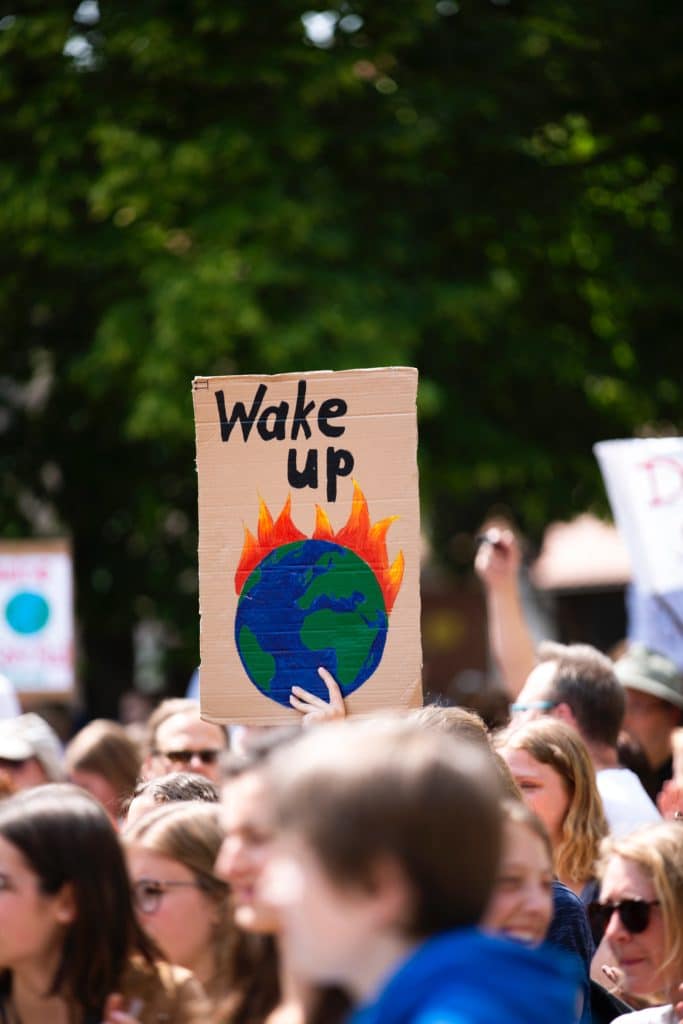
School students all over the globe have declared a “Climate Emergency.” For some time now, youth have been striking for immediate and effective action to stop global warming and secure the habitability of our planet. Greta Thunberg is perhaps the most recognizable student protesting. You’ve probably seen her moving speech at the United Nations last month.

In the context where students skip school to protest, what role do teachers play? More broadly, what is the role of education in times of climate crisis?

One group of university professors and activists have thought deeply about these questions. They have recently launched a “Call to Action” for educators, asking signatories to transform their pedagogies and curricula, realign research agendas, and reformulate policy frameworks – all in line with the climate crisis and other environmental challenges. In short, signatories are asked to voice their concerns any way they can in their professional work in and outside the classroom.

By early November, almost 2,000 educators signed the Call to Action.

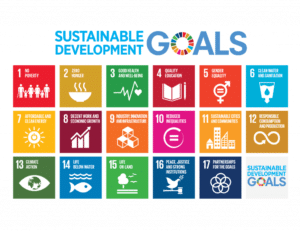
Today’s show takes you behind the scenes of this Call to Action, connecting the student protests and the climate crisis to the Sustainable Development Goals and Global Learning Metrics.

(Photo credit: https://unsplash.com/s/photos/climate-change)

Sign the call to action here: https://educators-for-climate-action.org/petition/


Transcript, Translation, and Resources:

Read more

OverviewTranscriptTranslationResources

Climate change and its effects aren’t some future possibilities waiting to happen unless we take action today. No. The effect of climate change is already occurring. Today. Right now. Around the world, people have been displaced, fell ill, or died because of the globe’s changing climate. These effects are uneven: Some countries and classes of people are more affected by global warming than others. Still, the United Nations estimates that catastrophic consequences from climate change are only a decade away. That’s the year 2029. [Editor’s note: The IPCC report is from 2018 and gave a 12-year prediction, so it should read 2030, not 2029.]

What is the role of education policy in an era of detrimental climate change?

My guest today is Marcia McKenzie, a professor in the Department of Educational Foundations at the University of Saskatchewan and director of the Sustainability Education Research Institute. She recently has been awarded a grant to research UN policy programs in relation to climate change education and in June will release a report for the United Nations that reviews country progress on climate change education and education for sustainable development.

In our conversation, we talk about what countries are doing or not doing in terms of education and sustainability, and we reflect on some of the existential questions that climate change brings to the fore.

Citation: McKenzie, Marcia, interview with Will Brehm, FreshEd, 154, podcast audio, May 13, 2019. https://www.freshedpodcast.com/mckenzie/

Will Brehm  2:24
So, Marcia Mckenzie, welcome to FreshEd.

Marcia McKenzie  2:26
Thank you very much. Great to be talking with you.

Will Brehm  2:27
So, the Intergovernmental Panel on Climate Change -which is a UN body, the IPCC I think, is the acronym- says that there is a decade left to make significant changes to avoid catastrophic consequences from climate change itself. So what role do you think education plays in mitigating some of these catastrophic consequences from climate change that the IPCC says might happen in 10 years? I mean, that is 2030.

Marcia McKenzie  3:00
Yeah. Well, I don’t know if you’re familiar with David Suzuki, a Canadian environmentalist who created his foundation decades ago, and he says now if he knew how long it was going to take us to take action, he would have got into education much earlier. So, yeah, and when we see that the problems with climate change, it’s not because we don’t have the scientific understanding of what’s happening. It’s not that we don’t have the technical ability to move to other energy forms and address climate change and mitigate still the worst of its impacts, but we don’t. We’re not taking the action that’s needed because we lack the will, you know, socially and culturally and politically. So, I think that is the role of education in terms of as the UNFCCC, which was the United Nations Framework Convention on Climate Change, which was signed back in 1992. With all the different member parties that meets every year at the COP [Conference of the Parties] meetings. And there is a commitment to education, training and public awareness that’s in that agreement that member parties to UNFCCC have signed on to but, because we don’t have a lot of research on it, you know, any data, we don’t even really have a good understanding of what makes good climate change education, we haven’t been doing as much as we can be or could be. And yet, there’s this recognition and even in that, that 2018 IPCC report, the recognition that we really need to be doing a better job of education in order to have people pushing for the change we need, right?

Will Brehm  4:47
So basically, you’re saying that everyone recognizes education is like, deeply important, but we: one, we don’t know exactly what all these different countries are doing. And two: we don’t know what actually makes good education, for, or about climate change to mitigate some of these solutions. So, I mean, and we have 10 years before…that seems like a pretty big challenge. What do we do first? Is the first step to just sort of get an understanding of what’s happening around the world and all countries that are signatory to that convention?

Marcia McKenzie  5:21
Well, I think both can be done in conjunction. So there is quite a bit of good work and understanding in other disciplinary fields, say on the sociology of climate change denial, Kari Norgaard’s work, for example, where she talks about not just the, you know, what you might think of as denial in terms of saying, “No, climate change is not caused by humans”, or we don’t even agree it’s happening, but more of the subtle forms of denial that you and I and, you know, most listeners are probably engaged in where, yes, you know, climate change is happening, you know, that it’s being caused mostly by human activity. And yet because of the realities of does this mean the planets not going to be habitable for humans within a generation or two? And we don’t know how to take action, you know, people turn away from that. Right? So, she calls it implicatory denial where you are implicated in it, you don’t know what to do, you kind of live this double life.

Will Brehm  6:20
I understand that climate change happens but I’m still going to eat red meat, and fly to conferences, and buy a big SUV.

Marcia McKenzie  6:27
Exactly! And there’s other literature as well in anthropology, climate change, communication around the importance of framing such emotional issues in terms of cultural frames and priorities that are important for different groups, whether it’s a business community, a Christian religious community, or indigenous community. Candis Callison, who’s an anthropologist and Media Studies person has written about that as well in a really powerful way. So, I think we need to be bringing those insights that have been developing over the past decade or so in other fields more into education, and into both policy and practice. Because what we see right now a lot of what’s being done as climate change education, whether it’s in formal education, K-12, or higher education, or in science communication, for example, that governments may be doing and so on, is still there much just based on educating people on the science of climate change.

Will Brehm  7:29
Like it exists. Yeah.

Marcia McKenzie  7:30
And here’s how it works with the assumption that therefore people are going to be empowered to take action. But we know from longer histories of research and environmental education, as well as other fields that have looked at things like Holocaust education, when things are so emotional, so difficult that you really need to take those aspects on and wrap it into how we do education and not just teaching the science but actually look at ways to engage people in, “Yes, this is difficult and there is grief involved and there is loss” and how do you kind of wade through that, and engaging it so that we actually look at it rather than look away.

Will Brehm  8:15
It’s quite existential realizing we could be the last generation of human species and how then do you teach about it? I mean, it is totally emotional, it is totally devastating in a way and I mean, that connection to the Holocaust. I never made that connection, but I can see where educators might learn a lot from Holocaust education and other sort of genocide, conflict issues that people have to work through.

Marcia McKenzie  8:43
And I guess the second part you’re asking about in terms of looking at what different countries are doing. I think that is really key. And I’m hopeful. I don’t know if that is naive, maybe but because education is a commitment that member parties have signed on to in committing to it with the joining the UNFCCC framework. If we can develop better data and on what countries are doing and then use that to sort of leverage change. So, if you can say, “In Canada, we’re doing this in, you know, Sweden, they’re doing that, and you can kind of compare and contrast. So, who’s got it in their formal education system? And how are they doing it? Right. So, it’s going back to the first point, it’s not just is it there, but how is it being done? What’s the quality as well as the quantity and developing that data, which I mean, we have the capability to do that and a new study will be released later this year in a few months just developed that we did with UNESCO and the UNFCCC and it was an analysis of all the country submissions to the UNFCCC from 194 member countries to look at how they’re already talking about how they’re engaging in climate change education in those submissions, so that we can, by pulling that out of the submissions and looking at it together, then we can sort of set some here’s a baseline of where we’re at or where we’re at with our reporting, and where could we be next year or the year after through the COP process?

Will Brehm  10:25
Right. And so that is -it sounds like what you’re describing is using some sort of evidence, global evidence, comparable evidence from all different countries involved in the UN. But really, it being used as a political project to sort of force particular change. I mean, that is what it sounds like. It almost reminds me of PISA, you know using the sort of same test all over the world and, it has become very, very political and there’s plenty of research about that.

Marcia McKenzie  10:56
Yeah. And it’s kind of -because I consider myself a critical researcher, critical policy researcher and you know, a lot of the work done on large-scale assessment and testing is quite, you know, there’s a lot of skepticism and concern, and how do you compare across different countries and socio-economic considerations, and all these very complicated and fraught. And so, it’s kind of ironic, I guess, to be in the situation of thinking, well, here’s an issue where we’re running out of time, if there’s any chance that data can help us, then let’s mobilize that.

Will Brehm  11:32
Right. Any tool we can find, let’s use it.

Marcia McKenzie  11:34
Yea, exactly!

Will Brehm  11:35
So, what would worry you? In this sort of political project and getting this data, are there worries? Because, from a critical scholar, you look at other examples like PISA and sure, there’s plenty to be critical about PISA and I’ve had people on the show talk very critically about it. So, from your thinking through this climate change education or education about climate change and sustainability, what are the worries that you might have?

Marcia McKenzie  12:04
So yeah, I guess one of my concerns potentially with amassing that kind of global data is the way that these type of things can be used almost like branding on a product, you’d buy in the supermarket where it says it’s green, and then it’s sort of like guilt free shopping or whatever. But often there’s, we call it greenwashing because it’s not necessarily a sustainable product, or it’s much more complicated and things going on behind the scenes. So, I mean, that is a concern anytime you’re using data like this to kind of give gold stars or silver stars or you know, who’s doing it right. And where they kind of get off the hook, like, Okay, you got it there you say on paper that you’re doing it, therefore, that’s good enough. And what’s represented in a policy document doesn’t necessarily reflect what’s happening on the ground either. So, there are definite limitations to that type of assessment. I mean, anything that there is so far around education and sustainability more probably, at a global level of data collection is self-reported data. So, say that’s collected through UNESCO. Right now, there is some and that’s it’s being used in some of the indicators related to education and sustainability currently.

Will Brehm  13:19
So, there’s a validity issue?

Marcia McKenzie  13:21
There’s a validity issue. So yeah, I mean, at least something that’s not you know, it’s good to also have things that are not self-reported, as well as the self-reported options. But then, even better, would be finer grained analysis, like, comparative case studies at a global level that can help us also inform our understandings of what makes quality climate change education that is able to kind of empower and lead to changed action and that’s culturally appropriate in different settings.

Will Brehm  13:53
What sort of examples can you point to like currently that we know about of, you know, quote, unquote, good policy into action. You know, things happening on the ground in schools or in a country?

Marcia McKenzie  14:07
Well, in the research, and I should say I direct the Sustainability and Education Policy Network, which is a partnership of international researchers and organizations. And so, we’ve been doing research in Canada the last number of years -comparative research there- and also doing some other global projects. But looking at the Canadian example, you know, BC is somewhere that stands out for its action around climate change and other sustainability issues in both K-12, and formal education as well as more broadly. And so, there’s a number of things that lead into or I think, support that activity. I mean, one just culturally, it’s on the west coast. It’s got more of a cultural prioritization. That’s led to different things like provincial mandates for carbon action plans within schools and then we’ve got, say the City of Vancouver, it has a green mandate with the municipal politics. So, all these things kind of coalesce together so that you see stronger policy and curriculum at say the Ministry of Education level, which would be where the curriculum is developed for the province as well as different school division levels, as well as at the post-secondary institutions -like UBC is well known for its sustainability work. So yeah, and there’s great organizations there as well like the Canadian Centre for Policy Alternatives, has a BC branch that has developed great climate justice curriculum that a lot of teachers are using in schools.

Will Brehm  15:56
So, there’s a lot of work happening in that part of Canada and it seems like its government, its non-governmental, schools are involved, cities are involved. They have the green mandate in Vancouver. How much of that is connected to the sustainable development goals of the UN? Right? I mean, so, you know, is that something that’s happening because they’re doing it for their own sort of political economic reasons in Western Canada? Or is it a response from, “Oh, the SDGs, are here and we have to meet them?”

Marcia McKenzie  16:34
Yeah, it’s an interesting question and one of the things I’m really interested in is policy mobility. So how these things like the SDGs, where do they come from? And then what impact do they have in different countries or different regions? And I think there’s a couple of different things that could factor into uptake of the SDGs or, you know, what effect they’ve had. One is, you hear about organizations or governments, who keep doing what they’re doing but they kind of orient it to the “flavor of the day” or whatever. So, I’ve talked to organizations that are like, “Well, you know, we were doing education for sustainable development. Now, we’re going to do SDGs, you know, that’s what we put on our grant applications. But we don’t -our programs don’t change, but”. So, I think, there’s some of that, but at the same time, I think the global policy programs do have a big effect. And in some places like my province, where I live in Canada, in Saskatchewan, we’ve seen absolutely the effect of the UNESCO Decade of Education for Sustainable Development-

Will Brehm  17:47
In what ways, like how does it manifest?

Marcia McKenzie  17:50
So, you know, in 2009, there was a Minister’s mandate around environment, conservation, and sustainability. So, they were recognizing, okay, we need to be doing more on this. We need to get it into the curriculum. And then they talked to folks next door in Manitoba, where they had been working with education for sustainable development and the Deputy Minister there, at the K-12 level was involved in the Council of Ministers of education, which is sort of a national advisory body of all the provincial ministries, and he had been seconded to UNESCO, so you see this kind of flow through of actually, Gerald Farthing was deputy minister at the time in Manitoba, and other folks as well that are back and forth between UNESCO Paris and the ESD section there and different Canadian places and this would be parallel in some other countries. But then you get the flow through so that the Ministry of Education in my province is talking to Manitoba, and suddenly they bring in the same folks to do the training of educational leaders and the school divisions across the province in ESD.

Will Brehm  18:58
There is a policy flow, and does it go back to UNESCO? Like does the lessons and experiences of the teachers who are getting this training and putting it into practice, get sort of that knowledge get picked up and somehow is mobile back through the channels to UNESCO to inform the SDGs and what they do in other countries or how they conceptualize what you know, quote unquote good practice is?

Marcia McKenzie  19:22
Yes, I think that is the case that there’s some of that. We just got some new funding to do a study of three UN policy programs that have a focus on climate change education and when we were -we did some initial pilot interviews for that and talking to folks from different countries that have been involved with UN programs. Before we really heard from them about how through UNESCO people coming -there’s someone from Southern Africa that we interviewed, who was involved in the environmental education and ESD work there and through UNESCO people coming- to their meetings, they were able to give feedback on what was working or not working. Or priorities in different Southern African countries and to feel like that was taken back to UNESCO and then shaped kind of later renditions of things. So, I think there is some of that for sure.

Will Brehm  20:18
Yeah. And then I mean, then you the UNESCO Secretariat would have to sort of leverage that knowledge to push other countries in ways. I mean, it’s a very political process. Really, you know, for me, and that’s what’s so fascinating is how UNESCO has to -its member driven but that Secretariat also has a very sort of clear political agenda. And we just hope that they’re doing right, and they’re going to be successful. And, you know, they have a lot of power behind the SDGs in a way.

Marcia McKenzie  20:50
Yeah, it’s very interesting and kind of who is at the table of deciding what these policy programs are going to be, and different countries that support different policy programs like ESD had its origins in Japan, and Japan’s very supportive of UNESCO and so yeah, there’s a lot of interesting politics.

Will Brehm  21:11
Yeah. I mean, when I read SDG 4.7, you know, I mean, it’s like this “catch-all” indicator, or sub-indicator, and you see that education for sustainable development, the ESD, which definitely comes from Japan, that’s where I live. And so, it’s a really, really, really big thing. But then in Korea, as Aaron Benavot was telling me, it’s all about global citizen education. So how do they fit together? You know do they fit together? Or is it just, we’re using this discourse to please two different nation-states?

Marcia McKenzie  21:43
Yeah, it’s very interesting. I mean, global citizenship kind of came along, after, in kind of the work of UNESCO from what I understand, but they are both under one division. So, there’s a section of ESD and a section of global citizenship and they work together as colleagues and there’s a lot of overlap obviously, depending how you understand education for sustainable development, but it does definitely have social aspects in there that would overlap with some of the global citizenship priorities. So, you know, in some other work we’ve been doing -for a report that will be launched in June as well -a 10 countries study and looking at focus on ESD and global citizenship education across the education policies and curricula of 10 countries. And so, you can kind of see through that process, where there’s overlap, and which countries may focus more on the environmental aspects versus the social and citizenship aspects, and I don’t know why. I’m interested to find out more about that, in terms of the politics of the different countries, but I don’t think I can comment on that.

Will Brehm  23:02
No worries. It’s just that it’s so fascinating to see how these different -because it is a member-state organization. So, the member states have a lot of power, but the Secretariat is sort of managing all of this and so the politics in that sort of global level is really quite fascinating. And I think, quite hidden as well. And, you know, it’s very hard unless you are at that table, it’s very hard to know what is actually happening.

Marcia McKenzie  23:25
And I think my sense is that the UNFCCC is even more, so you know, really sees itself or is understood as meant to be neutral and facilitating the process for member-states. But the priorities or motions need to come from the member states. So, in talking to Adriana Valenzuela who’s the education focal point for the UNFCCC about how great it would be if we could get education data on the negotiating table, and she’s like, Oh, that sounds great, but we can’t bring that forward. It would need to be a member-state. So, it’s almost like I would need to maybe work with Environment Climate Change Canada to bring it to the negotiating table to then see if we could get it there. Whereas I think this seems to be a little -UNESCO doesn’t have that same framework of the COP meetings and, you know, decision making in what’s going to be included and, you know, nationally determined contributions being put forward under the Paris Agreement and everything it’s much more kind of technical than the UNFCCC.

Will Brehm  24:31
Yeah, yeah, right. I mean, it’s really quite fascinating. As an academic, I keep thinking like it would be so great to do like an ethnography of that global process.

Marcia McKenzie  24:40
Well, that’s what we’re trying to do. And we just got the funding to do it as well.

Will Brehm  24:46
You’ll have to come back on and tell me about it once you end up doing it. One of the things that I struggle with, with the SDGs and thinking about education for sustainability or, you know, to reduce climate change is the inclusion of economic growth in the SDGs. It’s one of the SDGs. It’s seen as what countries should be maximizing -having more growth, which, you know, will put more carbon into the air, which will ultimately make climate change even worse into the future. And at the same time, including all these environmental sustainability goals of trying to make the world more sustainable. And for me, those are contradiction. And I don’t know how education for sustainability will square that contradiction.

Marcia McKenzie  25:41
Yeah, there’s been discussion of that for sure. Because you could be say, moving forward climate action while increasing gender disparity, you know, so kind of the conversation that you need to be moving them all forward, not some at the expense of others, but that’s so hard to do with 17 priorities and never mind all the you know, I think it’s 169 target under the 17 goals. But it’s the same problem that we’ve had with sustainability before that or say education for sustainable development which a lot of people see as having at least three pillars, as they’re often called, of the social, the economic, and the environmental and oftentimes people would, or still do, separate those three out. So, in my province where this is a priority that I’ve had superintendents tell me, “Well yea, we’ve got it in the curriculum now, we do it in our school division and so if you’re doing economy, social or environment, you can tick that you’re doing ESD. So, basically everything humans would be concerned with has something to do with the social, or the environment. So, you know, it becomes meaningless. So, I think it is a challenge for the SDGs even more so in a sense because at least with three pillars, you can say, Okay, these need to be nested and you can’t have economic prosperity if it’s harming the environment or harming the social. Environment is the biggest and then social then economy are nested together. Whereas the SDGs with 17, it’s much more complicated.

Will Brehm  27:21
It seems like we need to have different definitions. Like so of the economic, what does economic prosperity mean? To me, it seems like we need a new way to define that rather than GDP per capita, for instance. Right. I mean, because if that’s the goal, then we’re going to sacrifice all these other things that we say we care about.

Marcia McKenzie  27:44
Yeah, there was a presentation yesterday on the OECD and one of the folks that have worked there in the past was talking about how they’re just starting to look at well-being indexes and that would be great to see more countries go that way sooner rather than later.

Will Brehm  28:04
Yeah. I mean, are you an optimistic person? Like, do you think that in these 10 years that we’re now saying is sort of the critical moment. So, for 2020-2030, for instance, do you think the global community is really going to be able to radically alter its practices through education?

Marcia McKenzie  28:30
Yeah. I don’t know. It may be through other means. You know, it’s been really interesting the last few months to see the school climate strikes and you know, from starting with one person that fell on everyone’s kind of minds and hearts and suddenly people are out there all over the globe doing climate action strikes in schools and so I think it you know, it’s, I hope that that type of activity will just build as we’ve all got it kind of weighing on us, but no one feels like they can do enough on their own. Obviously, our governments aren’t taking.

Will Brehm  29:10
Yea a lot of governments say go back to school. Don’t strike!

Marcia McKenzie  29:13
Yeah, yeah, exactly. So, I think education is as part of that, you know, potentially. The more we can do the better to give more people the skills to feel they can take action and make change and have the knowledge that they need and to be able to work together and all those things, but I mean, within the time frames, realistically, it’s going to have to be other things as well. Some of those people that are educated, mobilizing a lot of other people. So yeah, I don’t know. And I think it’s also a question of, you know, we always talk about climate change mitigation and adaptation. Well, what does climate change adaptation education look like right?

Will Brehm  29:43
And what would that be adapting to? You know, flooding everywhere, two degrees hotter everywhere.

Marcia McKenzie  30:01
Yeah. So, I think part of the key to the mitigation part too probably is -because it’s such an emotional, difficult issue that we need to be facing the impacts and how people around the world are already being devastated by the weather effects related to climate change, and so on.

Will Brehm  30:23
Yeah, I mean, like, how do you prepare? I mean, there’s already countless deaths happening due to climate change, and climate migration is happening all over the place already. And it’s only going to get worse. There’s going to be more deaths caused by climate change. You know, hundreds of millions or billions I, you know, it’s probably pretty hard if you’re a demographer to sort of calculate that out. Yeah, but some percentage of that will be children. It’ll be a lot of children that will end up dying. And so, the question is, like, you know, climate change adaptation education, you know, how do you teach the ability to grieve for that large number of people? I don’t know. I mean, it’s sort of this is why for me, it becomes a sort of like, existential moment.

Marcia McKenzie  31:05
Yeah, I know, I know, I have a 13-year-old daughter and I don’t actually talk to her very much about my work in this area. I mean, I tell her I do research and work on sustainability and climate change education, but I don’t go on at length about the outlook. But -through the climate school strikes- she learned more through some of her friends and came home just a couple of weeks ago in tears, you know, writing, drawing in her journal that we only have 12 years left, why isn’t anyone doing anything? And you know, it’s intense.

Will Brehm  31:41
That’s powerful. That seems to be what is needed. You know that sort of powerful, emotional response. Like a cliff that’s in the distance, that we can see. It’s coming into view.

Marcia McKenzie  31:57
And we were talking about what’s needed and how we need to change lifestyles and our expectations. We were talking about, “what would it be like to move into apartment?” she’s like, “well, that’s not a problem. Like, I’d rather say let’s move into an apartment rather than, you know, half the planet or worse goes extinct”.

Will Brehm  32:17
Yeah. Right. You’re willing to sacrifice some sort of luxuries now, knowing that it actually could -that is sort of that change in attitude that we were talking about earlier. Like maybe I shouldn’t be eating meat all the time and I shouldn’t be flying around the world.

Marcia McKenzie  32:35
But I think it’s one thing for people in their 40s or 60s or 80s. You know, you can think oh, gosh, is it going to be really bad for our kids or grandkids generation? But it’s another thing for a child to look forward and say, am I going to be able to live out my full life or is it going to be just a nightmare before then.

Will Brehm  32:59
And is that sort of conversation happening at the global level? Because to me, that seems to be the most important conversation to be having.

Marcia McKenzie  33:07
It is.

Will Brehm  33:10
But it is it being reflected in some of these sort of, you know, the global meetings on climate change and sustainability. And, you know, what we can do? Is that even being like -it’s certainly not an indicator. In no way is it an indicator of the SDGs.

Marcia McKenzie  33:23
Yeah, I mean, I think people are aware, and, you know, it’s the underlying passion. Someone like Aaron Benavot, who was director of the GEM report, Global Education Monitoring report. And, the last GEM report that he did had a focus on sustainability and was really fantastic, but you can tell he’s got that passion in him. And for a lot of people that are doing this work, they have that in them. You know, we all have hypocrisies, or tradeoffs, but, you know, that is driven by that desire to do change. But sometimes when you get together at a meeting, then you kind of take that as an assumption and just move on to trying to move things forward.

Will Brehm  34:15
Well, Marcia Mckenzie, thank you so much for joining FreshEd. Please come back on when you have more of this ethnography of what’s happening at the global level.

Marcia McKenzie  34:24
Great. Thank you very much for having me. Great to meet you.

Want to help translate this show? Please contact info@freshedpodcast.com
Have any useful resources related to this show? Please send them to info@freshedpodcast.com

What’s the connection between education and climate change? My guest today, Arjen Wals, takes a critical take on sustainability yet offers a hopeful outlook.

In our conversation, Arjen details a few examples of school-level practices that could be seen as working towards a sustainable future while also critiques educational competition and the hidden curriculum of commodification.

He ultimately calls for more dissonance in education systems as a way to learn new forms of sustainability to combat climate change.

Arjen Wals  is the UNESCO Chair of Social Learning and Sustainable Development and Professor of Transformative Learning for Socio-Ecological Sustainability at Wageningen University in The Netherlands.

I spoke with Prof. Wals at the 2018 Global Education Meeting, which was a high-level forum held in Brussels in early December that reviewed the progress towards the Sustainable Development Goals.

Citation: Wals, Arjen, interview with Will Brehm, FreshEd, 144, podcast audio, January 14, 2019. https://www.freshedpodcast.com/arjenwals/

Transcript, translation, and resources:

Read more

In what is now becoming a tradition, today we review the field of comparative and international education for 2018. With me are Susan Robertson and Roger Dale, co-editors of the journal Globalisation, Societies and Education.

In our conversation, we touch on many topics, from the contradictions found within the Sustainable Development Goals to the lack of Climate Change research in the field and to the power of PISA.

Susan and Roger also point to new directions in research for 2019.

Susan Robertson is a Professor of Sociology of Education at the University of Cambridge, and Roger Dale is a Professor of Education at the University of Bristol.

Citation: Robertson, Susan & Dale, Roger, interview with Will Brehm, FreshEd, 142, podcast audio, December 30, 2018. https://www.freshedpodcast.com/2018inreview/

Transcript, translation, and resources: Read more

Today we take stock of the Sustainable Development Goals, which were adopted by the United Nations three years ago. With me is Silvia Montoya who is the director of the UNESCO Institute of Statistics. UIS is charged with monitoring a few of the SDGs.

In our conversation, which we had on the sidelines of the Global Education Meeting in Brussels, we dive into the problems and challenges of trying to measure concepts such as literacy, global citizenship, and sustainability.

Today’s episode of FreshEd was made possible through the support of the Graduate School of Education at the University of Tokyo and Education International.

Citation: Montoya, Silvia, interview with Will Brehm, FreshEd, 140, podcast audio, December 17, 2018. https://www.freshedpodcast.com/montoya/

Transcript, translation, and resources: Read more

(un.org)

Is there a worldwide learning crisis today? My guest, Keith Lewin, argues that the real issue in much of international education development has to do with financing.

In our conversation, we discuss aid to education and the ways in which the Sustainable Development Goals don’t take the idea of sustainability seriously.

Keith Lewin is an Emeritus Professor of International Education and Development at the University of Sussex


Citation: Lewin, Keith, interview with Will Brehm, FreshEd, 138, podcast audio, December 3, 2018. https://www.freshedpodcast.com/keithlewin/

Transcript, Translation, & Resources:

Read more

This will close in 10 seconds