10th Anniversary Special
with Iveta Silova, Yuto Kitamura & Will Brehm

10th Anniversary Special
School students all over the globe have declared a “Climate Emergency.” For some time now, youth have been striking for immediate and effective action to stop global warming and secure the habitability of our planet. Greta Thunberg is perhaps the most recognizable student protesting. You’ve probably seen her moving speech at the United Nations last month.
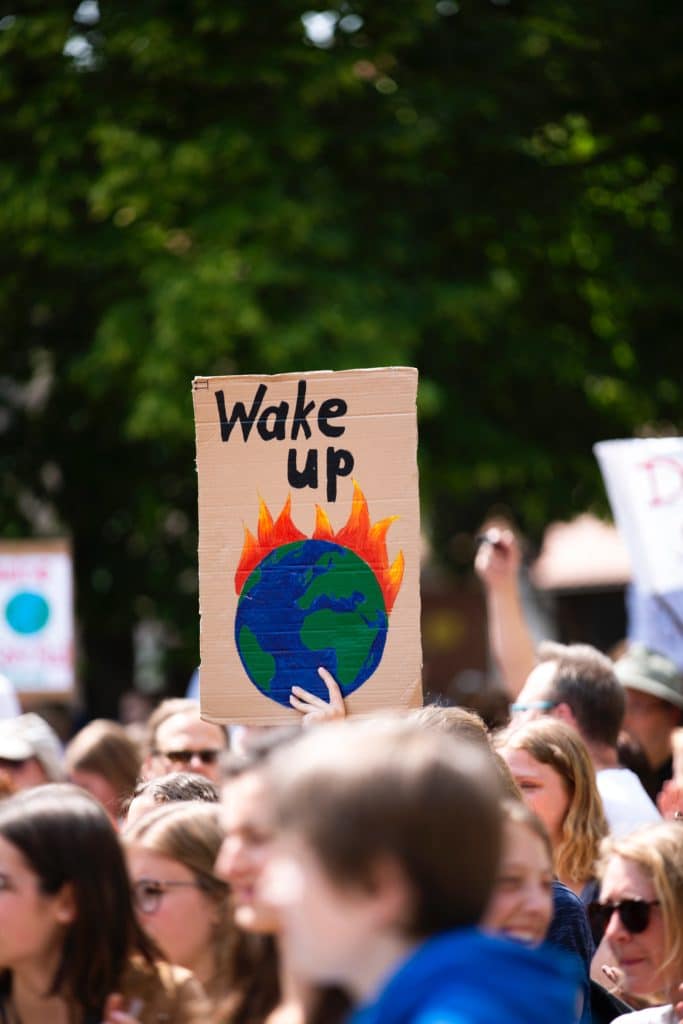
In the context where students skip school to protest, what role do teachers play? More broadly, what is the role of education in times of climate crisis?
One group of university professors and activists have thought deeply about these questions. They have recently launched a “Call to Action” for educators, asking signatories to transform their pedagogies and curricula, realign research agendas, and reformulate policy frameworks – all in line with the climate crisis and other environmental challenges. In short, signatories are asked to voice their concerns any way they can in their professional work in and outside the classroom.
By early November, almost 2,000 educators signed the Call to Action.
Today’s show takes you behind the scenes of this Call to Action, connecting the student protests and the climate crisis to the Sustainable Development Goals and Global Learning Metrics.
(Photo credit: https://unsplash.com/s/photos/climate-change)
Sign the call to action here: https://educators-for-climate-action.org/petition/
Transcript, Translation, and Resources:
What does it mean to think of comparative education beyond the human? Is our field based on assumptions of individual autonomy and Western Enlightenment thinking that sees time as linear and progress as possible? Does a “posthuman future” hold new possibilities for our research? And can our field live with such dissonance?
Earlier this month, the Post Foundational Approaches to Comparative and International Education Special Interest Group of the Comparative and International Education Society organized a webinar entitled “Exploring education beyond the human” to think through some of these questions.
The webinar brought together Weili Zhao, Stephen Carney, and Iveta Silova. I moderated the discussion, which explores what education beyond the human would actual look like and entail.
In this special addition of FreshEd, I’m going to replay our conversation because I think the ideas discussed push our field in new and important directions.
Citation: Zhao, Weili, Carney, Stephen & Silova, Iveta, interview with Will Brehm, FreshEd, 178, podcast audio, October 28, 2019. https://www.freshedpodcast.com/beyondhuman/
Transcript, Translation, and Resources:
What was it like growing up and attending school in the Soviet Union and other socialist societies? Did the lived experiences of children match the official rhetoric of the state or the Western bloc? What agency did children have? My guests today are Iveta Silova and Nelli Piattoeva. Together with Zsuzsa Millei, they have a new co-edited book that explores the memories of everyday life in socialist societies, showing the multiplicity and political nature of childhood experiences.
Their memories challenge the master-narratives that have come to dominate the way we think about the Soviet Union and other Socialist societies. Ultimately, their work pushes the field of comparative education in new directions.
Iveta Silova is a professor at Mary Lou Fulton Teachers College at Arizona State University and Nelli Piattoeva is an Associate Professor at the Faculty of Education and Culture, University of Tampere, Finland.
Their new co-edited book is entitled Childhood and Schooling in (Post)Socialist Societies: Memories of Everyday Life.
Nelli Piattoevia’s photo credit: Jonne Renvall/Tampere University
Citation: Silova, Iveta & Piattoeva, Nelli, interview with Will Brehm, FreshEd, 162, podcast audio, www.freshedpodcast.com/Silova-Piattoevia.
Transcript, Translation, and Resources:

This will close in 10 seconds