
The Safetyfication of Education
Derecho a la Educación en Contextos Neoliberales
Camilo Blanco
¿Educación Neoliberal?
Transnational Class Formation
Remaking Inequality through Education
Remaking Inequality through Education
The Conscience of a Progressive
Financing Education through Domestic Taxation
Financing Education through Domestic Taxation
OverviewTranscriptTranslationResources
Today we interrogate the idea of creativity.
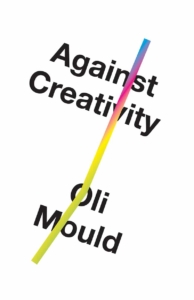
My guest, Oli Mould, says 21st Century capitalism has redefined creativity from being a power to create something from nothing to the ability to create new products for markets. Creativity, in other words, feeds capitalism’s own growth.
Students and workers alike are told they must be entrepreneurial and flexible to survive the global economy. We are told businesses and governments seek out these character traits. In effect, the power to create has become an individual characteristic that can be traded and exploited.
Oli Mould is a human geographer based at Royal Holloway, University of London. He argues for a creativity that forges entirely new ways of societal organization. His new book, Against Creativity, published by Verso, goes on sale tomorrow.
Oli Mould works at Royal Holloway, University of London. His new book is Against Creativity.
Citation: Mould, Oli, interview with Will Brehm, FreshEd, 127, podcast audio, September 24, 2018. https://freshedpodcast.com/olimould/
Will Brehm 1:18
Oli Mould, welcome to FreshEd.
Oli Mould 1:22
Thank you for having me.
Will Brehm 1:24
So, you start your new book by detailing a Pepsi commercial from 2017. Can you describe to listeners what that commercial showed?
Oli Mould 1:33
Yes. So, this Pepsi ad came out in 2018. And it shows Kendall Jenner, who is, I guess, the new kind of model of the day, and she is having a photoshoot done. And she spies this protest movement that is walking outside her door. And it’s really riffs off what’s been going on in the UK and the US of late days – protests, marches that have been going against police brutality, and Brexit, and you know all the kind of ills of this contemporary world. And it is a very generic protest. There’s sort of signs saying things like, “Join the conversation”, and “Love”, and all these really words that you never ever see at protests. And she spies this other sort of model looking guy, she, you know, throws off her wig and smudges her lipstick and just joins this march. And it is really quite incredible. She goes over, she grabs a Pepsi can, gives it to a policeman who’s clearly there to supposedly keep the peace, and he nods approvingly, and everyone sort of laughs and everyone is really really happy that this guy is drinking this Pepsi. And all the while, there is a what is clearly supposed to be a Muslim girl who is a photographer who comes in and out of the commercial at various times. And at the beginning, she is frustrated because the photos she has are not very good, and she’s clearly frustrated. You can see her doing that. And then she spies the protest as well, and she sees Kendall Jenner giving this Pepsi can to the policeman, and she takes a photo, she is really happy. And everyone is really really happy about what’s going on. But you watch it, and you know, the timing of it was important, given all that stuff going on in the states in the US, and in the UK. And it was clearly riffing off this. It was clearly sort of taking this aesthetic of protest to, you know, sell Pepsi cans. And it was very very blatant, very very crass. And it was just, you know, very very obviously done in that way. And clearly, when it came out, there was a lot of stuff online that was very critical of it, and it was taken down. Actually, they apologized for it. So that is what the advert does. And, you know, it was very very blatant. And actually, there was a very famous photo from Baton Rouge, where there was a woman who was being kind of approached by police and being handcuffed, and it was clearly, you know, riffed off that, and it was just very very low. And so that is what the commercial does – it really appropriated the protest aesthetic in order to essentially hawk a sugary drink.
Will Brehm 4:16
And what does that tell you about the contemporary form of creativity?
Oli Mould 4:22
Well, it says that, essentially, creative practices – in this case, advertising – but it bleeds into a lot of the corporate practices more generally, that essentially, you know they’re called creative, but what they’re doing is, they’re scouring the world. They are scouring all sorts of different images and experiences and feelings and emotions in order to plant them in ways that make profit for their products. So, you know what people say are creative in terms of advertising, what they’re doing is, they’re not being creative, they’re being appropriative, they’re been co-optive, in that they’re taking things that already exist, things that are sort of actually kind of anti-capitalist or resistive, and using it for corporate processes. So they’re emptying it of any kind of ethic, any kind of anti-capitalist meaning, and just kind of using it to just plaster over ways of flogging their products you know in new and kind of I guess, “innovative, creative ways”, as they say. So, for me, that is not creative at all, because they are actually destroying what that image means. And as they get more and more into the corporate aesthetic, they begin to lose their meaning, and they actually lose their resistive and anti-capitalist ethic. You have seen it with punk and skateboarding, and I guess even things like hip-hop to a certain extent. You know these are things that were once quite subcultural and quite resistive. But now they are very much part of the mainstream, and you watch it now, and you do not get a sense of that countercultural movement. You do to a certain extent, and they still exist in the cracks and everything else. But in the whole, you just don’t get that when you see it. So that is why that Pepsi ad, in particular, I think, was a particularly damaging form of creativity.
Will Brehm 6:21
And is this a new phenomenon? Or has, in a sense, capitalism been appropriating various creative ideas and industries, and riffing off of maybe anti-capitalistic imagery and protest to further capitalism itself? Is this new, or has this been happening for quite some time?
Oli Mould 6:44
I think it is relatively new. There is a lot of work, scholarly work, which has been done around the May 68 Parisian riots. These were almost considered a bit of a watershed moment because post that time, and I guess you can couch that in the wider countercultural revolution of the 60s more broadly, that you know it signaled a kind of shift in how corporations work, from being quite structured and hierarchical and quite kind of pragmatic to being little much more flexible in how they go about using images to further their profit margins and their spread, I guess. And people like Boltanski and Chiapello in their book, ‘The Spirit of New Capitalism’, they argue quite strongly in what is essentially 550 pages of this argument, that post-1968, capitalism has got much better at doing this. So, it is not necessarily new, but the ways in which capitalism has changed its processes have, since around the kind of late 60s, early 70s, and from then you see a lot of this appropriation happening. And it actually happens much quicker now, and I think with the advent of social media, it’s sped up even more. So, I would not say it is necessarily new, but I think that it is quicker, it is a lot quicker now. I always use the example of subcultures. I mean, I did some work around parkour and graffiti and skateboarding, all those I guess urban subcultures. And you look at skateboarding, it took maybe a decade, 15 years, for it to become appropriated if that is how you can measure these things. And then graffiti took a similar kind of time. Parkour took about two or three years. So, you can kind of trace these things. You spot something that is new and innovative and very very creative, because it is subcultural, anti-capitalist, and then within a few years, it is become part of the mainstream; has been Red Bull or Nike splashed all over it. So, I would not say it is new, I would say it is different and quicker.
Will Brehm 8:49
So, in a sense, is the idea of creativity, therefore, changing in itself?
Oli Mould 8:54
Yes, it depends on, I guess, which version of creativity you mean. Yes, I think what it means to be creative, I guess from top-down, to use a blunt phrase, I guess what corporations and businesses and politicians and teachers and everything else tell us to be, yes, it’s about being flexible and innovative in how you work. It is kind of exploring the world, always bringing that back into say, “Look, how can that how can that help us to grow.” It is about growth. Now that is often couched in economic growth, economic development, and sometimes that can be personal growth as well. But it is always about, “What can you find out there that helps you to grow – as a person, as a nation, in terms of monetary wealth, or whatever it might be?” So that is why I argue in the book – that the notion of creativity has now been privatized. It is about, “How can you be creative in order to help yourself?” How to expand yourself in monetary terms, in enlightenment terms, and everything else. So, that is what creativity means in terms of top-down, I guess, and that is how it is changed, yes.
Will Brehm 10:15
And so, what does that actually look like? This privatized notion of creativity, what does that look like today you know for someone in entering the labor force, for instance?
Oli Mould 10:27
Well, it looks very precarious. It looks very problematic for me anyway. You look at all the different job ads out there at the moment, from fast-food workers to corporate CEOs, “creative” is in there. You have to be creative. And it is become so ubiquitous that it is almost meaningless. But what it always means, for me anyways, is that you have to be flexible. You have to sort of embody that mode of competition, I guess. And this is a broader argument that I made in the book; that this version of creativity is very much couched in with what people call the “neoliberal turn”, and this idea that the markets must be as efficient as possible, and they must extend into every realm of life. And so within work, if you go into the job market, that’s what creativity, I think, when you see it, that’s what you should always be very very careful because it is asking you to be flexible. So, it is asking you to maybe work on a zero-hour contract, or it is asking you to work as a sort of outsourced worker where you get very few workers’ rights. You look at all the various gig economy companies that are around. There has been a huge backlash against their working practices. They are great if you have got the flexibility. The students that I teach actually really like these kinds of things because it allows them to earn a little bit of money whenever they want during their studies. But if you are relying on that kind of work to live, it becomes a whole different ballgame. And you know being creative in that way should really not just mean, “Oh, you can be flexible and just work whenever we want you to work, and you bow to the whims of us as employers, and to how the market dictates you should work.” So that is what that version of creativity means in the labor force.
Will Brehm 12:16
What does it look like in education? I mean, I know you have students who may work as Uber drivers as well, for instance, but what about in education itself, either in higher education or even in secondary and primary education? Do we see this sort of definition of creativity, this neoliberal definition of creativity creeping into these spaces as well?
Oli Mould 12:41
It is an interesting question, and funnily enough, I toyed very much with the idea of having a chapter about education in the book. I did not, primarily because I did not think I could make an argument with the examples, but I think that it is, to a certain extent, this neoliberal version. It is interesting, because obviously, I have got two young children now at school. And it is really really fascinating to see how the educational structure is encouraging or not encouraging creativity. There’s a big thing in the UK, at any rate, at the moment about how it’s really important for children to know and university students as well to have STEM subjects like science, technology, engineering, and maths, because those are the things that drive the economy, drive productivity. But actually, a lot of people are saying that “Well, actually, you do need that, but you also need the STEAM, such as an art in there as well. And you actually need to meld the two, you know, having music classes, art classes with engineering to make sure that they have a very well-rounded education. And that is being driven by a lot of people who work in, for example, the computer games industry, or you know, the tech sector. They are saying, “Actually, we need people who understand creative methods and artistic practices as well as the nuts and bolts of maths and engineering.” So, I think that that is important to a certain extent. So that division is happening quite early on in education. For example, my kids don’t do a huge amount of music, and that’s partly because of budget cuts and everything else. When budgets get cuts, the first things to go are the arts. They’re like, “Oh, they’re not important. Let’s just concentrate on English and maths and stuff.” And I think, “Well, maybe not.” The other thing as well is, and in the UK, we have a guy, Sir Ken Robinson, who you may know. He’s been very vocal about this, and one of the things he’s concerned about is that we group students into year groups very very early on. You know, like five-year-olds, six-year-olds, seven-year-olds, and they flourish at very very different times. And you have a particular kind of year group, but you’ll have very very different educational levels within that. And Ken says that maybe we should change the way that we group students together, for example. So, yes – I think that this version of creativity is creeping in, and it’s around the numbers, the targets and the exams, and everything else that has to be done is so huge now that students are just told how to pass exams, they’re not told how to think. And so yes, there is a number of different problems within education in terms of how creativity in that neoliberal form is being applied.
Will Brehm 15:25
And what about higher education? When you were saying about the idea of being flexible and having work that is very precarious. Higher education becomes a great example of the rise of contract teachers. So, in what ways have you seen this idea of creativity, or neoliberal creativity, entering higher education?
Oli Mould 15:50
Do you mean the teachers themselves?
Will Brehm 15:54
The teachers, or even more broadly, where do we see some of these neoliberal forms of creativity in universities?
Oli Mould 16:03
So, I think that within higher education it is really interesting. The workforce themselves, the academics and the teachers within higher education, you’re almost getting a sort of dichotomy or dualism created, where you’ve got a sort of higher, let’s say, “research class” or “professorial class” that are very secure. They have huge amounts of free time to do their research, and it is kind of self-serving in that respect. And you couple that with the massive increase in students that we have seen, which you know has become part of the problem, because that is where that’s where universities get their money from now, our students. So, we need large numbers of students; they need to be taught. And so, we have this sort of underclass of very, very precarious teachers, and universities in the UK, and I think the US as well have nine-month contracts, part-time contracts – very short term things. And being in the sector myself, I hear so many stories about early career staff, and peoples fresh out of PhDs who have had to travel to different countries, live in different parts of the world, move away from their families, their wives, and children, in order to secure a nine-month teaching post or a 12-month part-time lectureship, and it’s just not healthy, and it doesn’t foster that longevity and that kind of connection that students require – higher education. I am in the higher education system because I believe it is a fundamentally crucial part of people’s lives, and having that critical thinking is really really important. Because without it, we are just producing more of these, to use the phrase, these “worker drones” that have no kind of ability to act creatively in the way that I want people to in the book. And that comes from the amount of critical thinking and the input that people get in higher education, in further education, the sort of “latter years”, if you like, of their educational career. And having that binary class, again, kind of just erodes that, because you’re just creating this sort of cadre of precarious workers who just are like, “I’d like to be able to do that, but I can’t because I need to make sure that the students do this, and they pass the exams, and they do this, and I make sure I have my numbers up so I can get employed elsewhere.” So, there is a sort of soft hegemony I guess just moving people towards a sort of far more auditing, and just by-the-numbers kind of educational system, which is very very neoliberal at its heart.
Will Brehm 18:45
And so how has creativity been defined sort of outside of this idea of being appropriated by capitalism? Historically, how else has creativity been thought of?
Oli Mould 18:59
Well I guess it depends how far back you go, I mean. There’s very interesting lineage; I mean, you could go all the way back to kind of ancient societies where creativity was considered something which the gods had. They were the ones that had ability to create something out of nothing. And you know you trace that through history and the way that it’s kind of been developed over time, creativity has been increasingly privatized, and increasingly something which, you know, value has been extracted from it. But I think there is something to be said about having a creative mindset or having a kind of idea of creativity, which is about societal progress. Now, the arguments are that creativity now is just sort of something that we need to grow, we need to make more money. And that is one version of progress, but it is one which doesn’t necessarily inculcate anything new. It just creates more of the same sort of stuff. In a world that is rapidly deteriorating ecologically, growth is just a concept that we are going to need to rapidly get away from very very quickly. And so the idea of being creative that doesn’t just produce more of the same stuff, in this case, well in capitalism’s case, like money and profit, then that’s the kind of creativity which we need to work towards. And there is lots of examples throughout history of societies that work that way. So, you know, I often talk about the Diggers and the Levelers in the UK, sort of in the 15, 16th century. They were very much ones who kind of came up the idea of “the common”, the “common wealth”, this idea that there is no such thing as private property, and people kind of work together on the land and they work together to create an economy, a social economy, which provided all the need, provided everything that people needed to get by and to live, including culture and artistic enjoyment, but it was done collectively. It was done with a sense that you know, we can negate any potential damages or potential shortfall in provision by acting collaboratively and collectively, and as a common. Capitalism erodes that. Capitalism source says, “Well, look, I’m working this way, it’s really great for me. I want to do it more.” So, it then begins to encroach on other people’s enjoyment, which is why we get huge inequality and everything else. So, a creativity which source says, “No, let’s not to work towards, you know, making more of the same for a very small amount of people, let’s make sure that we create a world which actually, we can all enjoy. Because, you know, if the climate change people are correct, this world is not going to be the same very very soon. So, it is something which we need to reconceptualize creativity very very quickly. Because at the moment, the way it’s currently defined in the mainstream is just not creative at all. It just produces more of the same problems, and that is going to become very very difficult to sustain very very quickly.
Will Brehm 22:07
So how would that happen? How can we reconceptualize creativity away from the idea of “more growth is always good”?
Oli Mould 22:16
That is a very good question. One which if I had the answer, then I would probably be a very rich man – rather ironically, I guess. But to push against that idea of creativity as something which just sort of makes more of the same capitalist growth, there are examples of it out there. And in the book, I try to sort of pinpoint some of the more progressive ones: worker cooperatives, different political systems, disability. There is a huge array of ways that we can conceptualize creativity there at the margins of society. Now, it is not a case of bringing them into the mainstream and just saying, “Okay, let’s make disability the way we define creativity, and let’s just use them as means of growth.” It does not work that way. You have to kind of shift your societal structures to look towards the margins and say, “Well look, what is it that these people are doing? What is it that these communities are actually achieving?” And that is, in the most case, kind of a quite radical sense of equality, and making sure that there is enough of the resources, or at least the resources of which they have goes to the people that need them. And in doing so, you create a far more just, far more progressive, and actually far more sustainable community. So, you know, there is plenty of examples out there. After the book, I came across an example in Mexico: Cherán, which is a city which has completely refused to engage in local elections. Have you seen that example? It is fascinating. It is annoying that I saw it after I finished it, but there was some stuff written about it recently. And I think, yes, around kind of 2011 I think it was – they got rid of all their local politicians because they were not doing enough to stop the crime in the city, which was about logging. There was illegal logging, and it was creating a horrible kind of crime syndicate. And you know they were losing all their trees and everything else. So basically, the people got together, and they kind of complete defenestrated their local politicians and the police. And they said, “We’re going to sort out ourselves”. And reading the stuff, it is actually a lot of the women that organized this. And since 2011, 2012, they’ve not engaged in local elections, they’ve not engaged in any national elections (i.e. the recent presidential elections in Mexico), and crime has dropped significantly, people are healthier, they’re regrowing their trees, it’s a far more environmentally friendly place. And this is all because they had sort of said, “No, we are not going to engage in your version of society”, which is a kind of parliamentary, democratic, kind of this voting system which we have. So, that, to me … I mean, it’s got its problems, obviously … it’s not perfect by any means, but it’s a city-wide example of people that have refused to engage with what people have said. “You should engage in this kind of version of state capitalism”, but they refused to do that, and it is produced very very beneficial results.
Will Brehm 25:39
So how would that community in your mind define the notion of creativity?
Oli Mould 25:46
Because they are refusing to go along with the way in which the powers that be suggest that you need to do in order to progress. They are saying, “No, we are going to create a different version of life, one where we are not ruled by local politicians or indeed national politicians. One where we are not subject to police brutality. One in which we can actually stop crime before it happens in terms of, we don’t have to go to the police process, we can actually cut it down to this source.” So, they are being creative because they are refusing to engage with the version of progress which the world imposes upon them. And that is the kind of version of creativity which I try to explain in the book. I mean, there is nothing wrong with creating a brand-new technology, or a brand-new product to market, or a new computer game, or a new app, or whatever it might be. There is nothing wrong with that; they are creative in and of themselves. It is how they are then plugged into the wider systems, which then just sort of eradicate any kind of chance they have of revolutionary change. That’s the problem for me: that creativity has to be broadened out, you have to think about it globally on a societal kind of level because if we don’t create a new mode of living, then there’s all sorts of problems are going to happen. So, in Mexico, in Cherán, it is a really good example of a city trying to do that. Now, you could try and scale that up. Brilliant. The scale problem is a crucial one – can you scale up these things? Sometimes they do not work. Sometimes power comes crashing down, and you end up having to replicate the same problems. So, scaling them up is a very very important process. And that’s a very different question because you have to sort of start changing political systems, and heaven knows in the US and in the UK, we’re seeing a massive polarization of the political spectrum with socialism coming to the fore and everything else, but also the far right. So that is a different kind of question, but there are examples of this kind of creativity, and they are everywhere. Because they are not feeding capitalism, they are often marginalized. And people see them and go, “Well, that is clearly wrong because you are not making more money, you’re not doing this. Let’s try and stop it. Let’s try and appropriate it somehow. Let’s just try and violently enclose it.” So, for me, those are the kinds of things which make it creative.
Will Brehm 28:29
And it goes back to that Pepsi commercial that we talked about at the beginning, where these protest movements were certainly … in many respects, they had power to sort of create something new, something more just, something for the social good, or the commons. But businesses like Pepsi were appropriating these sort of creative spaces to perpetuate the status quo of capitalism.
Oli Mould 28:56
Absolutely. And you know, these protests and all these marches that we see in the world at the moment, it’s not just because it’s the new thing to do. It is that people are angry. People are really really scared and angry about the things that are happening in the world at the moment. And you know, corporations that use that to sell drinks, I mean look at what Nike recently with the NFL player. They have come under similar kinds of critiques. It’s fine on the one hand to have this and to bring these things into the public consciousness, but at the same time, their bottom line will be about, “How can we do that to make more money?” And if that’s the underlying process that’s going on, there will always be at the end game kind of “the growth of Nike”, or “the growth of Pepsi” and the problems that entails in terms of like working structures and continuing to sort of have child labor in Indonesia, or whatever it is that Nike do, how they make their shoes, and everything else. And that won’t change just because they’ve put Colin Kaepernick all over their adverts; it’s not going to change. So yes, these protests and everything else that Pepsi have appropriated, they mean something, and they are of a time, and they’re actually trying to change the system. They are trying to change how we operate in this world. And if the ethics of that are emptied, as they are being with things like Pepsi, then that is for me incredibly problematic.
Will Brehm 30:31
Well, Oli Mould, thank you so much for joining FreshEd.
Oli Mould 30:34
Thank you very much.
Want to help translate this show? Please contact info@freshedpodcast.com
Have useful resources related to this show? Please send them to info@freshedpodcast.com
Against Creativity
OverviewTranscriptTranslationResources
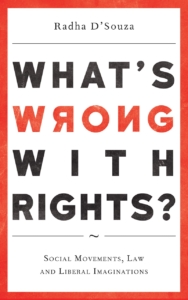 Today we take a critical look at human rights. My guest is Radha D’Souza. Radha has a new book entitled: What’s wrong with rights? Social movements, Law, and Liberal Imaginations
In our conversation, we discuss why there has been a proliferation of human rights since the end of World War II and how these rights have actually furthered the interests of the transnational capitalist class.
Radha also discusses education as a human right and the challenge it has for social movements and unions such as Education International.
Radha D’Souza teaches law at the University of Westminster, London.
Citation: D’Souza, Radha, interview with Will Brehm, FreshEd, 120, Podcast audio, June 25, 2018. https://www.freshedpodcast.com/radhadsouza/
Will Brehm 1:59
Radha D’Souza, welcome to FreshEd.
Radha D’Souza 2:02
Thank you, Will, for having me on this program. I’m delighted to be here today.
Will Brehm 2:07
How are human rights commonly understood today?
Radha D’Souza 2:12
Commonly, people when they speak about human rights, they have in mind a set of claims that they can make about certain basic needs for human life. For example, it could be civil and political rights: right to fair trial; right not to be tortured; and these kind of rights are called civil and political rights. Or they may be social economic rights: rights to education, rights to health, rights to housing, those kind of rights. Or they could be Cultural Rights: rights of indigenous people, and so on. But the key thing about rights in popular imaginations is that rights are universal, that every individual has them by virtue of being human. That is why they understand it as human right.
Will Brehm 3:12
How many rights are there?
Radha D’Souza 3:15
When the United Nations was established at the end of World War Two, in 1945, the Universal Declaration of Human Rights enumerated about 28 rights; there was a list of 28 rights. Today, it is estimated that international law recognizes more than 300 rights, so human rights have proliferated phenomenally in the last 70 years.
Will Brehm 3:46
Why? Why has there been a proliferation of human rights?
Radha D’Souza 3:50
Well, we can see if we look at the history of rights that the prefix ‘human’ was added only after the so called New World Order was established after World War Two. Now, why does that order need this expansion of rights? Earlier, before the World Wars happened in the 19th century, 18th century and so on, rights were largely confined to nation states, they were only available to citizens against states. But after World Wars, we find that capitalism changed in its fundamental character; it became transnational, it became monopolistic, it became finance driven. And these kinds of expansion of capitalism and intensification of capitalism required a proliferation of new types of rights. And that is why we see all sorts of new rights. Most of them are international in character, and most of them are rights that actually meet the needs of transnational monopoly, finance, capitalism.
Will Brehm 5:18
Could you give an example of a right that meets the needs of transnational financial capitalism?
Radha D’Souza 5:28
Okay, let’s look at the proliferation of rights, the ways in which rights have proliferated. We have all sorts of rights now, you know, rights to surrogacy, rights to land, indigenous people, including a right to happiness. Now, if you look at the UN General Assembly, it adopted a resolution in July 2011 called ‘Happiness: A holistic approach to development.’ Now, you might wonder what happiness has got to do with transnational monopoly finance capitalism, right? And can happiness be legislated at all? I mean, can people demand from the state a right to be happy in the same way as they can demand from the state right not to be tortured, for example? But when we actually — and it may on the face of it sound a little strange that we have a right to happiness, which is now part of the Sustainable Development Goals for 2030 — but when we start looking behind these rights, we can see that there are a lot of important organizations like EU commissioners, European Union commissioners, who are advocating for this right; the OECD, the Organization for Economic [Cooperation and] Development, has published guidelines on measuring subjective well-being for national statistical offices for the use of bureaucrats, etc.
Who’s driving this new right to happiness? On the one hand, we see large corporations are trying to de-unionized workers, deny them collective bargaining rights, which they always had. On the other hand, these very same corporations are also introducing what they call work life balance programs. Now, these work life balance programs have led to a large coaching industry which has about 47,000 employees and estimated to be around $2 billion US dollars a year. So one of the things that the right to happiness provides for people, or underprivileged people in developed countries, is the right to tourism. So now you can straightaway see the link between tourism industry and the right to happiness. And similarly, you have in the social, the economy… the SDGs or the Sustainable Development Goals 2030. Now these goals were established as successor to the Millennium Development Goals and the Millennium Development Goals set out about eight goals to achieve basic needs of people. So the goals like, for example, primary education, eradication of extreme poverty and hunger, universal gender equality, the goal to reduce child mortality and so on. Now, these goals where we know that it’s questionable whether they have been achieved at all. But regardless there was an eighth goal, which was to achieve Global Partnership. And this is the only goal in the Millennium Development Goal 2015 that was actually achieved because it was about establishing private public partnerships and induct global corporations, trust funds, private foundations, and so on into the very heart of the UN’s work.
Now, following on from that, we need to ask, if the Millennium Development Goals were not achieved, why do we need Sustainable Development Goals? And why do Sustainable Development Goals 2030 include the right to happiness? Right, and then you can see a whole lot of big players, for example, the Melinda and Bill Gates Foundation, the Clinton Foundation and so on taking up many of these development projects. And how do they plan to deliver on it? They deliver on — now because poverty has not been eradicated women are not equal. There’s no universal primary education yet. So instead of addressing those, now we have a new goal: let’s try to make people happy. Because people can obviously be happy even without anything, right? Because even slum children now are very happy when they kick footballs on streets, for example. There is momentary happiness, and it takes attention away from the fact that even if slum kids are happy, playing football on the streets — probably with a torn ball — and still feel happy, maybe questions of education, housing, health, you know, don’t really need to take center stage, or we don’t need to give it as much importance as we’ve been doing so far. So it kind of deflects attention from all of those things. And I think that is really one of the problems.
How does it deflect attention? Because the Sustainable Development Goals 2030 has led to this whole indicator industry, if we can call it that. How do we measure happiness? mathematical methods, you know, with a complete array of methodologies, multiple disciplines, including psychology, religious studies, sociologists, Development Studies, all getting together to list a number of factors, which, if they exist, we can say the person is happy. And that completely changes the meaning of happiness. And instead those indicators become ways of measuring, you know, development and saying, ‘Okay, these kids in the slums are happy playing football.’ So maybe, you know, they are somewhat developed. And that completely skews the whole thing. And I think it takes us away from the reality that as human beings we live in this community, whether we are rich or poor, and happiness is an attribute of being human. And regardless of our social status or conditions, we will always seek solidarity with other human beings and that will always bring us some level of happiness.
Will Brehm 12:55
So, are you saying that the the human right to happiness that’s embodied in the Sustainable Development Goals actually furthers the interests of a transnational capitalist class?
Radha D’Souza 13:10
It does. It does it at several levels, because at the level of poverty and all those basic needs, as I’ve just said, there is no need to deliver on them. So, there is no need to feel guilty because rich people are also unhappy, poor people are unhappy, rich people are happy sometimes. So, there is no need to give it the kind of primacy that we have given it all these years. It operates at the level of corporate management and so on, because of this work life balance, so that employees are driven to work more and more and the technologies have increased the intensity of work and yet, you know, there is no sense of solidarity because the trade unions are gone, communitarian life of employees are gone, entire towns have been dis-established. So, all those other social factors which give people some kind of social identity, solidarity, and so on is taken away. So the corporations need to step in and and do something about it. So instead of returning their communities in lives, they take over even their most personal lives by making, you know, work life balance a corporate goal and creating an industry coaching industry around it.
Will Brehm 14:45
Has capital been interested in rights before they were human rights? So you said human rights sort of came around post World War Two and sort of proliferated as transnational capitalism sort of grew globally. Before World War Two, the idea of rights, were they also connected to capitalism in any way?
Radha D’Souza 15:11
Absolutely. I said that the prefix ‘human’ was added to rights after World War Two. And before World War Two, say in the 17th and 18th centuries, rights did not have the prefix ‘human.’ When people talk about rights, it included property rights, as well as human rights. And rights are absolutely instrumental in establishing capitalist societies. Now, if we look at pre-capitalist societies, pre-capitalist societies were land based societies. Land was the central organizing principle for the social order and as land based societies, people and nature were united. This does not mean that there was no exploitation or whatever. I mean, serfs were exploited, etc. But their connection to nature was…their lives were embedded in nature. They were not disconnected from nature.
What capitalism, in contrast, is a commodity based system, so it’s commodity producing system. And that means that everything in capitalism needs to be commodified, bought and sold, exchanged and so on. And one of the first commodifications we see is commodification of land. So capitalism is establish by commodifying land, and when land becomes private property, and land becomes alienable, that means people can buy and sell it, which could not, was not, possible in the feudal system. Then people are displaced from land, because to get clear title, you have to buy it, sell land without the people. And when people are displaced from land, you have labor, a free labor market.
So you have two kinds of markets. One is the land market and the labor market. And these two are absolutely foundational for capitalism and commodity production, and a system based on commodity production. Now, rights are the means that actually reorganized society. They reorganize our relationships to nature, our relationships to each other, the capitalist and the worker, our relationship to land and forests and water and so on, and our relationships to each other in society, on the basis of rights. So capitalism kind of transforms, you know, property, a land, which is a social relationship between ourselves and nature into a thing, a commodity, and it transforms labor, which is an inherent property of being human, we have always worked and we can only live by working and that labor is transformed into another kind of commodity. And I think rights are the ones that established the system and rights establish in right bearing individuals. And each right bearing individual is right bearing because they have something to give and something that they need and can receive. And this is basically the basis of capitalist systems. And capitalism works on contracts. Because to produce commodities, to exchange commodities, individuals need to be able to arrive at contractual relations. And all contracts presuppose the existence of at least two right bearing parties. And that is the relationship between commodity production contracts as social relationships and rights as the concepts or the other basic idea that establishes right bearing individuals that can enter into contractual relations. So there is an absolutely inalienable, intrinsic relationship between rights and capitalism.
Will Brehm 19:48
On this show, I’ve spoken with a lot of people who do research on education privatization, the ways in which education has become commodified in so many different parts around the world. Do you think rights and human rights, since since education is a human right, as you said earlier — have rights played or furthered the commodification of education in your opinion?
Radha D’Souza 20:14
It has because, look, education has always historically, has always been central to social reproduction. Because what education does is reproduces the social order, it trains the next generation to take over the reins. This is not being or what capitalism does. This turns that into an education and education becomes an investment. And as an investment, it becomes meaningful only if it can produce returns. So education then loses its meaning as a way of, understanding the social order and how we can continue our social life. It becomes an individual personal investment. And with the right to education, we also see education itself becoming an industry in so many different ways. If you look at the internal management of educational systems, they are very much run like corporations. If you look at the disparities, they mirror the larger capitalist societies, you know: those with education and those without education, those who use it to make capitalism more profitable are the ones that go very high up, and those who use their education for social justice or to improve things in the world, you will find that they are not making much money out of their investment. But also the methods used. For example, we have these huge organizations, educational companies, you know, who produce databases who produce various kinds of technologies, they’re making money out of it. Let me give you a very simple example. Now, I work for a University. The University pays me a salary, but when I write something, I can’t give it to people free of charge to read. And because there are journals, academic journals, there are publishers and they all claim that they have a right to make money out of it, even though they have not spent anything on my work. So it’s a strange situation. We are in a position because I don’t need the money because the university’s paying me a salary. And education companies, I’m not doing anything, they’re only charging readers exorbitant sums of money $35, $40, to read an article for what, for doing nothing, because the technology is now so freely available that I can let anybody who wants to read my articles, but I’m not allowed to do that.
Will Brehm 23:25
And this comes back to the issue of having rights to commodify, in a sense, articles and books — very essential features of higher education.
Radha D’Souza 23:37
Yes, it is absolutely central to that, because education is about passing on our knowledge to others, and learning from others. So why do we need to pass on knowledge to others? And why do we need to learn from others as educators? Presumably there is something called a social good, presumably there is something called future generation, and we want the societies and the world to continue. And that is why this exchange of knowledge, both accumulated knowledge from the past and new knowledge is necessary to solve problems, just iron out difficulties, and to see how we can continue human life in the future. But this purpose is taken away. When education becomes a commodity, human life gets a backseat, social well-being gets a backseat and education becomes a product which has to be sold in the market. And increasingly, research is linked to corporations linked to government, social policy, to international organizations, and all of that, where it is designed to improve their productivity. But as social beings, we need a critique of society, constantly reviewing our practices, evaluating our practices, and, and trying to make improvements in our social life for society to continue. What education as a commodity does is exactly the opposite.
Will Brehm 25:23
Seeing education as a social good is something that organizations like Education International would most likely advocate for. Education International being the global federation of teacher unions around the world. But Education International also supports the human right to education. They sort of see that as one of the justifications for what they do. And so the question I guess I have is: to create education as a social good, can human rights help in that cause? Or is it actually just sort of undermining it because human rights have become sort of helping the political agenda of the global capitalist class?
Radha D’Souza 26:08
That’s a good question, Will, because I think one of the things I do in this book is to examine what the disjuncture between property rights and human rights does. Because that’s where we started this conversation. In the 17th and 18th centuries, rights included property rights, as well as human rights and in fact, rights, property rights and labor rights were very closely tied. And the justification for property rights was really about labor theories. You know, John Locke, for example, he says, he asks how can we call a piece of land mine and he says, because I labor on it, and therefore add value to it. So anything that we add value to through our work becomes property, my proper, private property, and so labor and property rights or social rights and property rights were entwined in the traditional thinking, or what we call enlightenment thinking, the European enlightenment. But after World War Two, we find that the property rights are disassociated with human rights. And I think this is the problem that we have today.
And your question is really an example of this disassociation. Because when people think about human rights, they think about, oh, children need to go to school, or, you know, people need — must have the right to go to a university or whatever. But they forget why the education industry wants human rights to education. See, and when…we see the property relations and education as a property, intellectual property, as is a post World War, you know, it has really expanded as a transnational, right, we see the industry itself, we see copyrights and all these kind of rights to my thoughts, which has become a form of property, because ultimately, that’s what it is, my thinking has become somebody’s property. And we don’t make the connection between these two things when organizations like this union, that you refer to, Education International, when they demand human rights, they’re only thinking about what we want from rights. But what I say is, you should also question why they want rights, why does the education industry want rights? Why do research foundations want rights? And why do corporations want intellectual property rights and so on. And when we start to ask why they want rights, then we start to see the connection between property rights and human rights. And this is what has been severed in the last 70 years. And that is why people continue to imagine that if they demand human rights, that somehow they can achieve it. But it only becomes an aspirational statement when it is not linked to the realities and how rights actually operate in the world. And that’s that’s the crucial point.
Will Brehm 30:07
I’d like to ask a personal question about how you navigate the space of academic publishing, because you just said that your thoughts become property. And we’ve been talking a little bit today about the academic publishing industry and how it’s, it’s very, it’s commodifying an essential part of higher education: books, articles. And you just put out a book and I think it’s published by Pluto Press.
Radha D’Souza 30:38
That’s right.
Will Brehm 30:38
How do you navigate signing contracts with publishers and knowing that your thoughts and your hard work is literally going to be the property of some other entity?
Radha D’Souza 30:52
It’s a difficult to navigate, especially at an individual level, because — and this is where the reality that we are social beings, we live in a social setting, and we can only change the world collectively becomes so important — because at an individual level, what is my option, either I publish, or I don’t publish. And even there, there is a lot of gatekeeping that happens. I mean Pluto is amazing; is one of the few, you know, radical book publishers around Left really remaining. But generally, if you look at the other big publishing names, they decide what they will publish and will not publish. And that will depend on the market that will depend on their judgment of your ideas. Say, I have an amazing idea, which is a radical idea. Or I write a piece of literary work, which is completely, you know, new genre, for example. If the publishing industry does not come on board, and some publisher does not agree to publish my work, I cannot communicate with the world. And in order to communicate with the world, then I’m under pressure to tailor my thoughts, to tailor my thinking, and my style and, you know, genre, to whatever is marketable. And that makes the gatekeeping a hugely problematic thing for our rights to intellectual freedom, you know, rights to knowledge, to conscience, all of those things. And I think the journals, it’s even worse because with journals, there are gatekeeping, gatekeepers who will decide, you know, you have not cited x or y or z and therefore, your article is unpublishable, or you’re right your ideas are too radical, therefore, they will not be publishable and it is through this kind of gatekeeping, that we are unable to produce knowledge that addresses the real problems of the real world and the people who are really in need of solutions.
Will Brehm 33:16
So, in your book, you argue that the 21st century needs a new counter social philosophy. What does that look like in your opinion?
Radha D’Souza 33:27
You see, all problems of the modern world are, in one way or another, related to three types of questions that we have: questions about human relations to nature, questions about human relations to each other, and questions about our inner lives, you can call it emotional life, psychological life, spiritual life, whatever you want to call it. Now, in ancient times, philosophy helped us to understand these relationships, helped us to understand our place in the world, our purpose in life, the meaning of life and our actions. What are the long term effects of what we do or don’t do.
Capitalism dismissed these questions as irrelevant, it undermined philosophy. The European Enlightenment thinkers for example, separated philosophy from science and philosophy was a useless part of knowledge and science became the useful part of knowledge. And then a series of separations followed: the separation of Natural Sciences from Social Sciences, separation of law from ethics, separation of society or sociology from law, and so on and so forth. And I could expand. Some European Enlightenment thinkers, like Liebnitz for example, fantasized about transforming all knowledge into an ideal kind of mathematical formula. Now, today, with computing, we see this fantasy being realized, because all computing is ultimately about mathematics. It’s about combinations of zeros and ones. I may be oversimplifying it here, but that’s what it is. Everything can be reduced to numbers, happiness can be measured, intergenerational equity is reduced to the technical definition of 30 years, and so on. But as a result of this, we no longer have any way of knowing our place in the world: Why are we here? What do we want to do? And we have no way of understanding the world around us. Therefore, I say we need to return to these big questions about human life. These are not useless kinds of knowledge, because they don’t produce marketable value, or they don’t produce returns on investments. We still need to understand how to make sense of our actions. And therefore I say, we need to find ways of restoring the three relationships that I talked about: relationships between nature and society, between people, and between ethics and aesthetics. And only a counter philosophy that puts these questions at the center of our knowledge production can help us get out of this terrible mess that we’re in.
Will Brehm 36:43
Well, Radha D’Souza, thank you so much for joining FreshEd it really was a pleasure to talk and a lot of thoughts and more questions are coming in my mind right now. And and I hope audience members will just have so much to think about going forward.
Radha D’Souza 36:58
Thank you so much, Will, it was a pleasure talking to you.
Want to help translate this show? Please contact info@freshedpodcast.com
Have any useful resources related to this show? Please send them to info@freshedpodcast.com
What’s wrong with rights?
OverviewTranscriptTranslationResources
Today we look at educational privatization in Japan. My guest is the renowned Marxist scholar Makoto Itoh. In our two-part conversation, Professor Itoh argues that both the capitalist market and Soviet system have not produced democratic equality. In both systems, schools have been used to sort people by class.
Makoto Itoh teaches at Kokugakuin University and is professor emeritus of the University of Tokyo. His newest book, written in Japanese, is A guide to Capitalist Economy, which was published in February.
Citation: Itoh, Makoto, interview with Will Brehm, FreshEd, 112, podcast audio, April 16, 2018. https://www.freshedpodcast.com/makotoitoh/
Will Brehm 1:15
Makoto Itoh, Welcome to FreshEd
Makoto Itoh 1:18
Thank you very much for your invitation.
Will Brehm 1:19
It’s really wonderful to sit down today in Tokyo and discuss, well, probably a whole bunch of things about education and your own life and about Marxism. And it’s a good time because you just told me you published a new book called ‘A Guide to Capitalist Economy’, which is published in Japanese a few months ago. So, congratulations on the book.
Makoto Itoh 1:40
Thank you.
Will Brehm 1:42
So, what I’m interested in speaking about today is your understanding of Marxism -you are an internationally renowned Marxist scholar- and applying it to the field of education. How would we apply Marxist thinking to education? So, you know, I’m not really sure where to begin because Marxism is so big of a body of literature but perhaps we can think about the costs of education. Because the costs seem to be one of the big pieces of capitalism: prices and costs.
Makoto Itoh 2:20
Indeed. Well, when we look at education costs today, it is worrying to see how it became so expensive, especially to learn at university level. The data in Japan for last year said that in private university, it costs in four years in total, 7.4 million yen. So, you can calculate.
Will Brehm 2:48
So, 7.4 million yen is something like $70,0000 US dollars?
Makoto Itoh 2:57
Right. So, it costs very much in private university. And in case of six-year medical students, in total, it costs 27 million yen, whereas average household income in Japan is 5.3 million.
Will Brehm 3:18
So many people wouldn’t be able to even afford to go to medical school and probably very difficult to go to private university.
Makoto Itoh 3:27
That’s right. It is said that almost educational costs of one child for medical department is almost the same as purchasing a house. So, I am afraid that such expensive educational cost cannot be affordable for all parents. The basic idea for democracy is egalitarian, freedom to run for everybody. But that cost prevents such a basis for social democracy, isn’t it? And although rate of university students among the same generation, as you may know, reached just over one half in 2009.
Will Brehm 4:20
OK, so in 2009, 50% of the same generation went to university?
Makoto Itoh 4:30
Four years university.
Will Brehm 4:32
Wow.
Makoto Itoh 4:32
Whereas in my youth, it was below 10%. At the year 1954, I became a university student in the next year, but at 1954 it equaled 7.9%. So, less than 10%.
Will Brehm 4:51
Right.
Makoto Itoh 4:51
So, the rate of higher education at the university level became more and more broadly shared, whereas it became so expensive nowadays. The rate of increase of students among the same generation became very, very stagnant and became slightly down lower to 49.9%. Less than 50% in 2013.
Will Brehm 5:21
Okay, so it’s the numbers of students enrolling in universities has slowed compared to when you were a student?
Makoto Itoh 5:31
No, no, no, the same generation? The rate of university students became lower in several years.
Will Brehm 5:38
Oh, right. And is this mainly because of the costs?
Makoto Itoh 5:42
I guess so. At least one reason. And this affects in various ways. For one thing, students became so busy to earn money while they are students too. So, that they cannot have enough time to enjoy their college life. And, “I’m sorry, I’m busy to do some advice” is a common phrase for the present students and they became so conscious about the career after graduation because they had to earn money for the sake of parents who paid university costs. And many students nowadays, just like in the United States, depend on student loans. And this newspaper reports, that personal bankruptcy, over 150,000 person a year bankrupted now. And this bankruptcy affects naturally to their parents, and sometimes to grandparents due to joint-signatures.
Will Brehm 6:54
This is the students that go bankrupt because of the loans they’ve taken out and they’re unable to pay them back.
Makoto Itoh 7:03
It’s a tragic situation. So, in many cases, it affects the total society broadly.
Will Brehm 7:11
Why do you think this happens? I mean, is this sort of a natural consequence in capitalists’ systems where fees increase and where you have to take out debt? Debt, as Minsky says is a main feature of capitalism. I mean, should we not be surprised that this is happening? Even if it is tragic?
Makoto Itoh 7:35
Hmm. In my years, when I was a student, tuitions for all state universities seems almost nothing. It was so cheap! So, in student period, student friends are so various in their classes. All a mixture of society. Whereas in the present day, in the University of Tokyo, for example, the other statistics says that over one half of students in the University of Tokyo, you can see over 54.8% of students came from the family type, which belongs just under 10% of top richer families this class.
Will Brehm 8:30
Right, so over half of the students come from the wealthiest families
Makoto Itoh 8:36
9.7% of richest families can only afford.
Will Brehm 8:43
The top 10% send more than 50% of the students.
Makoto Itoh 8:50
55%
Will Brehm 8:50
So, there’s huge inequality in the system.
Makoto Itoh 8:55
The University of Tokyo is a major feeding University Japan to occupy Korea for the future bureaucrat, business circle and many other candidates for the future central.
Will Brehm 9:09
Could you explain that? Because this is actually slightly different than in Western universities, where the University of Tokyo holds this very privileged…
Makoto Itoh 9:17
You probably know Gakureki shakai. Gakureki means career of university period. It is important to remember, and I feel unhappy to talk about that from a Marxian point of view. But the University of Tokyo actually did play a very important institution with some other top universities are important to see who became dominant probability to be declared as a candidate for the leading bureaucrats, leading businesspersons of big businesses and in other many fields. So, those are elite institutions and in order to get into such elitist universities there is certainly severe competition and parents have to be rich to hire private teacher to educate their children.
Will Brehm 10:23
And it’s not just private schooling it’s also tutoring or Juku
Makoto Itoh 10:28
Juku. Many costs extra is necessary.
Will Brehm 10:31
So, over the lifetime of a child you have to be able to spend millions and millions of yen to prepare him or her to get into a university like Todai.
Makoto Itoh 10:41
I read in Piketty’s book that only top 2% is able to send their children to Harvard. Almost a similar phenomenon is seen. To jump from that, I read some material of old Soviet. There was elite educational systems which only allowed to small number of elitist state bureaucrats and party bureaucrats. It was very privileged special course nomenclature education system. So, education system is a “for sale” system to discriminate elitist. In the case of Japan and the United States, or capitalist societies, money can serve as such a discriminatory reproduction of elitist capitalist class.
Will Brehm 11:37
Whereas with the Soviet Union it was…
Makoto Itoh 11:40
It was done by privileged political setting. Which is better? [Laughter]
Will Brehm 11:48
That’s right. I mean is there a better? Because the outcome is similar, right? You sort society in a particular way that gives certain people benefits and not others. It is very far from egalitarianism as you were talking about.
Makoto Itoh 12:02
Right. So, egalitarianism as an idea for both socialism and capitalism. But in reality, they failed for Soviet Union, United States, and Japan.
Will Brehm 12:20
That’s quite a difficult contradiction
Makoto Itoh 12:24
Indeed. An ideal society in common sense under the name of democracy cannot work in reality in the market. Just like a political system in the Soviet Union. We tend to be told that Soviet was a privileged, very undemocratic society. But why can’t we see democratic egalitarian social system on the market?
Will Brehm 12:50
Yeah, they might not -capitalism and democracy are not as intertwined as maybe the common assumption.
Makoto Itoh 13:02
Civil evolution from the age of former British or French Revolution has not been achieved in reality in the system of education. Oxbridge, Harvard, MIT, Boston, and the Ivy Leagues in the United States.
Will Brehm 13:21
When you look at education in Japan, but as you were saying, this phenomenon is in many other parts of the world, particularly in market economies, where inequality is increasing, and education is a way to sort of sort society, does Marxist economics help you understand what is going on?
Makoto Itoh 13:45
So, the real problem is that what is the social ground to argue for democracy? Political democracy is achieved by one vote for one person. One other person can be given one vote for election. It is a political way of expression of democracy. And in my belief, I think that economic life in society is supported by labor or work, and economic democracy should be recognized social contribution for egalitarian peoples endeavor to spend certain time of his life or day time to work for other persons or to support themselves or other persons. In usual a person statistically tells us that around 2000 hours a year is working day. And I think there are about 50 million persons in Japan working, or supporting our economic life, excepting certain number of wage workers like politicians and bureaucrats in certain parts. Just like Adam Smith said, they are unproductive classes that not support economic life -to work for services and producing something for other persons, socially. If we calculate 50 thousands persons 2,000 hours each makes total number of hours, 100 billion.
Will Brehm 15:37
100 billion hours of work every year-
Makoto Itoh 15:40
-supports Japanese society. This is a very clear image to calculate. And it is my fundamental view of society, that our economic life is supported by that number of hours together. Therefore, if we can conceive that each hour is usually estimated equally, each other homogeneous, this is called by Marx abstract human labor, which is the basis for any concrete useful labor. Marx distinguishes labor in that sense and abstract human labor is shared for different kinds of useful concrete labor. So, this forms division of labor in society. If we can recognize that any person even highly educated doctor and taxi driver is as the same person, same human being, which have concepts in their mind, and utilize their internal nature to act and work according to the their conception and execution is the combination to form human ability to work in any places, utilizing language in common and thinking, sharing certain ideas, and can do what they intend to do unlike any other animals who may also work but human labor is different from other animals’ metabolic functions with great nature. It is different from we share ideas, conceptions, and work according to that conception, this is human work. So, if we recognize each other, every working hour is homogeneous, despite of educational cost difference -it is other aspects to be considered- but if we recognize it in such a way, economic democracy should be based upon homogeneity of social contribution of every person’s work labor.
Will Brehm 18:07
So, for instance, like you said, the taxi drivers one hour of work would be equivalent to the doctor’s one hour of work, or the Prime Minister’s one hour of work?
Makoto Itoh 18:18
This is the basic idea.
Will Brehm 18:20
But even the non-wage labor would be valued the same way, right.
Makoto Itoh 18:25
Yes.
Will Brehm 18:26
So, the stay-at-home mother or father would be valued for one hour of childcare.
Makoto Itoh 18:32
And in order to think in such a way we have to distinct Marxists treatment of skilled labor issue. Even Marx said, skilled labor may be conceived as doing five times of labor in one hour unlike the unskilled labor. I think it is not democratic way of conceptualizing abstract human labor. I would like to revise that on Marx and almost all the Marxian economists still follow Ricardo -Marx traditions to conceive intensified labor by certain skilled work complex laborer. It is not a democratic way to think.
Will Brehm 19:19
No. You don’t want to have different values placed on different types of labor, skilled or unskilled, they all should be equal. That is the egalitarian way.
Makoto Itoh 19:30
Yeah. 100 billion is the same in quality.
Will Brehm 19:36
Yeah. And what I wonder is..
Makoto Itoh 19:37
It is interesting to think in such a way.
Will Brehm 19:40
Yeah, a hundred billion hours of work!
Makoto Itoh 19:43
And if we conceive certain cases nowadays, say Basic Income idea, for example, and some cases of local currency, time data, they treat labor contribution as the same contribution among community. It has a certain, in my belief, it is through communal ways of understanding each other let us recognize our time as a basis of community. It is a good way to think.
Will Brehm 20:18
It seems like it would also sort of naturally lead to people devoting less time in wage labor, because 100 billion hours of labor per year, I would imagine that’s not completely -or you don’t need 100 billion hours to produce the GDP of Japan.
Makoto Itoh 20:44
If we include certain non-market labor, it might be 1.5 times of that size. We don’t care about that. But the important thing is to recognize egalitarian democratic homogeneity in contributing labor activities, either market or no market, it is an important thing.
Will Brehm 21:08
It seems as if the education system, as we were talking about earlier, the sorting that goes on, would not allow for such an egalitarian system as you were saying.
Makoto Itoh 21:23
Yea. It is because privatization of education attributes educational costs to each family or each individual. Therefore, the person who needs higher education, such as medical doctor, has to pay back, as Becker’s human capital theory says as an investment. It is a type of thinking which seems very natural when we live in the individualistic, private, market economy. Whereas in old period, the educational system could be more public, communal, common goods, as you suggest here. And any children, who may come from the poorer family, can receive that education free. If educational system is supported by common funds, in that case, we do not care about educational costs being paid back later by their higher wages, we can still reproduce necessary types of educated, trained persons for each necessary works.
Will Brehm 22:40
To think beyond human capital theory. To not view education as a future rate of return on my individual wage, but rather, as you’re saying, see it more communally. To me, it sounds like that will take a huge shift in imagination of everyday people. Because, I think the person who’s spending 7.4 million yen to go to university is expecting that he or she will get a return on investment that is quite high.
Makoto Itoh 23:20
And the student loan expect that too. That is a privatization of education for individual. But actually, communist economy in Soviet system, higher education, while also very cheap or free to produce most numerous number of higher educated technicians who are produced in Soviet. And in such an educational system, the public way: In that case, why should be pay higher wages to that doctor or to that engineer? We do not need to paying system such a discriminatory way. So probably in Soviet grading of labor was done, but this grading could be much reduced gaps and connected to educational costs, you see. So that sort of system is conceivable. If educational costs can be socialized, educational systems could be more democratic and probably social mobility could be elevated much more. As a result, it might be more activated society and mobility across various families to contribute in suitable places or according to the children’s aspirations could be achieved.
Will Brehm 24:56
Are you hopeful that in the future we will see a transition in society away from this privatization of education that has expanded exponentially under neoliberalism? Or are you hopeful that we will actually shift -in Japan, and in America, and in other places around the world- away from that private notion and value of education.
Makoto Itoh 25:24
At least my generation experiences such cheap education and cost for educational level. We used to think university tuitions almost does not cost. At that time, National University of Japanese educational system served as a sort of recruiting system for different type classes of societies, which meant a sort of a mobility of society was much greater than nowadays. It is my impression, and I think it might be more desirable for social future. And while educational costs bother me for another reason too, which is reducing children. United States still has growing number of population, but Japan is declining population and many other advanced capitalist countries began to see the similar trend for smaller children, ageing society. It is very bad to see for the future of educational system to maintain. And social activity, aspirations, new ideas would be expected lesser degrees due to smaller number of children may make society very, very conservative. All the sociologists say second and third child is more in a sense, non-conservative.
Will Brehm 27:15
Progressive.
Makoto Itoh 27:15
Progressive, if you say. Or act more ambitiously for new ideas than first children. It is because mothers and fathers protect first child more carefully and the second and third are not cared for much.
Will Brehm 27:40
I am the second child.
Makoto Itoh 27:44
So, I understand why you came to Japan.
Will Brehm 27:50
More freedom, I guess. My brother has much more -I mean, my parents are probably listening to this conversation. And they were very good parents. I mean, that’s not an issue.
Makoto Itoh 28:02
You have to say that. [Laughter]
Will Brehm 28:07
You put me in a difficult position.
Makoto Itoh 28:11
And I’m the third child.
Will Brehm 28:13
Ah! That says a lot!
Makoto Itoh 28:15
My elder brother had to take care of my parents. He’s very good. And I feel a bit embarrassing to take care of my parents and go free as you did.
Will Brehm 28:36
And is that what brought you into the academy?
Makoto Itoh 28:40
Right.
Will Brehm 28:41
You felt like you had more freedom. You also joined some of the student protests in the 1970’s.
Makoto Itoh 28:48
Sometimes Yes, but not very much. But I was attracted to Marxism just for intellectual aspect. It seems too heavy problems to think. And I used to think everything quickly. But when I encountered Marxist capital, it was heavy, deep, not easy to understand. It is quite a shock to me. And how to understand those heavy deep thinking was an interesting experience. But the first time in my life to encounter such a theoretical system containing so deep work.
Will Brehm 29:42
So, it was a very intellectual pursuit for you?
Makoto Itoh 29:45
Yes, I began to read Marxist capital in what you say the first year of university?
Will Brehm 29:53
Freshmen year.
Makoto Itoh 29:53
Freshmen. Among my classroom friend invited me to join the reading group in our university class.
Will Brehm 30:04
Makoto Itoh, thank you so much for joining FreshEd
Makoto Itoh 30:07
It’s my pleasure.
Will Brehm 30:08
It really was my pleasure. I really enjoyed talking today.
Want to help translate this show? Please contact info@freshedpodcast.com
Have any useful resources related to this show? Please send them to info@freshedpodcast.com
Educational privatization in Japan