How Time Inequalities Shape Higher Education Mobility
How Time Inequalities Shape Higher Education Mobility

How Time Inequalities Shape Higher Education Mobility
Dissertations and the Field of Education
Today we talk about powerful knowledge, a concept that has sparked a major debate about what should be taught in schools. My guest is Michael Young, a professor of Sociology of Curriculum at UCL’s Institute of Education.
Michael’s work in the sociology of education has been criticized by both the Right and the Left. That’s why I wanted to sit down with him to unpack what he even means by powerful knowledge and how it applies to schools. Where did the idea come from? How has his own thinking evolved over his career?
Michael Young has worked at the Institute of Education for over 50 years. A student of Basil Bernstein, he has had a major impact on the field of sociology of education since the publication of his first book, Knowledge and Control, in 1971. Much of our conversation today focuses on his 2008 book, Bringing Knowledge Back in.
Citation: Young, Michael, interview with Will Brehm, FreshEd, 188, podcast audio, February 24, 2020. https://www.freshedpodcast.com/michaelyoung/
Will Brehm 2:14
Michael Young, welcome to FreshEd.
Michael Young 2:16
Thank you. I am very delighted to be involved.
Will Brehm 2:19
So, you have this idea of powerful knowledge and it, sort of, has taken on a life of its own, in many ways. Could you just define the concept of ‘powerful knowledge’? How would you tell a student, for instance, what this idea is?
Michael Young 2:34
I think that there would be many definitions, and what I can do is say something about the starting ideas that, in fact, led to it. And then, I suppose what I wanted to do when I came up with the idea, and I do not know if it is uniquely me … but there was … I was focusing more on educational research in sociology, and I thought that it was important that, in fact, we refocused how we approach questions about the curriculum in sociology. And so … I came up … I gave a talk at the Institute in about 2007, 2008, about the future direction of research. And … it … and I made this distinction, which I think is a very important one, between knowledge of the powerful, and powerful knowledge. And, on the whole, the sociological tradition has been to focus on knowledge … the curriculum, as knowledge of the powerful, and that comes from, basically, a left Marxist tradition, which basically sees the knowledge that people get access to as ideology, masking the nature of the societies that, in fact, they’re in.
Will Brehm 3:48
So, for instance, it would be the people in power who are writing the curriculum, writing the syllabi, writing the textbooks, their knowledge, their interests are being reproduced inside the curriculum. And that is the knowledge of the powerful.
Michael Young 4:02
And, in a sense, what the sociologists did was to expose this. And I felt that there was time … we had to stop. Because, actually, it was an oversimplification this… was… Although that knowledge of powerful ideas got some truth in it, it is also true that, in fact, people can get quite other kinds of things from being educated in a school system … university system … in a Western capitalist society. And, what they can get is access to if I call ‘powerful knowledge’. So, in a sense, there is a tension within education systems in capitalist society, on the one hand, wanting to perpetuate a particular social order, but also having an alternative … but … to give access to criticism of that social order. And this is an argument that, in fact, Basil Bernstein makes quite powerfully in his work.
Will Brehm 4:57
Right. So, what would be an example, in today’s world, of powerful knowledge, as you see it?
Michael Young 5:03
Johan Muller, who’s a colleague I work with from Cape Town, he and I decided … we had to try and write a paper, actually trying to answer that question. And, I think the important thing to say is that, in fact, and this is where Bernstein comes in, is that, in fact, the meaning of powerful knowledge depends on the … area … the field of knowledge you’re talking about. And, in a sense, there is a tendency for the model from the natural sciences, to be seen as a definitive one, across the whole of the field of knowledge. Because, unequivocally, if we think back to industrialization, the knowledge that is transformed the society is the scientific knowledge, and the increasing emphasis of the sciences, in industry, manufacturing, and so forth. But I am not wanting to negate that, but what is extremely important is to recognize that, in a sense, the knowledge fields are differentiated. And that, in fact, you have the social sciences, you have the humanities, you have the unity. And, I think the key thing … this is the point that Bernstein makes, which I think is quite useful, that, in fact, depending on which which field you’re in, knowledge progresses in different ways, new knowledge is developed in different ways … according to where …now in the natural sciences it’s developed through the process of greater generalization and abstraction. So that, in fact, Einstein incorporates Newton and all the nineteenth century, in his field … it does not mean that they were wrong, but they were partial. And Einstein provided a broader theory, quantum theory and so forth, is an attempt to combine those, and there is the endless attempt in physics, which is to bring, in a sense, relativity and quantum theory together.
Will Brehm 6:59
Right. So … so basically powerful knowledge, in a way, you’re saying, is that once you differentiate between fields or disciplines, there are different sort of traditions with in those disciplines that, sort of, legitimate …
Michael Young 7:12
Yes.
Will Brehm 7:12
… powerful knowledge. And, I think one of the words you use is ‘specialized …
Michael Young 7:16
Yes.
Will Brehm 7:17
… knowledge’. So, what is the difference between ‘specialized knowledge’ and say ‘non-specialized knowledge’?
Michael Young 7:22
Well, non-specialized knowledge is the knowledge that is developed without reflection in communities, and is valuable to make sense of the world that people grow up in. So there’s, in a sense, non-specialized knowledge, it’s about the streets you live in, whether there’s a shop here or there, what bus is going where they go, that’s everyday knowledge, as discussed, for instance, particularly by the psychologist Vygotsky, and indeed … it’s … Durkheim uses the term ‘profane knowledge’ for that … that … it’s … it’s knowledge of experience. I think the big difference between specialized … starting something … between specialized and non-specialized, is that it is knowledge from experience, or it is knowledge that goes beyond experience. And that, in fact, I quite often give the example that, in fact … a city … a young person in the city … knows quite a lot … has a lot of knowledge of the city that he or she has grown up in. And, at the age … depending … seven or eight or nine, he certainly meets a geography teacher. And, the geography teacher has specialized knowledge of cities, what happens to them, how they have changed, different parts of the city affect, in different kinds of ways. And, in a sense, you get what … the … some of the researchers say is a disruption, disruption between the specialized knowledge of a field like geography, which relies upon research, inquiry, debates, within its community, and the everyday knowledge, which is also about the city, urban geography or urban sociology, is about the city. So is the young boy growing up in the city …
Will Brehm 9:09
Or the black taxi driver’s knowledge …
Michael Young 9:11
That is right … taxi drivers … is knowledge indeed, yeah…yup, yup.
Will Brehm 9:15
But that would be everyday knowledge.
Michael Young 9:16
That would be everyday knowledge, yes indeed.
Will Brehm 9:17
That would be the profane to use Durkheim’s word.
Michael Young 9:20
Yeah, yeah …that … But, in a sense, the interesting thing is that there is also a difference between codified and uncodified knowledge…
Will Brehm 9:30
Meaning?
Michael Young 9:31
… and, in a sense, specialized knowledge means that, in fact, it is more than just organizing knowledge … I mean … the taxi driver’s knowledge is codified, so you can test them, do they know it? – and so forth. But it is not specialized. In the sense that it never progresses, you just have to keep up with what’s going on when the new roads are built, and so forth. And, in a sense, it is different from … the … the person who lives in an area who has uncodified knowledge about the names of the streets, and the pubs, and the shops, and things like that …
Will Brehm 10:07
Right, exactly, exactly. Okay. Now … I mean … you know, the specialized/non-specialized knowledge, it seems like it is a dichotomy that might be too absolute, in a way. Would you … you know … is there some gray area where there could be types of powerful knowledge that is both specialized and non-specialized?
Michael Young 10:25
I think that in a modern industrial society, these categories … I mean … to use the term that the great German sociologist Max Weber uses, ‘ideal types’, they are not descriptions, and therefore, somebody’s knowledge will always have bits of specialized and bits of unspecialized, but when you move, say, from everyday knowledge of a city to a geography teacher, then you get a focus and a specialization that is focused. It does not mean that you throw out the unspecialized knowledge, but it is a different way of thinking. And, in that sense …it is a … students find it difficult to make that step.
Will Brehm 11:07
So … so … okay. So, we have knowledge that is specialized, we have knowledge that is unspecialized as ideal types, and then we still have this knowledge of the powerful. And would that … be … that sort of fits into specialized and non-specialized as well.
Michael Young 11:22
The knowledge of the powerful is a way of thinking about specialized knowledge. Whereas powerful knowledge is another way of thinking about specialized knowledge. Because, in a sense, if you’re approaching it from the point of view of knowledge of the powerful, you focus on ideological assumptions, you focus on who has the knowledge, what interests does it protect? – and so for those kind of things, so it’s not so much … so it’s a question of how you think about it, rather than that.
Will Brehm 11:53
Right, right. Okay. And so, I mean, we have spent a lot of time talking about knowledge. What about the word ‘powerful’, like, how are you conceptualizing the very idea of power?
Michael Young 12:02
I think it is … quite … it is an important point. Johan Muller and I, we wrote a paper in ‘The Curriculum Journal’ last year, which, in fact, revisits the question of power. Because we realized that, in a sense, and particularly important for education, that, in fact, for instance, you come across new literature or new sciences then, in a sense, on the one hand, that is powerful knowledge, but it also has powers through knowing it, and therefore, what we realized was that, in a sense, power can either mean … can mean power over, it also means power to do certain things, to think certain things. So, in a sense, power has always got those dimensions. And the problem was, to some extent … is what sociology’s emphasized, it is always the power of domination. Because it is a very powerful, it’s a very significant factor, in societies, the domination of knowledge. But it tends to neglect the fact that, in fact, students, from whatever social class, can actually acquire knowledge that empowers them. So that, in a sense, somebody like Paulo Freire is talking about the emancipatory potential of knowledge. Whereas, in fact, somebody like Althusser and Bourdieu is talking about dominating power of knowledge.
Will Brehm 13:29
Right. Okay.
Michael Young 13:29
So, there are two very, very different notions of knowledge.
Will Brehm 13:32
Yeah, very different notions …
Michael Young 13:34
That makes it a complex issue for students actually studying and thinking about it. They want to see it as simple, that either it is power over or it is power to …
Will Brehm 13:44
Right…
Michael Young 13:45
…never.
Will Brehm 13:46
And it is both …
Michael Young 13:47
And it is both…
Will Brehm 13:47
… at the same time.
Michael Young 13:48
Yeah, at the same time, yes …
Will Brehm 13:49
…and that is difficult to then unpack …
Michael Young 13:51
… and this is somethings that is always true …
Will Brehm 13:53
Right …
Michael Young 13:53
… about social …
Will Brehm 13:54
Right …
Michael Young 13:54
… organization.
Will Brehm 13:56
And so, would all specialized knowledge be powerful?
Michael Young 14:00
Would all specialized knowledge be powerful? Again, it depends. The reason why people specialize is to further knowledge and, in a sense, to make it, generate new ideas, extend their imagination about the world, or make predictions more powerful. So that the purpose of specialization is always to increase the power. I think that … but on the other hand, for instance, if you take the Gnostic knowledge of physicists, about the nature of the atom, then that, actually, can lead to Hiroshima. As much as it can lead to a way of producing energy.
Will Brehm 14:44
Right, right … so …
Michael Young 14:45
And so, it is not so much whether it is always powerful, but it’s powerful with different consequences.
Will Brehm 14:52
And in different times. So …
Michael Young 14:53
Yah, yah …
Will Brehm 14:53
… so, at one time, it …
Michael Young 14:54
Yah, yah …
Will Brehm 14:54
…it can be a domination over …
Michael Young 14:56
…that’s right …
Will Brehm 14:56
… certain people, and other times it can be …
Michael Young 14:58
… and you cannot really, you cannot really escape that … we have the dramatic case of it now about artificial intelligence, it’s actually incredibly productive, the things it can enable us to do, but also it has very, very negative consequences as well, as we know from, you know, the Cambridge Analytica project, and all those kind of things.
Will Brehm 15:19
Exactly. And I guess this is where some issues of politics come in, because then there has to be choices that are made … by how these, sort of, new knowledge in different fields gets applied to society or applied in society, right? So …
Michael Young 15:33
But it is a most tricky issue for politics …
Will Brehm 15:36
Oh, of course …
Michael Young 15:36
… because, in a sense, it is not unambiguous right …ly … right … or left.
Will Brehm 15:42
Exactly. Right. And there is, yeah, exactly …
Michael Young 15:44
People want to find things …of, you know, that the Labour Party can go in for or the Conservative Party, but it is not like that …
Will Brehm 15:50
Right…
Michael Young 15:51
…knowledge is not like that.
Will Brehm 15:52
Right. So, I mean, this, sort of, brings up this idea of, you know, what is truth? And we, sort of, live in this moment of ‘fake news’. And where journalism is, sort of, you know, they feel the need to present both side ism. So, in every article there is, you know, here is what one person says, but we also have the opposite take by this other group with that has other interests. Do you think that powerful knowledge, this idea that we’ve been talking about, can actually help, you know, societies today, sort of, get over or get through this idea of ‘fake news’ and where truth is relative and anyone can have as many different truths as we can count?
Michael Young 16:32
I think the notion of … there are two things need to be clarified there, I think. One is that, in fact, there is a difference between, if you are like, I cannot think of quite the right term, the difference between absolute truth, and with something more like procedural truth. I mean, there is … and, in a sense, I would use the term for procedural truth, better knowledge rather than, in fact, another version of truth. There’s always better knowledge knowledge. And that takes you back to the fact that there’s better knowledge in different disciplines, there is better plays, better films. And then the reason … what ‘better’ means is that you can get the background, the argument, the evidence, and, so forth, for why you claim to be better. And it is very, very important that, in fact, school education, in particular, actually focuses on better knowledge.
Will Brehm 17:25
So, isn’t one person’s idea of ‘better’ different from another’s?
Michael Young 17:29
Well, it’s potentially better, but, in a sense …one of the things that schools try to do is to give students access to the specialized communities who spend their life on trying to clarify the better knowledge, and that gives the historians … they don’t have an answer, you know, anybody can have a view about the origins of the American War of Independence or whatever, but what historians do can document you, what happened and why, and the arguments that they can make. And, in a sense … and therefore we turn to them, but we do not turn to them for an absolute truth, we turned to them because, in fact, what … the way that the …the issue … I would say the way … it is important for everybody to be thinking about knowledge, not necessarily about powerful knowledge, that is not always that helpful.
Will Brehm 18:25
Right.
Michael Young 18:26
But, in a sense, if they think about powerful knowledge, they will realize that they are involved in some judgment, but there are limits to their judgment, because of specialization. I cannot make a judgement about some technical thing involved in artificial intelligence. But I can make some broader judgments about what assumptions about intelligence the AI people are making, because I am, you know, that is what philosophers and sociologists do. So, there is a question of where your own specialization applies.
Will Brehm 19:00
So, you know, it is interesting this idea of trying to, you know, view specialized knowledge, or view powerful knowledge within specialized fields, within specialized disciplines. Because, at the same time, in higher education, we hear a lot about trying to be cross-disciplinary, transdisciplinary, trying to not simply work within single disciplines, but work across disciplines, to get at certain issues that don’t fall neatly in one area, right? So, for instance, one example that I can think of is climate change, right? Because that obviously has issues that not only impact, you know, environmental studies and physics and, you know, but also sociology, also technology. So how, you know, how do you understand or how can cross-disciplinary thinking fit within ideas of powerful knowledge?
Michael Young 19:50
Climate change, I mean, I’m not a geographer, but climate change is a very interesting example, because there was a debate about whether, in fact, climate change should be introduced or not … and it’s … in the primary school. And some people thought it should because it is relevant, and practical, and happening every day. I would make the argument that, in fact, that is fine but, if you do not really know what climate is, then to think about the consequences of climate change is absurd. So, I would take the view that, in a sense, the starting assumption of schooling is to focus on, if you like, disciplines, which provide you with the intellectual basis for being transdisciplinary. And, I would not introduce, I mean, certainly I used to teach chemistry, as a schoolteacher, and I used to feel much happier … I often had to teach physics and biology, but I did not know much, but I did not feel that I was such a good teacher then. Whereas, I knew my subject, and that’s why people could basically get excited about it, if I taught them, and also, they could learn. So, I think that, in fact, it is very important to see the interrelationships between the discipline, or the subject, and the interdisciplinary inquiry. Because, of course, you look at the, for instance, UCL’s range of research, a lot of it is interdisciplinary. But the people who work in interdisciplinary fields have a strong background in some discipline or other.
Will Brehm 21:28
Right, so they are, you know, you need to specialize in a particular knowledge tradition. But then you also have to have the skills to be able to talk to people and work with people in other disciplines.
Michael Young 21:38
But I think that what’s really important there is, particularly at the school level, it’s slightly different, but has similarities to the university level, is that, in fact, what a subject… cause we … in England anyhow we tend to talk about subjects in schools, disciplines in universities, very crude distinction, but nevertheless. And that … what’s … what’s very important, I think, is that, in fact, if you come to school, from your everyday knowledge, a subject gives you a sense of your identity as a learner, of whether you’re progressing, what’s better knowledge and what less good, and in a sense, it provides an important resource for you. Because, and also, at some point or rather, you may come across the boundaries of the subjects, and then you know … what … what you can speak about, and what, in fact, you need to inquire or talk to colleagues in other subjects, and so forth. So … I think … I think the boundaries between subjects have a very important role for the progress of learners.
Will Brehm 22:39
Right.
Michael Young 22:40
And we have gone against that. I mean, I now find… I don’t teach Masters courses, as I used to, but what I used to find was that, in fact, the disciplines had got broken up, and there were these interdisciplinary modules, and I would have 20 or 30 students, and some of them have never done any sociology before, some of them had done lots. And that is not the best context …
Will Brehm 23:05
Right …
Michael Young 23:05
…for taking them on …
Will Brehm 23:06
… because how do you teach …
Michael Young 23:08
Yah…
Will Brehm 23:08
… such a diverse group of students?
Michael Young 23:09
And I am not sure you do. You see, I think that … they … they would be better to have done some courses in sociology or economics and psychology …
Will Brehm 23:17
… before moving up to
Michael Young 23:19
… then move up …
Will Brehm 23:19
Right, right. I mean … so … and going back to this issue of climate change, so before you can learn about … the … what’s happening in climate change in a cross-disciplinary way, you need to have the … real … good foundation of what climate is.
Michael Young 23:32
And it is quite an abstract concept ‘climate’…
Will Brehm 23:33
It sure is, yeah, yeah…
Michael Young 23:34
Yeah, I mean, like weather, and all these things, yeah…and… yeah …
Will Brehm 23:39
… and climate is not weather, it is … not …
Michael Young 23:40
… no, no, it is not … exactly. And, that is important, you know…
Will Brehm 23:43
So, what then do you think of someone like Greta Thunberg? You know … this … she’s the 16-17 year old that is making all of these speeches and, sort of, leading a massive social movement across the world to get politicians to address the issue of climate change or what … what … she calls the climate crisis. Like, is she working in powerful knowledge? Or, is this more of the everyday knowledge? Like … how would you … How would you understand the phenomenon of Greta Thunberg?
Michael Young 24:12
Well, it is good question, actually. I mean, she is obviously a very bright and thoughtful girl, no question about it. And, she is thought a lot about the issues, and so forth. But … I think … I do not think she is so much a leader; I think she is being used. And, I do not use that negatively. But then people think if we can show that there’s somebody of her age, we’ve got these things, she represents something, they may convince some people that, in fact, another academic, who really knows about it, who has the specialized knowledge, which she doesn’t have, she’s got a concern, and, I think, we can respect that. But I think she is being used as a …sort of … rather like that extraordinary Pakistani girl, Malala.
Will Brehm 24:59
Yeah, yeah …
Michael Young 25:00
I mean, she got used, you know, got the Nobel Prize, not because, in one sense, she deserved it, but to symbolize something that she stood for, was the, kind of, courage and bravery … and it … kind of … concerned about … and I think they’re very much the same. And I am sure that Greta will get some kind of Nobel prize, at some point, just because, in fact, for a 16-year-old to do that everybody thinks it’s wonderful. They cannot really criticize because she’s only 16…
Will Brehm 25:26
Right…
Michael Young 25:27
But I do not think … it is not the knowledge …that’s the important thing, it’s a symbol of the young girl.
Will Brehm 25:33
I think one of the things that’s so powerful about Greta is her ability to take specialized knowledge in the research literature, in diverse fields that focus on climate and climate change, and say them in ways that are so easily understood by people, from politicians to, you know, other schoolchildren, but also to adults, right? Who aren’t in that specialized knowledge? So, she is almost … I see her almost as translating this specialized knowledge into, sort of, everyday knowledge, and it’s become popularized, in a way, where now there’s, sort of, this common language, you know, even the idea of calling it the climate crisis, rather than climate change, you know, in many ways that discursive change … is … or linguistic change … is to her credit.
Michael Young 26:18
Yeah, no … but it might have been an adult, it could have been somebody else…
Will Brehm 26:22
Right…
Michael Young 26:22
But, in fact, it is symbolic that it is not an adult …
Will Brehm 26:25
…Right …
Michael Young 26:25
…and therefore, people, in a way, have to listen to it … I do not think she is done a massive amount of reading …
Will Brehm 26:32
… I, see, I actually think she has …
Michael Young 26:33
…well, she is obviously done… more than most 16-year olds, but I, in a sense, I think it is less… I mean, I agree with you that her ability to articulate, and to express, in accessible lang … is admirable. It is almost as if she is a specialist in communication, rather than in climate knowledge …
Will Brehm 26:53
…Yeah …Yeah, right … I mean, that’s … yeah … that is a good point, because she really is capable of talking about some of these complex issues …
Michael Young 27:00
But I think it is her as the symbol, rather than just what she says.
Will Brehm 27:06
Yeah, it is complex, you are, sort of, becoming multiple things, right? As she is gaining more and more famous … and … you know, her face is known all over the world. So, you know … in … I read a little bit about your history before coming into this interview. And it is quite striking that … I learned that … in … when you were a young lecturer, I think about probably the same age I am now, in the same Institute, you wrote a book called ‘Knowledge and Control’ …
Michael Young 27:33
That is right …
Will Brehm 27:34
… which was very much about how knowledge or school knowledge is socially constructed to … basic … to privilege the ruling classes, those with power, and disadvantage the workers. Fast forward 50 years, we are beginning to, sort of … a … you know … in this conversation today, we’re not really talking about the social construction of knowledge anymore. You are talking about powerful knowledge. These disciplinary knowledges …
Michael Young 27:59
I mean … I realized that, in a sense, the development of … First of all, I think that, in a sense, unless you … … unless you’re a very religious person, social construction is a rather banal notion that is true. That all knowledge is humanly constructed by groups of people in particular contexts. And what is important to say about that is that, I think, is that one of the things that is continued to … is that therefore, it is also always potentially accessible to anyone. Because it’s a human thing, it’s not, you know, it’s not God, you know, it’s not the universe or something like that, and, or some divine being or creator, or anything like that. And I think that was … but if you follow through the social construction, you end up by saying … focusing only on the social … and … and therefore, on the whole, on par, and true knowledge is a knowledge that the powerful have, you get to knowledge of the powerful. And, you do not actually get to any understanding of knowledge, the knowledge itself disappears. Because it is all social. It is kind of a … it is a, kind of, sociological imperialism…
Will Brehm 29:10
Yeah. Right.
Michael Young 29:11
… because … and it’s interesting that, in fact, you know, Marx, who was the first social constructivist, if you like, I mean, he had this notion of post the revolution, something more like primitive communism, where everybody was able to do everything. Now, I think that is a mistake … he was an anti-specialization person. And so, I think, I realized, and I suppose I got a lot of flak, for the first time, not the only time in my life, a lot of flak from the academics, and people, about social constructivism … and rightly, but I want to hold on to the fact that it’s still got an element of truth, just, we tend to convert it into the whole truth. And, that was … I think … that … that was what was misleading. So, and I think I particularly … what was important for me was … in … in the early 90s, I went … I spent a lot of time in South Africa, as a kind of consultant with the Democratic Movement on developing a new education system, because obviously, they were just about to abolish apartheid, which was, in a sense, determined their education … so now what were they were going to do? And, the only theory I had at the time was a socially constructed theory, which basically said, basically, you should let everyone be free to construct their own knowledge. And, in fact, because that is what people used to …flag … wave a flag saying, knowledge is a social construct. But, of course, the poor teachers have not a clue. They were there in the schools and what on earth did they do? And, in a sense, there was chaos in the schools. And, in a sense … and what I have been doing ever since is trying to recover from that idea, to realize that there is actually something real about the world. This is why social realism comes, there’s something real about the world. We do not just social construct, as we will, we social construct an external world, whether it is social or material, or whatever … and we try and improve our understanding of that … material … of that world. And I … then … and then I went back, and I came across Durkheim, and I reread Durkheim, who I read and misunderstood when I was an undergraduate. And, and he was the starting point for me, and the influence of Bernstein as well. And indeed, Vygotsky. So, I looked for an alternative. And, in a sense, ‘Bringing Knowledge Back In’ … the book is a, kind of, conclusion. But it is not a conclusion, it does not solve the problem, it just says ‘here is a way of thinking that is much better than the way we’ve had before’. And then … that social realism, but, in fact, that requires you to accept the importance of specialization, to accept the importance of an external world, to accept the importance … you never have the absolute truth. You are always trying to improve it. I mean, the people in quantum physics are trying to improve quantum physics…. to make it a more adequate account of, you know, of the atom …
Will Brehm 32:06
So, from social constructivism to social realism, and now you are bringing knowledge back in in your working … where to next?
Michael Young 32:16
Well, I mean, I think that the … when we came to powerful knowledge, and the idea that there is better knowledge, and that that should be the basis for the curriculum, for all pupils, because in England, as you probably know, and probably is the same in the States, we had a kind of diversified model of knowledge that, in fact, for the kids who appeared to be in quotes, not ‘academic’, you would give them something more like everyday knowledge. And, of course, that actually kept perpetuating the inequalities for them. So, in a sense, so the … the … thing that I am focusing on now, primarily, is that, in fact, the curriculum is about stipulating the best knowledge, right? And that is fine. I think you can do that, but if you are thinking about education … that, in fact, the educational problem is the stipulation and the de-transmission problem. And that, in a sense, because you cannot transmit the knowledge that is produced by researchers, there has to be … Bernstein called ‘recontextualization’ of that, and which involves the relationship between the teacher and the pupil. And that, in fact, if you don’t do that, and you think it’s only the curriculum and stipulation, then … you … you get a curriculum, which involves expecting people to mug up to memorize, to reproduce, you don’t actually give them an access to knowledge, which is about changing their thinking. You do not.
Will Brehm 33:47
Well, Michael Young, thank you so much for joining FreshEd, really a pleasure to talk today. Thank you very much.
Michael Young 33:53
Not at all. I have enjoyed the discussion.
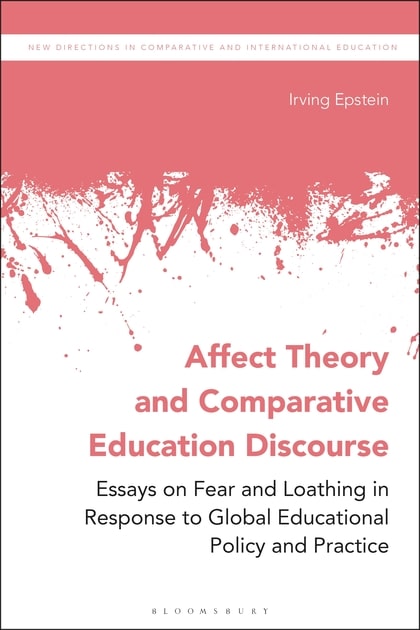 Today we explore affect theory in comparative education.
With me is Irv Epstein, the Ben and Susan Rhodes Professor of Peace and Social Justice at Illinois Wesleyan University, where he chairs the Department of Educational Studies and directs the Center for Human Rights and Social Justice. Irv’s new book is called Affect Theory and Comparative Education Discourse which was published in Bloomsbury’s New Directions in Comparative Education book series, which he co-edits.
Citation: Epstein, Irving, interview with Will Brehm, FreshEd, 187, podcast audio, February 17, 2020. https://www.freshedpodcast.com/irvingepstein/
Transcript, Translation, and Resources:
Today Raewyn Connell returns to FreshEd to talk about her new book, The Good University. In it, Raewyn takes a deep dive into the labor that makes a university possible while also detailing the main troubles the institution currently faces.
She argues that a good university must work for the social good rather than for profit. It must embrace its democratic roots and protect the process of being truthful.
Raewyn Connell is Professor Emerita at the University of Sydney. She is an active trade unionist and advocate for workers’ rights, student autonomy and educational reform.
Photo by Peter Hall
Citation: Raewyn, Connell, interview with Will Brehm, FreshEd, 157, podcast audio, June 3, 2019. https://www.freshedpodcast.com/raewynconnell2/
Will Brehm 1:30
Raewyn Connell, welcome back to FreshEd.
Raewyn Connell 1:31
I’m very glad to be here.
Will Brehm 1:33
So, congratulations on your new book. And just halfway through this book, when I was reading it, you tell this wonderful story about this famous Jacaranda tree at the University of Sydney. And I want to just ask, what made this tree so famous? And why did you end up writing about it?
Raewyn Connell 1:48
Well, it’s a very beautiful tree. It has lovely purple flowers, and it’s absolutely covered in blossom at a certain time of year, which happens to correspond with when graduations are held. So, for many years, since the invention of color photography, all the graduates would go and stand in front of the tree in their robes and get the photographs at the end of their degree. And it’s all in front of this sort of mock Gothic sandstone building in golden stone. It’s a lovely picture. Well, a few years ago, five or perhaps eight years ago, the University began including in its advertising, a picture of a tutorial group -a discussion group- sitting on the lawn in front of this tree in full bloom. And that was a lovely picture for advertising with the mock Gothic building behind suggesting how ancient and venerable the University was. Unfortunately, it wasn’t true for two reasons: one, no tutorials are allowed to meet on that lawn. Two, the tree actually blossoms after tutorials are over. So, the thing was a fake! And it seemed to me that that somehow represented what was happening in universities as they became more commercialized. There was more fakery and misrepresentation. And just a couple of years after that image was used in the advertising, the tree died. Now, no biologist among my friends would agree that the tree died of shame but one suspected, and that somehow to me symbolized that the university in some sort of crisis. Yeah, universities in general. Well, by corporate standards, there’s no crisis. You know, the higher education industry is booming. There are now more than 200 million university and college students around the world. The flow of fees and money into the system is bigger than ever before. So, from a profit-making and corporate growth perspective, we’re doing wonderfully in universities. But, by other standards, there are terrible problems. I mean the casualization of academic labor force, virtual end of the prospect of a career for very large numbers of university teachers, the growing level of distrust and antagonism between workforce in universities and the managers, the growing level of inequality within universities just in sheer money terms, the level of anger that you see in conflicts in universities now, and of course, the decline of government support for higher education in most parts of the world, not quite all, which escalates in some countries like Hungary -it’s a famous example recently- of outright attacks by government on the university sector -at any rate, parts of it- showing a kind of political antagonism to good higher education, which is very disturbing, indeed. And in that kind of sense, yeah, there is a crisis that’s bubbling/boiling up around us.
Will Brehm 5:25
Yeah, I mean, I’ve seen photos of many years ago, protests in Chile, just recently, protests in Brazil. Even in the UK, there’s been these mass protests of university lecturers fighting for basically better pensions and better wages and trying to resist this sort of corporatization of the university. So where do we begin? If this is this crisis that we see -and in your book, you basically start by looking at the foundations of the university, and really focus on the massive amount of labor that universities do in a way. All the different types of people that make a university possible require huge amounts of labor. Can you talk a little bit about, you know, what sort of labor actually happens based on your long career in universities?
Raewyn Connell 6:17
Well, what I do in the first chapters of the book is show how research, the production of knowledge, has to be understood as a form of work -a complex and intricate kind of work, but work nevertheless, with a workforce in certain conditions. And the same for teaching too. Education involves a form of labor by the teachers and by the students for that matter. And we have to understand the circumstances in which this work is done, the relationships that shape the work in order to understand the production of knowledge and the educational process itself. Now as the universities have got more commercialized and commodified, this labor has been changing. And the conditions of this labor has been changing. So, the academic work: Well, there’s a much higher level of casualization and insecurity for academic workers, as more of the face-to-face teaching is done by people in insecure, short-term jobs. The role of academics in longer term jobs has also changed. They’ve become a kind of middle management group responsible for organizing a casualized, insecure workforce. There’s been an intensification of labor. This is not unusual in today’s economy. That’s true in other industries as well. But it’s quite striking in academic work. The growth of a long hours culture, the decline of the sense that you have time to sit and think and look around, read around and come up with fundamental new ideas -this is now harder simply because of the change in the kind of work. And there’s more control over academic labor via audits and measurement, and management surveillance. Even a simple decision, like when you’ve done some research, you’ve written an article about it, where you publish it, that used to be your own decision as to where you should publish it to reach the audience who needed to know. No! That doesn’t apply anymore. There are now management pressures to publish only in high-prestige journals in the most central countries in the world, and so forth. So, that’s a very significant set of changes in academic labor. And for non-academic workers, what I call the operations workers, who are half the workforce of universities, the work also has been changing -sometimes in the same ways. There’s more sort of surveillance and control from above, so fewer people are just trusted to get on with a job, assume that they know what their job is, and they should get on with it -there’s less and less of that. More surveillance, more auditing. But there’s also more outsourcing of work in universities. That is, workers who actually work for the university, but are not employed by the university, rather employed by another company, which has a contract with the university management and that changes relationships in universities too as it would in any place where that kind of thing happened. Because people working in an outsourced basis for another company don’t have rights, don’t have recognition on campus, are not likely to be there long-term so they can’t develop long-term relationships with the teaching or research staff, and there’s just less of the basic, ground-level know-how on which universities have depended in order to work effectively as organizations. So, more control concentrated at the top means less effective work down below. And that has been happening on a large scale in universities.
Will Brehm 10:25
And has there been any consequences or impacts on student learning? I mean, this seems to be a major function of the university. So, with these various reforms, with this corporate-style management, this power residing at the top in these administrations, what effect on the student?
Raewyn Connell 10:42
Two things: One, because corporate management drives for lower wage costs, lower labor costs, they’re terribly interested in technologizing university teaching. So, MOOCs are the classic example of that, the massive online open courses, which have something like a 90% dropout rate, I mean they’re quite stunning. But in other ways too, the learning experience is more computerized, more technologized, therefore, more -and this is the other side of it- in various ways more formalized. So, we have more frequent and technologically controlled testing. There’s less scope for ambitious but out of the way learning practices by the students. They’re more, sort of on a prescribed path all the time. I can remember -this is, you know, I’m now one of the older generation very much. When I was an undergraduate doing a history program, we actually had two years in the middle of the degree with no exams at all. We had an exam at the end of the two, but for two years, we could pursue our own learning interests, we had to attend courses, lectures, tutorials, and so forth. But we weren’t tested. And, you know, modern students, I think -and this applies to schools, as well as universities- are tested to within an inch of their lives sometimes. And I think that really degrades the kind of learning experience that a university should be.
Will Brehm 12:25
So, one of the things you mentioned earlier was that there’s something like 200 million students enrolled in higher education around the world. And in a way, this is very much a massification of higher education. So many more people today are going to university than say 50 years ago. And we talked-
Raewyn Connell 12:45
-and that’s a good thing.
Will Brehm 12:46
Right. That’s a good thing. And universities often talk about this in terms of equity, and diversity, and opportunity, and enlarging that student base. But in your book, you start calling the university sort of “privilege machines”. You talk about how they actually produce inequality. And so, I wanted to know, in your mind, how are universities complicit in the production of inequality?
Raewyn Connell 13:08
Hmm. Well, universities have always been connected with privilege and power throughout their history. So, a phrase like “a college man”, a bit out of date now but it used to be an expression which signaled leisure and money among young people. Well, as the university system has expanded, it’s also become more unequal in itself. So, we’ve now got this massive hierarchy of universities from the very well-funded privileged institutions down to a worldwide mass of higher education institutions, colleges, universities, called different things in different places. And that’s symbolized by the league tables that are now published, you know, with Harvard on top, and MIT and Stanford up there at the top, and your local community college way down at the bottom. Now, the biggest part of the expansion, very recently, has been in privately owned, for-profit universities. That’s now a large sector worldwide. And I would emphasize the for-profit part because what these kinds of colleges sell, basically, is vocational training. They do hardly any research, that’s not their game and they have a very casualized workforce so that you’re not getting a high quality of educational thinking there because people don’t have time and opportunity to do that thinking. But you do have connections with local industries, local businessmen, who are often on the boards, and even involved in developing the curricula of those kinds of colleges. So, what you’re getting then, is an apparent mass expansion but also a change in the character of most higher education as that expansion occurs, which becomes a thinning out of the university or the college experience and a commodification of what it’s taken to be. So, the advertising, the marketing of the for-profit private colleges, is all about what this ticket you’re getting should yield you in terms of future income. Now that benefit often doesn’t happen because labor markets themselves are changing, and the meaning of qualifications in labor markets change. But that’s the way universities, on a mass scale, are now sold. I’m entirely in support of professional education. I think that’s a correct business of universities, and there I differ from some other critics who criticize the idea of professional education. I think that’s a central role of universities. But professional education itself should be an intellectual proposition, it should be involve thinking carefully and at length about the ethics, about the social meaning of the profession that you’re going into, it should involve understanding the clients that your profession is going to meet, so it truly involved social sciences, philosophy, humanities, other technical areas -all of those kinds of knowledges should be involved in good professional education. And I think that is being thinned out now in a very worrying way.
Will Brehm 16:48
So, I guess the obvious question then is, what can be done? What does a university look like that doesn’t embrace this corporate management, doesn’t embrace these sort of for-profit logics that many universities are around the world today? Like, what’s the alternative in a way?
Raewyn Connell 17:05
Well, there are multiple alternatives. It’s not a single blueprint that we should be following. That’s part of my critique of the “league table” mentality that assumes we all want to be like Harvard and we don’t frankly. So, one thing then is diversity. Multiplicity of purposes, and styles, and approaches to teaching, and knowledge. There are multiple knowledge systems in the world. We’ve talked about that kind of thing before. It should be part of the universities thinking. Universities now model hierarchy and even propagandize in favor of inequality. All this jargon that comes out about “excellence” really gets up my nose!
Will Brehm 17:58
I don’t know what it even means!
Raewyn Connell 18:00
It’s just a signifier of inequality, basically. And also, the nonsense that comes out about leadership. Leadership, for what for heaven’s sake! in what direction? Well, I think there is a direction which we should be leading and that’s democracy, and public service, and that doesn’t need hierarchies and league tables for heaven’s sake! Talk about self-satirizing university systems, they’re now developing league tables for public service!
Will Brehm 18:39
So how can a university be democratic? How can that ideal be embraced inside a university?
Raewyn Connell 18:45
Well, parts of it is already there. We do know how to run institutions democratically. And that’s what you know, the last 200 years of global history has taught us. There are ways of doing that. So, we have leaderships that are elected, we have forms of responsibility, from top-down and bottom-up, rather than just one way. We diversify the membership of institutions, we take steps to make social inclusion real rather than simply symbolic and selective. We can’t have a democratic education and a democratic knowledge system in an authoritarian institution, it doesn’t work.
Will Brehm 19:34
So, what would that mean? That would mean giving more power to the professors to make decisions to drive the direction of the university, than the central management?
Raewyn Connell 19:43
More power to the whole of the workforce. Remember that half of the workforce of universities are non-academic and they also have know-how and commitment and ideas and should be part of the governing process of the institution. I mean, what I’m talking about is, you know, you can put in the phrase, ‘industrial democracy’, we know how to do that. We’ve done it in cooperatives, in mainstream industries, we do know how to do that kind of thing. It’s not rocket science. But we have been shifting away from those ideas in higher education, as in other industries recently, and there’s a struggle on our hands, I think. The other thing to remember is that at the core of the modern university is a system of knowledge, which I call the ‘research-based knowledge formation’. So, research is central to the knowledge on which we build our curricula, on which we base our professional practices, and which we give to the world at large, is what universities offer. And there’s a democratic core in research, actually. I mean, we don’t necessarily represent it that way because we give Nobel prizes, to a very few top scientists, or the media will drool over the professor with the furthest away galaxy, or the latest cure for cancer. But in fact, research knowledge is a democratic theme in itself. It’s produced by a whole workforce, not just by individual stars. Particular research programs involve research teams, not, in most cases, individual stars. Or the individual stars are standing for teams of 20, 30, 100 people. And they depend on other teams and other researchers. The term publication, which has become a kind of sight of tension and horror for young academics, is actually a sign of that democratic character of knowledge. We put our knowledge out there when we publish. We put it out there for everyone to see, and for other people to build on. That’s the whole point of publication.
Will Brehm 22:08
Yeah, its publication, not ‘priva-cation’.
Raewyn Connell 22:11
Exactly, exactly! And we’re building in the knowledge system, that universities depend on and produce, we’re building a “knowledge commons”. We’re building a common social resource in research-based knowledge. So, there’s a democratic element at the very heart of universities, which is not necessarily immediately obvious, but it’s there. And we can build on it.
Will Brehm 22:39
And it’s particularly not obvious when, you know, Elsevier and Wiley and Sons, and Taylor and Francis are owning that knowledge commons. And it sort of does take that public out of publication.
Raewyn Connell 22:52
Yeah, that’s a classic example of the harm that’s done by privatization, I think. And it is being resisted. There’s quite a strong movement now to reverse that by open access policies on the part of funders, by a kind of movement among academics towards open access for other ways of circulating knowledge that don’t run into those monetary barriers. That’s a hot topic in universities now and I’m very glad to see that kind of struggle going on.
Will Brehm 23:29
So, the beginning of our talk today, you talked about this sort of fake image that the University of Sydney was promoting, and it sort of gets to this idea of truth. And this idea of, what is the role of the universities in being truth?
Raewyn Connell 23:46
Yeah. I should say that I’m not particularly blaming the University of Sydney. I mean, that’s just where I happen to be. And I happened to know that tree from a long time, because I’m also a graduate of this university. But what the University of Sydney was doing was what the University of Melbourne is doing, the University of Queensland is doing, what all the universities in the country in one way or another have been doing, and internationally too. So, I was trying to give an example of something that is, in fact global, as a problem. And why I think that’s significant is that universities do have a cultural role. I mean, they’re not -the corporation famously has, there’s a lovely saying, by Lord Chancellor of England in the 18th century, that “a corporation has no body to be kept, and no soul to be damned therefore it can do as it likes”. And that is pretty much the attitude of the mainstream corporation. And as universities approach the status of money-making corporations which indeed, some of them now are 100% that, they inhabit that kind of situation. And the problem is that universities DO have a soul. And that soul concerns truth. It’s the cultural commitment to telling the truth. And anyone who has done research, you know, I’ve been a researcher for more than 50 years. And I know how difficult it is to establish truth. But that’s what research is, it’s hard work. It’s a struggle. So, you know, it involves interacting with many people and trying to understand situations and speak the truth. It’s difficult, but it’s what we’re about. And if universities start fudging the truth in advertising, pretending to be what they are not, misrepresenting reality, then they are doing terrible damage to their own cultural position as the institutions that embody truth telling. That seems to be a very, very serious problem. And, and that’s why I get, you know, more angry about what seems to many managements to be just good commercial practice. It’s not good university practice.
Will Brehm 26:05
Are you hopeful that the university will soon move away from this corporate-style management? Or are there examples of universities around the world that are actually doing something different? And yes, it could be a multiplicity and a diversity of different ways of managing and organizing the university but sometimes I get very pessimistic about the whole industry that I have spent the last ten years of my life working in. And I don’t know, is it going to change in my lifetime or am I going to be battling this corporate-style management for the rest of my career?
Raewyn Connell 26:41
It’s a good question. And I think everybody involved in these issues at times despairs at the difficulty of moving in a more democratic direction. And I’m sustained, I think -I mean, I’m originally a historian. So, I’m always interested in the history of institutions. And I took some time when I was working on this project to go back into the history of universities and look specifically at the history of alternative universities. And it turns out, there is a wonderful history of alternative and experimental universities all over the world, which is not all that widely known. But things like, for instance, there’s an extraordinary story of the Flying University in Poland, which was developed back in the 1880s, when Poland or most of Poland was part of the Russian Tsarist Empire. And the Russian regime tried to control universities, to ratify them, and to exert regime control over them. So, the Poles went underground and invented a kind of underground university, which became known as the Flying University because its classes would move around from place to place in Warsaw in order to avoid the police. And taught a whole curriculum, natural science, educational sciences, humanities and so forth, all under the radar. And after the 1905 revolution in Russia, that came to the surface, became legal, became a regular university. Then Poland was invaded by the Nazis and they did it again, under incredible repression during the Second World War. Then the Russians threw the Nazis out and established a communist regime in Russia, which restored the universities but also attempted to control them and the Poles did it again! They had a Flying University teaching all the forbidden kinds of social sciences and humanities. Now, that’s one story, there are anti-colonial universities in India, which was set up by people like Rabindranath Tagore, the poet, back in the 1920s as a place for the meeting of civilizations rather than the Eurocentric curriculum in the universities the British had set up in the colonial system. When the pink tide occurred in Latin America 10 or 15 years ago, a series of progressive governments around the continent, they set up reform universities too. Indigenous universities, working class universities, universities in remote parts of the country with rural populations and so forth, publicly funded, bringing in new groups of people who, for years, they’ve been excluded from the university system. In AotearoaNew Zealand, there’s a university which is based on Maori indigenous culture. Similar things in parts of India, all over Central America, in parts of South America, like Bolivia, there are now indigenous universities which have curriculum that try to blend research-based knowledge with indigenous knowledge and develop curricula that are relevant to indigenous communities. So, there’s lots of experimentation in the history when you go looking for it, and that, to me, is a deep source of hope. People have done it in the past, it’s still possible for us to move in these directions now.
Will Brehm 30:34
And that actually is incredibly hopeful that the system that we’re in today is not static, and it can change and there is a history of change over time. And that’s deeply, deeply hopeful.
Raewyn Connell 30:45
I had a bit of involvement in this kind of work back in the 1960s when I was a radical student among the many other radical students. I was involved in setting up what we called Free University in Sydney, which was a student-directed, cooperative learning institution that did a couple of dozen courses on a variety of issues that we felt were missing from the mainstream university curricula. I’ve taught in publicly funded universities that were part of another reform movement, the kind of “Green Fields” universities set up in the 1960s and 70s in countries like Australia, Britain, the United States. The expansion of the University of California was a good example of that, places like UC Santa Cruz, Santa Barbara Davis, were involved. You know, experimentation with curricula, combinations of disciplines, student-centered teaching practices, lots of really interesting educational innovation happening in those institutions over a period of 20-25 years. So even in the mainstream system, it is possible to innovate and democratize in inventive ways.
Will Brehm 32:04
Well, Raewyn Connell, thank you so much for joining FreshEd. You know, I read your book, and it’s like a love letter to the university itself. And it’s critical but supportive and offers so much beautiful history. So, I mean, I can’t recommend it enough. And I just want to say thank you for writing the book and getting these ideas out there. And, as a young academic, I must say that I am actually very hopeful of being in this industry and in this career and hopefully getting involved in some of these new movements to diversify the university. So, thank you very much for joining FreshEd and you’re always welcome back on in the future.
Raewyn Connell 32:40
That’s great to hear. Thank you.
Today we air the first ever FreshEd Live event, which was recorded last night in San Francisco. Gita Steiner-Khamsi joined me to discuss the ways in which the global education industry has altered the State and notions of free public education.
We touched on a range of topics, from Bridge International to theInternational Baccalaureate and from network governance to system theory. Gita theorized why the State has taken on the logic of business and how a quantum leap in privatization has radically altered education.
Gita Steiner-Khamsi is permanent faculty at Teachers College, Columbia University. In addition, she has been seconded by the Graduate Institute of International and Development Studies in Geneva as a faculty member and by NORRAG as the director.
This FreshEd Live event was sponsored by NORRAG.
Citation: Steiner-Khamsi, Gita, interview with Will Brehm, FreshEd, 150, podcast audio, April 15, 2019. https://www.freshedpodcast.com/gitalive/
Transcript, Translation, Photos, Resources:

This will close in 10 seconds